Sounion: The Sacred Cape and Fortress of Ancient Attica
Perched on the southernmost tip of Attica, Sounion serves as a timeless sentinel overlooking the Aegean Sea. Known in antiquity as the "Cape of Athens," this site blends deep mythological roots with strategic military importance. From the epic verses of Homer to the architectural grandeur of the Periclean age, Sounion has remained a focal point of Greek spiritual and political life for centuries.
The site's earliest literary mention appears in Homer's Odyssey, which describes King Menelaus of Sparta landing at "Holy Sounion" to perform funeral rites for his helmsman, Phrontis. Archaeological evidence confirms human activity as early as 700 BC, and by the 6th century BC, the Athenians established a quadrennial festival where leaders sailed to the cape in a sacred boat.
Key Facts
- Strategic Location: A critical fortress protecting Athens' grain supply routes from Euboea.
- Architectural Legacy: Home to the hexastyle Temple of Poseidon (built c. 440 BC).
- Mythological Links: Associated with the burial of Phrontis from the Odyssey.
- Economic Ties: Prosperity linked to the nearby silver mines of Laurion.
- Military History: Fortified in 413 BC during the Peloponnesian War.
The Deme and Administration
Sounion functioned as a deme (a local administrative district) of the Leontis tribe. Its political influence grew over time; it initially sent four representatives to the ancient Boule (council) of 500 under Cleisthenes, increasing to six men for the Boule of 600 by the 3rd century BC. By the 2nd century BC, it was integrated into the Attalid phyle, created in honor of Attalus I.
The settlement center was located north of the cape, positioned between modern Ano Sounio and Kato Sounio. Its territory was economically significant, encompassing portions of the silver mines of Laurion, which contributed to a level of wealth that became proverbial in the ancient world.
The Temple of Poseidon
The most iconic landmark at the site is the Temple of Poseidon. The original Archaic-period structure was built from tufa but was likely destroyed in 480 BC during the Persian invasion led by Xerxes I. Following the Greek victory at the Battle of Salamis, the Athenians dedicated a captured Persian trireme—a warship with three banks of oars—at the site as a trophy to the god of the sea.
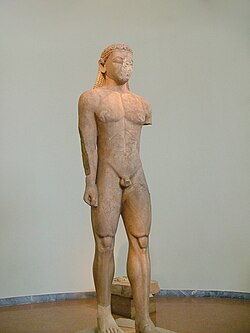
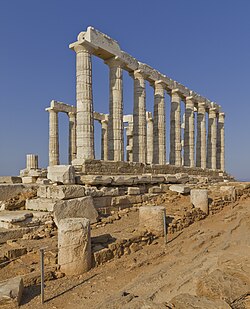
The current temple was constructed between 444 and 440 BC during the leadership of Pericles. Standing 60 meters above the sea, the temple is a hexastyle design, meaning it featured a front portico with six columns. It followed the Doric Order, utilizing locally quarried white marble.
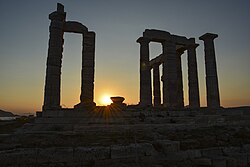
The structure was rectangular with a total of 34 columns, 15 of which remain today. Each column stood 6.10 meters high. At the heart of the temple was the naos (hall of worship), a windowless room that once housed a colossal 6-meter bronze statue of Poseidon.
The Temple of Athena
Located approximately 300 meters northeast of Poseidon's sanctuary was the Temple of Athena Souniados. Built in 470 BC to replace a 6th-century BCE structure, its architecture was notably unusual. According to the Roman architect Vitruvius, the temple featured colonnades only on the southern and eastern sides, leaving the north and west open.
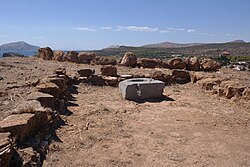
This temple stood adjacent to a peribolos (enclosure) identified as the shrine and burial mound of Phrontis. A smaller Doric temple nearby is believed to have been dedicated to either Artemis or Phrontis. The Temple of Athena was eventually demolished in the 1st century AD, with its materials repurposed for the South-East temple of the Agora in Athens.
The Fortress of Sounion
In 413 BC, during the Peloponnesian War, Athens fortified Sounion to secure the passage of cornships from Euboea. This became vital after the Spartans fortified Dekeleia, cutting off Athens' land-based supply lines. The resulting fortress was one of Attica's primary defenses, featuring regular Hellenic masonry and square towers enclosing a circumference of just over half a mile.
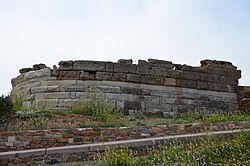
The military complex included a small naval base with a shipshed capable of holding two warships. While the fortress was maintained through the Hellenistic period—with upgrades during the Chremonidean War (266–261 BC)—it was eventually seized by rebel slaves from the Laurium silver mines.
Sounion Site Summary
| Feature | Date/Period | Key Characteristics | Primary Purpose |
|---|---|---|---|
| Temple of Poseidon | 444–440 BC | Doric, Hexastyle, White Marble | Religious Worship |
| Temple of Athena | 470 BC | Asymmetrical Colonnades | Religious Worship |
| Sounion Fortress | 413 BC | Square Towers, Naval Base | Military Defense |
| Laurion Mines | Ancient Period | Silver Extraction | Economic Resource |
Frequently Asked Questions
Why was Sounion strategically important to Athens?
Sounion was critical for protecting the seaborne grain supply routes from Euboea, especially after land routes were blocked by Spartan forces during the Peloponnesian War.
What is a hexastyle temple?
A hexastyle temple is a Greek architectural design characterized by a front portico containing exactly six columns.
Who was Phrontis?
Phrontis was the helmsman for King Menelaus of Sparta, whose death and burial at Sounion are recounted in Homer's Odyssey.
What happened to the Temple of Athena?
The temple was demolished in the 1st century AD, and its column fragments were transported to Athens for use in the South-East temple of the Agora.
What was the significance of the Laurion mines?
The silver mines of Laurion provided immense wealth to the region, contributing to the prosperity of the Sounion deme and the Athenian state.