Sophie Scholl and the White Rose Resistance
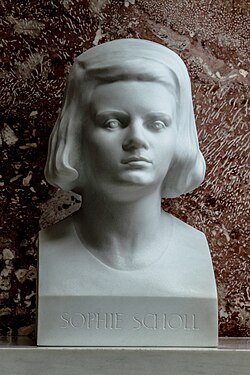
Sophie Scholl was a courageous German student and political activist who became a symbol of moral resistance against the oppressive regime of Nazi Germany. As a key member of the White Rose, a non-violent resistance group, she risked her life to awaken the German public to the atrocities of National Socialism through the distribution of clandestine leaflets.
Her journey from a compliant youth to a defiant revolutionary reflects a profound intellectual and moral awakening, culminating in a sacrifice that continues to inspire generations of activists worldwide.
Early Life and Moral Awakening
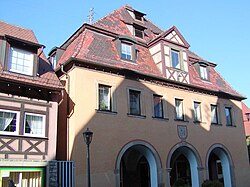
Born Sophia Magdalena Scholl on May 9, 1921, in Forchtenberg, Weimar Republic, Sophie grew up in a household where dissenting political views were present. Like many of her peers, she joined the Bund Deutscher Mädel (League of German Girls), the female branch of the Hitler Youth, at age 12. However, her initial enthusiasm soon turned to criticism as she became more aware of the regime's nature.
The influence of her father, teachers, and her brother Hans played a pivotal role in her disillusionment. A defining moment occurred in 1937 when her brothers and friends were arrested for participating in the German Youth Movement. Sophie herself was first arrested by the Gestapo (the secret police of Nazi Germany) at age 16 after Hans was found active in an anti-Hitler Youth group called Deutsche Jungenschaft vom 1.11.1929. Although she was released the same day, the experience solidified her anti-Nazi convictions.
The Origins of the White Rose
The resistance movement known as the White Rose began to take shape between 1940 and 1941. While studying at the Ludwig-Maximilians-Universität München, Hans Scholl was inspired by Roman Catholic intellectuals to pivot from medicine toward religion, philosophy, and the arts. Alongside friends Alexander Schmorell, Willi Graf, and Jurgen Wittenstein, Hans adopted a strategy of passive resistance.
Starting in June 1942, the group authored and distributed anonymous leaflets. These documents quoted the Bible, Aristotle, Novalis, Goethe, and Schiller, appealing to the German intelligentsia (the intellectual elite) to overthrow National Socialism. The leaflets were distributed via public telephone booths, mail, and couriers to various universities.
Sophie joined the effort, providing a strategic advantage; as a woman, she was less likely to be randomly stopped and searched by the SS. Evidence suggests she may have been involved as early as May 1942, when she sought a permit for a duplicating machine.
Arrest and Execution
The activities of the White Rose came to a sudden end on February 18, 1943. Sophie and Hans Scholl visited the Ludwig-Maximilians-Universität München to distribute flyers. After placing stacks in the corridors, Sophie spontaneously flung the remaining leaflets from the top floor into the university atrium. This act was witnessed by Jakob Schmid, a university maintenance man and committed Nazi, who immediately denounced them.
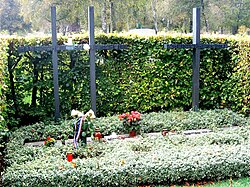
Following their arrest, Sophie, Hans, and their friend Christoph Probst were brought before Judge Roland Freisler. On February 22, 1943, all three were found guilty of treason and sentenced to death. They were executed by guillotine at Stadelheim Prison in Munich. Sophie was executed at 5:00 p.m., followed by Hans at 5:02 p.m. and Christoph at 5:05 p.m.
Reports of her final words vary, with the most likely being "The sun still shines" or "God, my refuge unto eternity."
Key Facts
- Full Name: Sophia Magdalena Scholl
- Birth/Death: May 9, 1921 – February 22, 1943 (aged 21)
- Resistance Group: The White Rose (non-violent)
- Education: Ludwig-Maximilians-Universität München
- Cause of Death: Execution by guillotine for treason
- Key Associates: Hans Scholl, Alexander Schmorell, Willi Graf, Christoph Probst
Summary of the White Rose Resistance
| Aspect | Details |
|---|---|
| Primary Goal | Overthrow of National Socialism through passive resistance |
| Method | Writing and distributing anonymous leaflets |
| Key Influences | Philosophy, Religion, and Classical Literature (e.g., Aristotle, Goethe) |
| Target Audience | The German intelligentsia and university students |
| Outcome | Discovery by Gestapo leading to executions in February 1943 |
Cultural Legacy
Sophie Scholl's bravery has been immortalized in various media. In cinema, the 2005 film Sophie Scholl – Die letzten Tage received an Academy Award nomination for Best Foreign Language Film. Her story has also been adapted into theater, such as the play Stars in the Dark Sky, and modern digital projects, including an Instagram account (@ichbinsophiescholl) launched for her 100th birthday in 2021.
The German government has further honored her through the issuance of a commemorative sterling silver €20 coin and a special stamp in 2021 to mark the centenary of her birth.
Frequently Asked Questions
What was the White Rose?
The White Rose was a non-violent intellectual resistance group in Nazi Germany that published and distributed leaflets calling for the end of the Nazi regime.
Why was Sophie Scholl targeted by the Gestapo?
She was arrested after being caught distributing anti-Nazi leaflets at the Ludwig-Maximilians-Universität München, an act considered treason by the state.
How did Sophie Scholl die?
Sophie Scholl was executed by guillotine at Stadelheim Prison in Munich on February 22, 1943, at the age of 21.
What was Sophie's role in the resistance?
Sophie helped distribute the group's leaflets and was particularly valuable because, as a woman, she was less likely to be stopped and searched by the SS.
Who was Jakob Schmid?
Jakob Schmid was a university maintenance man and Nazi Party member who witnessed Sophie Scholl throwing leaflets into the university atrium and reported her to the authorities.