Solomon Islands Religious Demographics and Belief Systems
The Solomon Islands possesses a rich and diverse spiritual landscape, shaped by a blend of indigenous traditions and the influence of global missionary movements. Today, the nation is characterized by a dominant Christian presence, though traditional beliefs continue to play a vital role in the cultural identity of specific communities.
Key Facts
- Christianity is the primary religion, practiced by approximately 93% of the population.
- Protestantism represents the largest segment of the faith, accounting for 73% of the population.
- The Anglican Church of Melanesia is the single largest denomination at 32%.
- Indigenous animism—the belief that objects, places, and creatures all possess a distinct spiritual essence—is practiced by about 5% of the population.
- The Roman Catholic Church maintains the highest percentage of foreign clergy compared to other established churches.
The Landscape of Christianity in the Solomon Islands
Christianity was introduced to the archipelago during the 19th and early 20th centuries through the efforts of Western missionaries. Over time, these denominations became deeply integrated into the social fabric of the islands. While some foreign missionaries remain active today, the leadership of most established churches transitioned to indigenous clergy by the early 2000s.
The Roman Catholic Church is a notable exception to this trend, with foreign nationals comprising approximately 45% of its clergy.
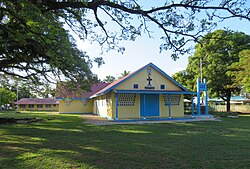
Denominational Breakdown
The Christian population is divided among several major denominations. The Anglican Church of Melanesia holds the most significant influence, followed by the South Seas Evangelical Church and the Seventh-day Adventist Church. Other notable groups include the United Methodists and various other Christian sects.
Indigenous Beliefs and Minority Faiths
Despite the prevalence of Christianity, indigenous animistic religions persist, particularly among the Kwaio community on the island of Malaita. This group represents the core of the estimated 5% of the population that adheres to traditional spiritual practices.
Beyond the major denominations and traditional beliefs, a small percentage of the population identifies with other faiths. This diverse group includes Muslims, Baha’is, Jehovah’s Witnesses, The Church of Jesus Christ of Latter-day Saints, the Christian Fellowship Church, and the Family Federation for World Peace and Unification (commonly known as the Unification Church).
Religious Composition Summary
| Religious Group | Estimated Percentage |
|---|---|
| Anglican (Church of Melanesia) | 31% - 32% |
| Roman Catholic | 19% - 20% |
| Evangelical (South Seas Evangelical Church) | 17% |
| Seventh-day Adventist | 12% |
| United Methodist | 10% |
| Indigenous & Animistic | 5% |
| Other Christian / Other Faiths | 6% |
Frequently Asked Questions
What is the most common religion in the Solomon Islands?
Christianity is the most common religion, practiced by 93% of the population, with Protestantism making up the majority of that group at 73%.
Which Christian denomination has the largest following?
The Anglican Church of Melanesia is the largest denomination, representing approximately 32% of the population.
Who practices indigenous animism in the Solomon Islands?
Indigenous animistic religions are primarily practiced by the Kwaio community located on the island of Malaita.
How does the clergy of the Roman Catholic Church differ from other churches?
While most established churches in the Solomon Islands have nearly entirely indigenous clergy, the Roman Catholic Church's clergy is approximately 45% foreign.
What other minority religions are present in the country?
Minority groups include Muslims, Baha’is, Jehovah’s Witnesses, The Church of Jesus Christ of Latter-day Saints, the Family Federation for World Peace and Unification, and the Christian Fellowship Church.