Social Conformity: The Psychology of Group Influence and Behavior
Social conformity, or conformism, is the act of aligning one's attitudes, beliefs, and behaviors with group norms or political leanings to be like-minded with others. At its core, conformity is driven by norms—the implicit, specific rules and shared guidance that govern how individuals interact within a group. For many, following an established path is simpler and more efficient than forging a new one, making conformity a frequent product of group communication.
This tendency manifests in various settings, from small peer groups to society at large. It can be triggered by direct, overt social pressure or by subtle, unconscious influences. Interestingly, conformity does not require the physical presence of others; people often adhere to social norms—such as specific behaviors while eating or watching television—even when they are alone.
Key Facts
- Asch's Findings: In classic line-judgment tests, 75% of participants conformed to a wrong majority at least once.
- Influence Types: Conformity is generally split between normative influence (fitting in) and informational influence (seeking accuracy).
- The Chameleon Effect: The automatic, unintentional mimicry of gestures and speech to build rapport.
- Group Size: While pressure generally increases with group size, some research suggests the impact plateaus after a majority of three.
- Cultural Variance: Conformity levels vary between individualistic cultures (prioritizing the self) and collectivistic cultures (prioritizing the group).
The Asch Conformity Experiments
One of the most influential studies in social psychology was conducted by Solomon Asch. To test the power of group pressure, Asch recruited 50 male students from Swarthmore College for what they believed was a "vision test."
In the experiment, a single naive participant was placed in a room with seven "stooges" (confederates) who were already instructed to give specific answers. The real participant sat in the last position. When asked to match a line to one of three options, the stooges unanimously gave the wrong answer. Asch found that approximately 32% of participants sided with the clearly incorrect majority on critical trials. Over 12 critical trials, 75% of participants conformed at least once.
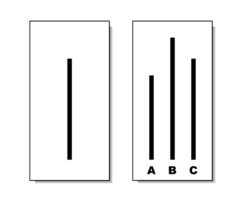
Post-experiment interviews revealed that participants did not actually agree with the incorrect answers. Instead, they conformed because they believed the group was wiser or because they did not want to appear as mavericks. This phenomenon is known as normative influence.
Types of Social Influence
Normative Influence
Normative influence occurs when an individual conforms to be liked or accepted by a group, even if they privately disagree with the group's consensus.
Informational Influence
Informational influence happens when people look to others for information to help them make decisions, particularly in new, ambiguous, or confusing situations where they assume the group possesses more accurate knowledge.
The Chameleon Effect
Beyond conscious decision-making, humans experience the Chameleon effect. This is the unintentional and automatic mimicry of another person's posture, gestures, and speech style. This biological mechanism helps produce rapport and ensures social interactions run smoothly.
Factors Influencing Conformity
Group Size and Dynamics
The relationship between group size and conformity is complex. Asch's 1951 study suggested that increasing group size beyond three people provides no additional impact. Brown and Byrne (1997) hypothesized that larger groups might lead participants to suspect collusion. However, Gerard (1968) reported a linear increase in conformity for groups ranging from two to seven people, while Latané (1981) emphasized that strength and immediacy are also critical factors.
Cultural Context
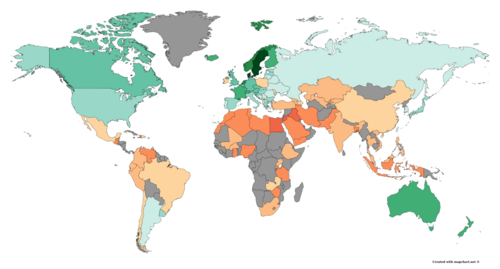
Culture plays a significant role in how individuals respond to group pressure. Societies are often categorized as either individualistic or collectivistic.
Stimuli and Task Importance
Stanley Milgram expanded on Asch's work by using audio tones instead of visual lines in France and Norway. He found higher conformity rates (50% in France and 62% in Norway) than Asch did. However, when Milgram told participants that the results would be used for aircraft safety signals, conformity decreased (56% in Norway and 46% in France), suggesting that people are less likely to conform when the task is linked to a high-stakes, important issue.
Summary of Conformity Research
| Researcher | Stimulus Used | Key Finding | Primary Influence Type |
|---|---|---|---|
| Solomon Asch | Line Lengths | 75% conformed at least once; 32% average on critical trials. | Normative |
| Stanley Milgram | Audio Tones | Higher conformity than Asch; decreased when task importance rose. | Normative/Informational |
| Chartrand & Bargh | Gestures/Speech | Automatic mimicry (Chameleon Effect) creates rapport. | Unconscious/Automatic |
Frequently Asked Questions
What is the difference between normative and informational influence?
Normative influence is driven by the desire to fit in and avoid social rejection, even if the person knows the group is wrong. Informational influence is driven by the desire to be correct, leading a person to follow the group because they believe the group has better information.
Does group size always increase the pressure to conform?
Not necessarily. While some studies show a linear increase, others suggest that the effect plateaus after three or four people, as participants may begin to suspect the group is colluding.
What is the Chameleon effect?
The Chameleon effect is the unconscious and automatic mimicry of others' nonverbal behaviors, such as posture and speech patterns, which helps facilitate smoother social interactions.
How does the importance of a task affect conformity?
Research by Stanley Milgram suggests that when a task is perceived as highly important—such as affecting aircraft safety—individuals are slightly less likely to conform to a wrong majority.
Do different cultures conform differently?
Yes. People from collectivistic cultures, which emphasize group harmony and interdependence, generally show different conformity patterns compared to those from individualistic cultures, which prioritize personal autonomy.