Småland: The Rich History and Diverse Landscapes of Sweden's Small Lands
The name Småland literally translates to "small lands," a fitting title for a historical province composed of many small, once-independent territories. Located in southern Sweden within the Götaland region, this province is a land of deep forests, intricate lakes, and a resilient spirit that has shaped much of Swedish culture and industry. From the birthplace of world-renowned botanists to the home of global retail giants, Småland offers a unique blend of rugged nature and industrious heritage.
Key Facts
- Total Area: 29,400 km² (comparable in size to Belgium).
- Population: 780,489 (as of December 31, 2023).
- Highest Point: Tomtabacken (377 metres).
- Major Cities: Jönköping, Växjö, and Kalmar.
- Provincial Flower: Twinflower.
- Provincial Animal: Otter.
- Provincial Bird: Song thrush.
Geography and Terrain
Småland's landscape is characterized by a forested high plain where the soil is often mixed with sand and boulders. This makes much of the region unsuitable for large-scale agriculture, except in specific areas like the fertile Kalmar plains. The province is exceptionally rich in lakes and bogs, with forests covering approximately 50% of its surface.
Geological Formations
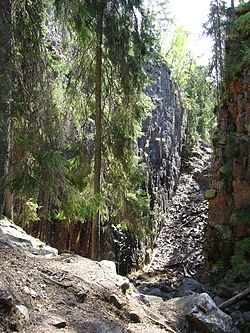
The topography is defined by a series of flat surfaces built upon a geological dome. This creates a stepped sequence known as a piedmonttreppen. The region is also famous for its many lakes, which were formed by glacial erosion stripping away weathered rock to create deep basins. In central and northern Småland, narrow canyons cut into the bedrock are a common and striking feature.
Climate Patterns
The climate varies between the oceanic climate of the coastal areas, such as Kalmar, and the humid continental climate of the higher interior regions like Jönköping. While summer daytime averages are relatively consistent across the province—averaging around 22 °C (72 °F)—the interior can experience slightly colder nights. Notably, the locality of Målilla holds the record for the highest temperature ever measured in Sweden, reaching 38 °C (100 °F) in 1947.
A Deep Historical Tapestry
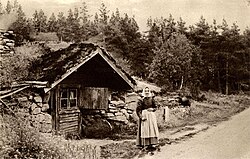
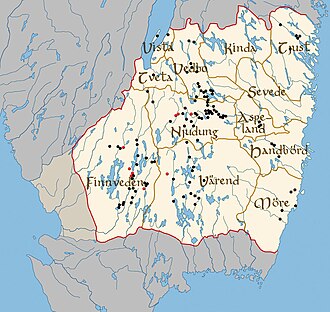
Human habitation in Småland dates back to the Stone Age, with evidence suggesting people moved along the coast toward Kalmar as early as 6000 BC. Historically, the province was an aggregation of a dozen territories, such as Värend, Möre, and Tjust, each possessing its own laws during the Viking Age and early Middle Ages.
Medieval Importance and Rebellions
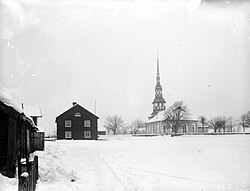
The city of Kalmar stands as one of Sweden's oldest and was once a major medieval center for iron exports. Småland's history is also marked by significant peasant resistance, most notably the Dackefejden rebellion led by Nils Dacke in 1542–1543, which challenged the authority of King Gustav Vasa.
The Spirit of Entrepreneurship
Småland is famously associated with a high level of entrepreneurship. This is exemplified by the Kingdom of Crystal, known for its historic glassworks, and the founding of IKEA in the town of Älmhult by Ingvar Kamprad. The local people are often described in historical texts as diligent, smart, and capable of thriving even with limited means.
Culture, Language, and Notable Figures
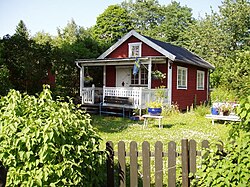
The local dialect, Småländska, varies significantly between regions, reflecting the historical divisions of the "small lands." Culturally, the province has a higher level of religious intensity and church participation compared to much of Sweden, particularly within free church congregations.
Famous Smålandians
- Carl Linnaeus: The "father of taxonomy" and world-renowned botanist, born in Älmhult.
- Ingvar Kamprad: The founder of IKEA.
- Astrid Lindgren: The beloved children's book author whose stories often drew from her Småland childhood.
- Vilhelm Moberg: Author whose novels depicted the 19th-century Swedish emigration to North America.
Summary of Småland Profile
| Category | Details |
|---|---|
| Administrative Counties | Jönköping, Kalmar, Kronoberg (plus parts of Halland and Östergötland) |
| Land Use | Forests (50%), Cultivated land (14%), Meadows (7%) |
| National Parks | Store Mosse, Norra Kvill, Blå Jungfrun, Åsnen |
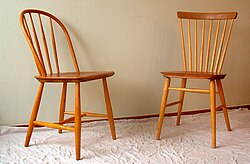
| Major Industries | Glassmaking, Furniture, Entrepreneurship |
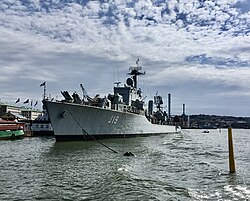
| Navy Connection | HSwMS Småland (J19) destroyer |
Frequently Asked Questions
What does the name Småland mean?
The name Småland literally means "small lands," referring to the many small, historically independent territories that formed the province.
Which major companies originated in Småland?
The global furniture retailer IKEA was founded in the Småland town of Älmhult.
What are the main cities in Småland?
The largest towns in the province are Jönköping in the northwest, Växjö in the south, and Kalmar on the east coast.
Are there any national parks in Småland?
Yes, Småland is home to four national parks: Store Mosse, Norra Kvill, Blå Jungfrun, and Åsnen.
What is the climate like in Småland?
The climate ranges from oceanic on the coast to humid continental in the higher interior areas, with summer averages around 22 °C (72 °F).