Skomer Island: A Sanctuary for Rare Wildlife and Ancient History
Located off the coast of Pembrokeshire in west Wales, Skomer (Welsh: Ynys Sgomer) is a breathtaking island sanctuary renowned for its extraordinary biodiversity and deep archaeological roots. Managed by the Wildlife Trust of South and West Wales, this national nature reserve serves as a critical haven for some of the world's most remarkable avian and mammalian species.
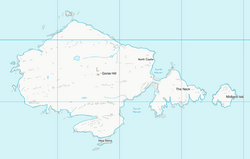
The island's name is derived from the Viking word Skalmey, meaning "Cleft island," a reference to the eastern end that is nearly severed from the main body of land. Today, it is recognized as a Site of Special Scientific Interest and a Special Protection Area, surrounded by a dedicated marine nature reserve.
Key Facts
- Location: Pembrokeshire, Wales, within the community of Marloes and St Brides.
- Wildlife Highlights: Home to roughly half of the global Manx shearwater population and the largest Atlantic puffin colony in southern Britain.
- Endemic Species: The Skomer vole is a subspecies found only on this island.
- Archaeology: Contains prehistoric houses, standing stones, and stone circles dating back 5,000 years.
- Geology: Comprised of volcanic rocks from the Silurian period (approx. 440 million years ago).
Geography and Geology
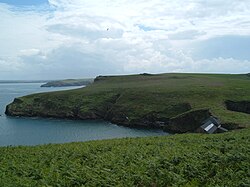
Skomer spans 2.92 square kilometres (720 acres), measuring approximately 3.2 km east-west and 2.4 km north-south. The topography is varied, characterized by ridges and slopes, with the highest point reaching 79 metres at Gorse Hill.
The island's foundation is the Skomer Volcanic Series, a sequence of rocks up to 1,000 metres thick. This includes basalts, rhyolites, and skomerite (an altered andesite). The presence of pillow lava indicates that some of these volcanic eruptions occurred underwater. Over time, rising sea levels following the last Ice Age separated Skomer from the mainland.
The island is accompanied by several smaller islets, including Midland Isle, Mew Stone, and Garland Stone, separated by narrow channels such as Little Sound.
Ancient History and Human Occupation
Human presence on Skomer dates back 5,000 years. Evidence of Iron Age settlement, including field boundaries and house remains, has been uncovered through the Skomer Island Project—a collaboration between the Royal Commission for Ancient and Historical Monuments in Wales and universities in Sheffield and Cardiff.
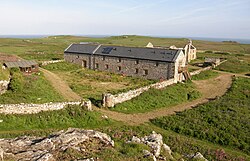
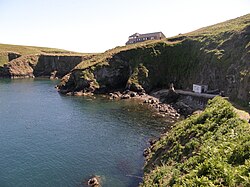
Much of the island is designated as an ancient monument. While it was permanently inhabited by the Codd family until 1950, it has since transitioned into a center for conservation and research. The central farm buildings, refurbished in 2005, now provide essential visitor and research accommodation.
A Haven for Wildlife
Skomer is a global hotspot for seabirds. The island supports a vast array of species, including guillemots, razorbills, great cormorants, and peregrine falcons. Beyond the birds, the island is home to grey seals, slow-worms, and a diverse population of glow-worms.
The Atlantic Puffin
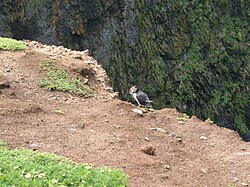
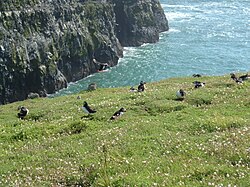
Skomer hosts one of Britain's most significant puffin colonies. These birds arrive in mid-April to nest in burrows, many of which were originally excavated by rabbits. The population has shown impressive growth; from an estimate of 24,108 birds in 2019, the population rose to 34,796 in 2020 and reached 43,626 by 2025.
The Manx Shearwater
The island is the world's most important breeding site for the Manx shearwater, hosting approximately half of the global population. In 2019, the population was estimated at nearly 350,000 pairs. These birds are nocturnal on land to avoid predation by gulls, returning to the exact burrow of their birth after five years at sea.
The Endemic Skomer Vole
The Skomer vole (Myodes glareolus skomerensis) is a distinct subspecies of the bank vole found nowhere else on Earth. With no land-based predators, the population thrives in the bracken, reaching roughly 20,000 individuals during the summer, providing a vital food source for resident short-eared owls.
Ecological Significance of Lichens
Skomer supports 248 species of lichens, which are organized in distinct zones based on salt spray and nutrient levels. The abundance of seabird guano (droppings) promotes the growth of nitrogen-rich species like Xanthoria parietina. Rare species, such as the Mediterranean-Atlantic Roccella fuciformis, also persist here.
Visiting Skomer Island
Access to the island is strictly managed to protect its fragile ecosystem. Visitors can reach Skomer via the Dale Princess ferry from Martin's Haven, a 15-minute journey available from April to September. To prevent overcrowding, visits are limited to 250 people per day.
Visitors must remain on designated pathways. The eastern area known as "The Neck" is entirely out of bounds to protect nesting wildlife. For those seeking a deeper experience, a 16-bed self-catering hostel is available at the island's center.
| Feature | Detail |
|---|---|
| Total Area | 2.92 km² (720 acres) |
| Highest Point | Gorse Hill (79m) |
| Puffin Population (2025) | 43,626 birds |
| Shearwater Population (2019) | ~350,000 pairs |
| Visitor Limit | 250 people per day |
| Primary Access Point | Martin's Haven |
Frequently Asked Questions
When is the best time to see puffins on Skomer?
Atlantic puffins arrive in mid-April to nest and typically depart the island by the second or third week of July.
Why are Manx shearwaters difficult to spot during the day?
Shearwaters are nocturnal on land to avoid predation by gulls; they only leave their burrows at night.
What makes the Skomer vole special?
The Skomer vole is a subspecies endemic to the island, meaning it is found naturally nowhere else in the world.
How do I book a trip to the island?
Visitors can take the Dale Princess ferry from Martin's Haven. Due to the 250-person daily limit, advance booking is highly recommended.
Is there accommodation available on the island?
Yes, there is a self-catering hostel with 16 beds located at the farm in the center of the island, open from April to September.