Sister Rosetta Tharpe: The Godmother of Rock and Roll
Long before the global explosion of rock and roll in the 1950s, a powerhouse performer was already blending the sacred sounds of the church with the electric energy of the nightclub. Sister Rosetta Tharpe was a visionary singer, songwriter, and guitarist who bridged the gap between gospel and secular music, earning her the title of the "Godmother of Rock and Roll."
With a style that combined spiritual lyrics with a driving, distorted electric guitar, Tharpe broke social and musical barriers. Her influence can be heard in the work of nearly every early rock pioneer, from Elvis Presley to Chuck Berry, making her one of the most significant figures in 20th-century American music.
Key Facts
- Birth Name: Rosetta Nubin (some researchers cite Rosether Atkins).
- Musical Legacy: Known as the "Godmother of Rock and Roll" and the "original soul sister."
- Innovation: One of the first recording artists to use heavy distortion on the electric guitar.
- Chart Success: Her 1944 hit "Strange Things Happening Every Day" was the first gospel record to cross over to the R&B charts.
- Hall of Fame: Posthumously inducted into the Rock and Roll Hall of Fame in 2018 as an Early Influence.
Early Life and Musical Prodigy
Born on March 20, 1915, in Cotton Plant, Arkansas, Rosetta Nubin was raised in a musical household. Her mother, Katie, was a singer, mandolin player, and a deaconess-missionary for the Church of God in Christ (COGIC). This Pentecostal denomination was crucial to Tharpe's development, as it encouraged rhythmic expression and allowed women to sing and teach in the church.
By the age of six, Rosetta was recognized as a musical prodigy. She joined her mother in a traveling evangelical troupe, performing a mix of sermons and gospel concerts across the American South. By the mid-1920s, the duo settled in Chicago, where Rosetta's rare skill as a black female guitarist brought her significant fame.
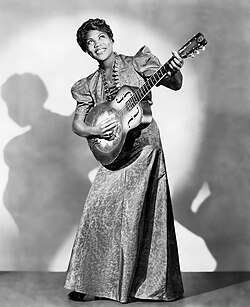
The Rise of Sister Rosetta Tharpe
In 1934, at age 19, she married Thomas Thorpe, a COGIC preacher. Although the marriage ended a few years later, she adopted a version of his surname as her professional stage name: Sister Rosetta Tharpe. In 1938, she moved to New York City, where her recording career officially began.
Breaking Commercial Barriers
Tharpe's first recordings for Decca Records in 1938, including "Rock Me," were instant hits. She became one of the first commercially successful gospel artists, though her willingness to perform in secular venues—such as Harlem's Cotton Club and Carnegie Hall—caused friction with conservative religious circles.
In 1944, she recorded "Strange Things Happening Every Day." This track is frequently cited as a precursor to rock and roll, or even the first rock and roll record, reaching No. 2 on the Billboard "race records" chart (the precursor to the R&B chart) in April 1945.
Technical Innovation and Global Influence
Tharpe was a pioneer of the electric guitar. She was among the first to employ heavy distortion, a sound that would later define electric blues and rock. Her influence extended across the Atlantic; during a 1964 European tour with Muddy Waters, her performances in cities like Manchester deeply impacted British guitar legends including Eric Clapton, Jeff Beck, and Keith Richards.
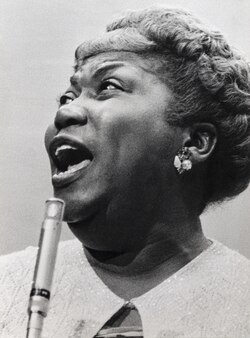
Later Years and Lasting Legacy
Throughout the 1950s, Tharpe continued to push boundaries, including a 1952 recording with Red Foley, "Have a Little Talk with Jesus," which is believed to be the first interracial duet recorded in the United States.
Her career was tragically curtailed by a stroke in 1970, and complications from diabetes led to the amputation of one of her legs. Sister Rosetta Tharpe passed away on October 9, 1973, in Philadelphia, Pennsylvania, following another stroke.
Honors and Recognition
While she was a superstar in her time, a modern resurgence of interest has solidified her place in history. Her 1944 release "Down by the Riverside" was added to the National Recording Registry of the U.S. Library of Congress in 2004. In 2007, she was inducted into the Blues Hall of Fame, and in 2018, she finally received her induction into the Rock and Roll Hall of Fame.
| Category | Details |
|---|---|
| Active Years | 1919–1973 |
| Primary Genres | Gospel, Blues, R&B, Jazz, Rock and Roll |
| Key Instruments | Vocals, Electric Guitar, Piano |
| Major Hit | "Strange Things Happening Every Day" (1944) |
| Key Influences | Elvis Presley, Little Richard, Chuck Berry, Johnny Cash |
Frequently Asked Questions
Why is Sister Rosetta Tharpe called the Godmother of Rock and Roll?
She is given this title because she blended gospel music with electric guitar distortion and a driving swing beat long before rock and roll became a recognized genre, directly influencing the founders of the movement.
What was her most significant musical innovation?
Tharpe was one of the first popular recording artists to use heavy distortion on her electric guitar, which paved the way for the development of electric blues and the distorted guitar sounds of rock music.
Which famous musicians were influenced by her?
Her style influenced a wide array of artists, including early rock stars like Elvis Presley, Little Richard, Chuck Berry, and Jerry Lee Lewis, as well as British guitarists like Eric Clapton and Keith Richards.
Was she accepted by the church community?
While she began in the Church of God in Christ, her decision to perform gospel music in secular nightclubs and alongside jazz and blues musicians led her to fall out of favor with some conservative segments of the gospel community.
When was she inducted into the Rock and Roll Hall of Fame?
Sister Rosetta Tharpe was posthumously inducted into the Rock and Roll Hall of Fame in December 2017 as an Early Influence, with the official induction occurring in 2018.