Sir: The History and Usage of the English Honorific
The term Sir is one of the most recognizable formal honorifics in the English language. Used primarily for men, it serves as a marker of status, achievement, and chivalry. While many associate the title exclusively with the British monarchy, its application spans various global regions, legal systems, and social contexts, ranging from the highest orders of knighthood to everyday classroom interactions.
Etymology and Origins
The word 'Sir' is derived from the Old French Sire (meaning "Lord"), which was introduced to England by the French-speaking Normans. The form 'Sir' first appeared in English documentation in 1297 as a title of honor for knights and, later, baronets. Its predecessor, sire, had been in use since approximately 1205 to denote knighthood and was used to address the male Sovereign starting around 1225. By the 14th century, the term had expanded in general usage to refer to a father or an important elderly man.
Key Facts
- Sir is used for men who are knights or baronets.
- Dame is the female equivalent for those holding a knighthood or baronetcy in their own right.
- Substantive knighthoods allow the use of the prefix 'Sir', whereas honorary knighthoods generally do not (unless specific national rules apply).
- In the UK, foreign titles (including papal knighthoods) cannot be prefixed as 'Sir' without a Royal Licence.
- The title is used non-honorifically in British schools and military contexts as a mark of respect.
Entitlement and Regional Usage
The Commonwealth of Nations
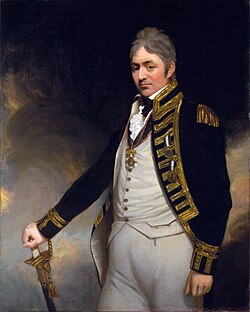
Historically, British knighthoods—such as those in the Order of the Bath or the Order of the British Empire—were imperial honours. Today, these are substantive (granting the right to use the title 'Sir') for British nationals and citizens of Commonwealth realms that have retained these systems. Many Commonwealth nations have since developed their own independent honours systems.
The distinction between substantive and honorary awards is critical. For example, while a British citizen receiving a knighthood is entitled to the style of 'Sir', a non-citizen may receive an honorary award. In 1974, Sidney Poitier was granted an honorary KBE because he resided permanently in the United States, despite his Bahamian citizenship. Furthermore, knighthoods granted by one Commonwealth realm may be viewed as foreign honours in another; in 2016, Anthony Bailey was reprimanded for using the style 'Sir' in the UK based on an honorary Antiguan knighthood.
The Philippines
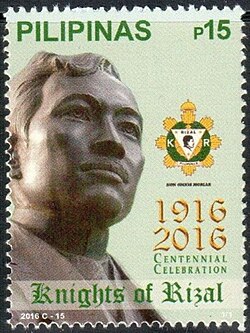
In the Philippines, the Order of Rizal allows knights to prefix their first names with 'Sir' and their wives with 'Lady'. These titles are substantive and applicable to both citizens and non-citizens. Notable recipients include former US Secretary of State Sir Henry Kissinger and former Philippine President Sir Benigno Aquino III.
India and Ireland
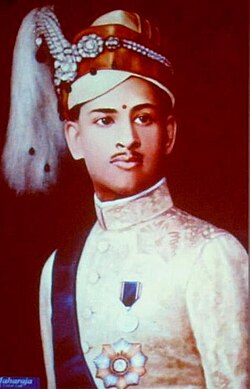
In India, the Order of the Star of India (est. 1861) and the Order of the Indian Empire (est. 1878) once granted the style of 'Sir' to high-ranking members. These became obsolete in India in 1950 and in Pakistan in 1956 upon the establishment of their republics. Similarly, the Order of St. Patrick in Ireland became dormant after the death of its last knight in 1974.
The Holy See and Non-Commonwealth Entities
The Holy See confers various orders, such as the Order of St. Gregory the Great. While lay knights may use the style 'Sir' in some contexts, they are not permitted to use the prefix in the United Kingdom without a Royal Licence, though they may use post-nominal letters. Catholic clergy invested as Knight Chaplains retain their clerical titles (e.g., Rev.) rather than using 'Sir'.
Combinations with Other Titles
Nobility and Peerage
Titles of nobility take precedence over knighthoods. Peers who are knighted are not addressed as 'Sir'. This also applies to the male heir apparent to a dukedom, marquessate, or earldom, who is styled as 'Lord'. However, male heirs of a viscount or baron who lack courtesy titles do use 'Sir' if knighted, preceded by 'The Honourable'.
Military and Academic Ranks
When combined with military ranks, the honorific follows the rank. Examples include Admiral of the Fleet Sir Bruce Fraser and Field Marshal Sir Thomas Blamey.
Educational, Military, and Social Usage
The British School System
Since the 16th century, 'Sir' and 'Miss' have been used by students to address teachers. While some view this as a necessary mark of respect and authority, critics argue it reflects outdated gender hierarchies, as 'Sir' denotes a high-status knight while 'Miss' refers to an unmarried woman.
Military and Police
In the British Armed Forces, junior ranks address male commissioned and warrant officers as 'sir'. In the Royal Canadian Mounted Police, only commissioned officers receive this address. Similarly, British police officers of the rank of Inspector or above are addressed as 'Sir'.
The Service Industry
In customer service, 'Sir' is used as a polite address for male customers. This is particularly prevalent in the Southern United States, where a 1980 study found that 80% of service interactions included 'Sir' or 'Ma'am', compared to 25% in the Northern US.
Summary of Knighthood Styles
| Recipient | Honorific | Condition/Context |
|---|---|---|
| Male Knight/Baronet | Sir | Substantive award or specific national order |
| Female Knight/Baronet | Dame | Holding the title in her own right |
| Wife of Knight/Baronet | Lady | Used with surname (e.g., Lady Fiennes) |
| Widow of Baronet | Dowager Lady / [Forename], Lady | Specific courtesy styles for widows |
| Peer/Noble | Lord | Nobility takes precedence over 'Sir' |
Frequently Asked Questions
Can a woman be called 'Sir'?
No. The female equivalent for a person holding a knighthood or baronetcy in her own right is 'Dame'.
What is the difference between a substantive and an honorary knighthood?
A substantive knighthood is granted to a citizen of the awarding country (or a qualifying Commonwealth realm), entitling them to use the prefix 'Sir'. An honorary knighthood is granted to non-citizens, who generally may not use the prefix.
Why can't knights of papal orders use 'Sir' in the UK?
The British Crown does not permit the use of foreign titles without a Royal Licence, and current policy dictates that such licences are not granted.
How is 'Sir' used in the British education system?
It is used by students as a respectful form of address for male teachers and staff, a practice dating back to the 16th century.
Do all members of the Order of Rizal use the title 'Sir'?
Yes, all knighthoods within the Order of Rizal are substantive, and the honorific may be used by all its knights, regardless of citizenship.