Sir O'Moore Creagh: The Gallant General and Victoria Cross Recipient
Sir O'Moore Creagh was a distinguished senior officer of the British Army and the British Indian Army, whose career spanned nearly five decades of imperial service. An Irish-born soldier, he is most remembered for his extraordinary bravery during the Second Anglo-Afghan War, which earned him the Victoria Cross—the highest award for gallantry in the face of the enemy available to British and Commonwealth forces.
Key Facts
- Full Name: Garrett O'Moore Creagh
- Born: April 2, 1848, in Cahirbane, County Clare, Ireland
- Highest Rank: General
- Major Award: Victoria Cross (VC)
- Top Command: Commander-in-Chief, India (1909–1914)
- Key Conflicts: Second Anglo-Afghan War and the Boxer Rebellion
Early Life and Military Beginnings
Born in 1848, Garrett O'Moore Creagh was the seventh son of Grace O'Moore and Captain James Creagh, a Royal Navy officer. He pursued a military career starting at the Royal Military College, Sandhurst. In 1866, he received his commission into the 95th (Derbyshire) Regiment of Foot.
Creagh's career soon took him abroad; he was posted to India in 1869 and transferred to the British Indian Army the following year. This transition set the stage for his long association with the Indian subcontinent, where he would eventually reach the pinnacle of military command.
Heroism in the Second Anglo-Afghan War
The defining moment of Creagh's early career occurred on April 22, 1879, during the Second Anglo-Afghan War. While serving as a captain in the Bombay Staff Corps, Creagh was tasked with protecting the village of Kam Dakka on the Kabul River with a detachment of 150 men.
Facing an overwhelming force of approximately 1,500 Mohmunds—and discovering that the local villagers had joined the enemy—Creagh was forced to retreat from the village. He established a defensive position in a nearby cemetery, where he and his men repeatedly repulsed enemy attacks using bayonet charges. Creagh held this position until 3:00 PM, when reinforcements from Dakka arrived. The enemy was eventually routed by a charge from the 10th Bengal Lancers. The Commander-in-Chief in India later noted that without Creagh's coolness and determination, his detachment would likely have been destroyed.
Rise Through the Ranks and Global Command
Following his heroic actions in Afghanistan, Creagh continued to ascend through the military hierarchy. He commanded the Merwara battalion from 1882 to 1886 and took command of the 29th (Duke of Connaught's Own) Bombay Infantry (2nd Baluch Battalion) in 1890. By 1896, he had been promoted to Assistant Quarter-master General.
Creagh's leadership was again tested during the Boxer Rebellion in China in 1900, where he commanded the Indian contingent. In July 1901, he was appointed General Officer Commanding the British Force in China, succeeding General Alfred Gaselee. His tenure in China was marked by detailed field operations, the reports of which were published in the London Gazette in 1902.
His career culminated in several high-profile appointments: he was knighted as a Knight Commander of the Order of the Bath (KCB) in 1904, promoted to General in 1907, and served as the Military Secretary to the India Office. In 1909, he succeeded Lord Kitchener as the Commander-in-Chief, India, a position he held until his retirement in 1914.
Final Years and Legacy
Even after his formal retirement, Creagh remained active during the First World War, serving as a military advisor to the Central Association of Volunteer Training Corps. He also followed in Lord Kitchener's footsteps by becoming the District Grand Master of Freemasons in the Punjab.
Sir O'Moore Creagh passed away on August 9, 1923, at the age of 75 in South Kensington, London. He is buried in East Sheen Cemetery.
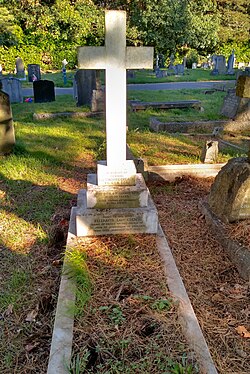
Today, his Victoria Cross is preserved and displayed at the National Army Museum in Chelsea, London.
Summary of Service and Honors
| Category | Details |
|---|---|
| Service Years | 1866–1914 |
| Primary Units | 95th (Derbyshire) Regiment of Foot; 29th Bombay Infantry |
| Major Commands | Commander-in-Chief, India; British Force in China |
| Key Decorations | Victoria Cross, GCB, GCSI, Order of the Rising Sun (Japan) |
| Family | Son: Major General Sir Michael Creagh |
Frequently Asked Questions
Why was Sir O'Moore Creagh awarded the Victoria Cross?
He was awarded the VC for his gallantry on April 22, 1879, at Kam Dakka, Afghanistan. He successfully defended a cemetery position with 150 men against an enemy force of 1,500, holding them off until reinforcements arrived.
What was his highest military rank and position?
He attained the rank of General and served as the Commander-in-Chief, India, from 1909 until his retirement in 1914.
Did Sir O'Moore Creagh serve in any other major conflicts?
Yes, in addition to the Second Anglo-Afghan War, he commanded the Indian contingent and later the overall British Force during the Boxer Rebellion in China.
Where can the public see his Victoria Cross today?
The medal is held by the National Army Museum located in Chelsea, London, England.
Who succeeded whom in the role of Commander-in-Chief, India?
Sir O'Moore Creagh succeeded Lord Kitchener as the Commander-in-Chief, India, in 1909.