Sir David Attenborough: A Legacy of Natural History and Conservation
Few individuals have shaped the global understanding of the natural world as profoundly as Sir David Attenborough. A broadcaster, natural historian, and tireless conservationist, Attenborough has spent over seven decades bringing the wonders of Earth's biodiversity into millions of homes. From his early days at the BBC to his modern role as a global voice for the planet, his career is a testament to the power of science communication.
Educated at Clare College, Cambridge, where he earned an MA, Attenborough began his professional journey in 1951. His unique ability to blend scientific accuracy with engaging storytelling has made him one of the most trusted figures in public service broadcasting.
Key Facts
- Active Years: 1951 to the present.
- Major Roles: Broadcaster, natural historian, writer, and former Controller of BBC2 (1965–1969).
- Key Contributions: Pioneered the "Life" series of documentaries and advocated for global species conservation.
- Notable Honors: Knight Bachelor (1985), Order of Merit (2005), and the Stephen Hawking Medal for Science Communication (2024).
- Conservation Impact: President of the Royal Society for Nature Conservation (1991–1996) and UN Champion of the Earth (2022).
A Career in Broadcasting and Natural History
Early Years and BBC Administration
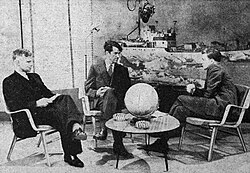
Attenborough's early career was marked by a passion for exploration, exemplified by his Zoo Quest series in the 1950s and 60s, which took him to Guiana, Paraguay, and Madagascar. Beyond the camera, he played a pivotal role in the administration of the BBC, serving as the Controller of BBC2 from 1965 to 1969, where he helped shape the channel's early identity.
The "Life" Series and Beyond
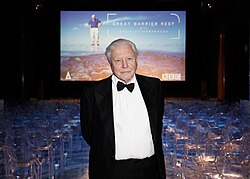
He is perhaps best known for his landmark "Life" series, beginning with Life on Earth (1979). These productions utilized groundbreaking filming techniques to document the evolution and behavior of animals and plants. His work expanded to include The Living Planet, The Private Life of Plants, and The Life of Mammals, creating a comprehensive visual encyclopedia of biological life.
Expanding Horizons: Space and Technology
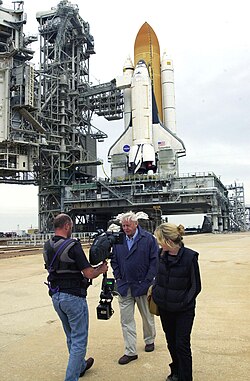
While primarily focused on Earth, Attenborough's curiosity extended to the cosmos. He has produced content exploring the possibility of life beyond our planet, bridging the gap between biology and astronomy for a general audience.
Environmental Advocacy and Conservation
In recent decades, Attenborough has transitioned from a chronicler of nature to a fierce advocate for its protection. He has used his platform to warn against the dangers of species extinction and the climate emergency, emphasizing that human population growth and excess capitalism are putting unsustainable pressure on the environment.
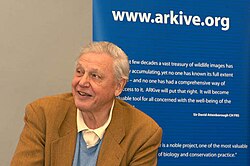
His commitment is evident in his support for initiatives like ARKive, a global project dedicated to promoting the conservation of threatened species through wildlife imagery.
Through works such as A Life on Our Planet, he has provided a "witness statement" of the decline of the natural world, while offering a vision for a sustainable future based on hope rather than fear.
Recognition and Scientific Legacy
The scientific community has recognized Attenborough's contributions not only through awards but through taxonomy. Several genera and species have been named in his honor, including the species Trigonopterus attenboroughi.

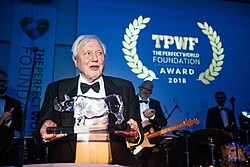
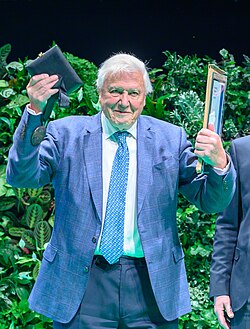
His accolades span the globe, from the Kalinga Prize for the Popularization of Science to the Indira Gandhi Peace Prize. He has also been honored by the Landscape Institute and the Perfect World Foundation for his lifetime of achievement.
| Category | Details |
|---|---|
| Education | MA from Clare College, Cambridge |
| Key Series | Life on Earth, The Living Planet, The Private Life of Plants, Blue Planet II |
| Major Awards | Knight Bachelor, Order of Merit, UN Champion of the Earth |
| Conservation Focus | Biodiversity, Climate Change, Species Extinction |
| Notable Publications | A Life on Our Planet, Adventures of a Young Naturalist |
Frequently Asked Questions
What is Sir David Attenborough's most famous documentary series?
While he has produced many, Life on Earth (1979) is widely considered his most influential work, as it laid the groundwork for the modern natural history documentary.
Has David Attenborough received any scientific honors?
Yes, he was elected a Fellow of the Royal Society (FRS) in 1983 and has had multiple species and genera named after him in recognition of his contributions to natural history.
What are his primary views on the environment?
Attenborough advocates for the urgent protection of biodiversity and the reduction of human impact on the planet, warning that current levels of consumption and population growth are unsustainable.
What role did he play at the BBC beyond presenting?
He served as the Controller of BBC2 from 1965 to 1969, where he was responsible for the administrative and creative direction of the channel.
Which international environmental awards has he won?
He was named a Champion of the Earth by the United Nations Environment Programme in 2022 and received the IUCN Phillips Memorial Medal for outstanding service in international conservation.