Singapore National Pledge: History and Significance
The National Pledge serves as a solemn oath of allegiance to the Republic of Singapore. It is a foundational expression of national identity, designed to foster unity and a shared sense of purpose among the diverse population of the city-state.
In practice, the Pledge is recited in unison by Singaporeans during significant public events. It is a staple of daily life in schools and a core tradition within the Singapore Armed Forces, as well as a highlight of the annual National Day Parade.
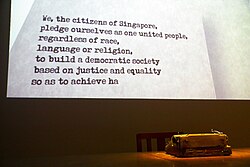
The Evolution of the Pledge
The wording of the National Pledge has evolved since its inception in 1966 to better reflect the aspirations of the nation. There are two primary versions of the text.
The February 1966 Version
The first iteration of the Pledge was introduced in February 1966. This original version focused on the act of forgetting differences to achieve a collective goal:
“We, as citizens of Singapore, pledge ourselves to forget differences of race, language or religion and become one united people; to build a democratic society where justice and equality will prevail and where we will seek happiness and progress by helping one another.”
The August 1966 Version
By August 1966, the text was refined into the current version recognized by the Constitution of Singapore. This version emphasizes unity regardless of background and explicitly mentions the prosperity of the nation:
"We, the citizens of Singapore, pledge ourselves as one united people, regardless of race, language or religion, to build a democratic society based on justice and equality so as to achieve happiness, prosperity and progress for our nation."
Key Facts
- Purpose: An oath of allegiance to the Republic of Singapore.
- Current Version: Established in August 1966 and recognized by the Constitution.
- Core Values: Justice, equality, and unity across race, language, and religion.
- Common Venues: Schools, Singapore Armed Forces, and the National Day Parade.
Comparison of Pledge Versions
| Feature | February 1966 Version | August 1966 (Current) Version |
|---|---|---|
| Approach to Diversity | "forget differences" | "regardless of race, language or religion" |
| Societal Goal | Justice and equality will prevail | Based on justice and equality |
| Desired Outcomes | Happiness and progress | Happiness, prosperity and progress |
| Focus of Benefit | Helping one another | For our nation |
Frequently Asked Questions
What is the purpose of the Singapore National Pledge?
The National Pledge is an oath of allegiance to the Republic of Singapore, intended to unite citizens regardless of their race, language, or religion.
When was the current version of the Pledge adopted?
The current version of the Pledge was adopted in August 1966 and is recognized per the Constitution of Singapore.
Where is the National Pledge typically recited?
It is commonly recited in unison at public events, specifically within schools, the Singapore Armed Forces, and during the National Day Parade.
How does the current Pledge differ from the February 1966 version?
The current version shifts from "forgetting" differences to being "regardless" of them, and it adds "prosperity" to the goals of happiness and progress for the nation.