Signal Transduction: The Molecular Mechanisms of Cellular Communication
Every action a cell takes—from dividing to producing energy—is the result of a complex conversation with its environment. This process, known as signal transduction, is the mechanism by which a chemical or physical signal is transmitted through a cell as a series of molecular events. By converting external stimuli into specific internal responses, cells can coordinate their behavior to maintain homeostasis and respond to changing conditions.
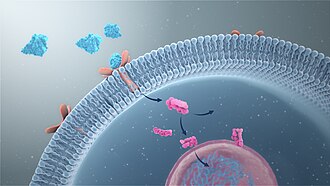
At its core, signal transduction begins when a protein, typically called a receptor (or sometimes a sensor), detects a specific stimulus. The binding of a signaling molecule, or ligand, to this receptor triggers a biochemical cascade. This cascade is a chain of biochemical events known as a signaling pathway, which carries the message from the cell surface to the interior.
Key Facts
- Signal Transduction is the process of converting an extracellular signal into a functional cellular response.
- Receptors are the primary proteins responsible for detecting external stimuli.
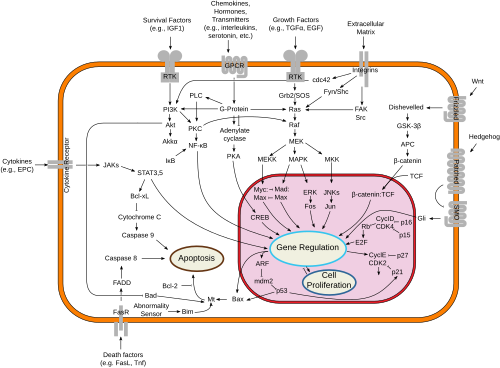
- Signaling Pathways often overlap to form complex networks, allowing for coordinated cellular responses.
- Molecular Outcomes include changes in gene transcription, translation, protein conformation, or protein localization.
- Biological Control: These processes regulate essential functions such as cell growth, proliferation, and metabolism.
The Mechanics of Cellular Signaling
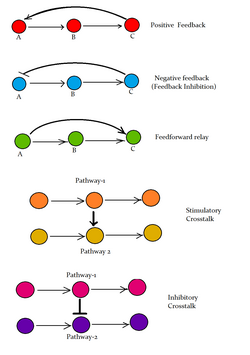
Signal transduction is not a linear path but often a sophisticated network. When multiple signaling pathways interact, they form networks that allow the cell to integrate various inputs. This combinatorial signaling ensures that the cellular response is appropriate for the specific set of stimuli received.
The final molecular responses can take several forms:
- Genetic Changes: Alterations in the transcription (DNA to RNA) or translation (RNA to protein) of genes.
- Protein Modification: Post-translational changes or conformational shifts in protein structure.
- Spatial Redistribution: Changes in the physical location of proteins within the cell.
Types of Stimuli
Cells are equipped to respond to a diverse array of triggers. These stimuli are generally categorized into chemical and physical signals:
- Ligands: Chemical signaling molecules.
- Mechanical Forces: Physical pressure or tension.
- Osmolarity: Changes in solute concentration.
- Temperature: Thermal fluctuations.
- Light: Electromagnetic radiation.
Receptors and Signal Detection
Receptors are the "gatekeepers" of the cell. Depending on the nature of the signal, different types of receptors are employed to initiate the transduction process.
Common Receptor Types
- G protein-coupled receptors (GPCRs): A large family of receptors that activate internal G proteins.
- Protein Kinases: Including Tyrosine, Serine/Threonine, and Histidine-specific kinases that modify other proteins via phosphorylation.
- Integrins: Receptors that mediate cell-matrix interactions and respond to mechanical forces.
- Toll-like receptors: Critical components of the innate immune system.
- Ligand-gated ion channels: Pores that open or close in response to ligand binding, altering ion flow.
- Intracellular receptors: Receptors located inside the cell, typically for lipid-soluble signals.
![An overview of integrin-mediated signal transduction, adapted from Hehlgens et al. (2007).[40]](/images/9f/21/9f219b377d6c647a5170fe501048617dbc5bde180cc1cbff9ab2303fb802d77e.jpg)
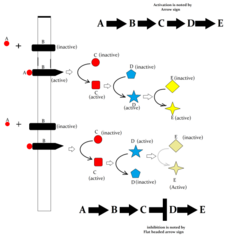
Understanding how to interpret these processes often requires specialized diagrams. In these visual representations, standard arrows typically indicate activation, while flathead arrows signify inhibition.
Second Messengers and Intracellular Cascades
Once a receptor is activated, the signal must be amplified and distributed within the cell. This is achieved through second messengers—small molecules that relay the signal from the receptor to target proteins.
Key second messengers include:
- Calcium (Ca2+): A ubiquitous signal for muscle contraction and neurotransmitter release.
- Lipid messengers: Molecules derived from cell membrane lipids.
- Nitric oxide: A gaseous signaling molecule.
- Redox signaling: Signals mediated by the oxidation-reduction state of the cell.
Cellular Responses and Outcomes
The culmination of a signal transduction pathway is a specific cellular response. These responses are generally categorized by their effect on the cell's activity:
| Response Type | Primary Function | Example Trigger |
|---|---|---|
| Stimulatory | Promotes cell growth or activity | Growth factors |
| Inhibitory | Suppresses cell activity or growth | Cell-cell contact |
| Permissive | Allows a response to occur | Cell-matrix interactions |
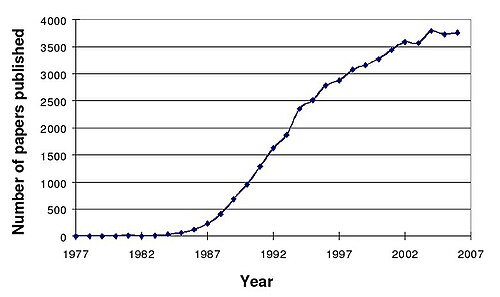
The study of these pathways has grown exponentially over the decades, as evidenced by the increasing volume of research indexed in databases like MEDLINE since 1977.
Frequently Asked Questions
What is the difference between a receptor and a ligand?
A ligand is the signaling molecule (the "key") that carries the message, while the receptor is the protein (the "lock") that detects the ligand and initiates the cellular response.
What is a biochemical cascade?
A biochemical cascade is a series of sequential reactions where the product of one reaction activates the next. This allows a small initial signal to be greatly amplified within the cell.
How do integrins differ from other receptors?
While many receptors respond to chemical ligands, integrins are specialized to respond to mechanical forces and facilitate interactions between the cell and the surrounding extracellular matrix.
What role do second messengers play?
Second messengers act as intracellular relays. They take the signal from the membrane-bound receptor and spread it throughout the cytoplasm to reach various target proteins and organelles.
Can signal transduction pathways inhibit cell growth?
Yes. While some pathways are stimulatory (like those triggered by growth factors), others are inhibitory, such as those triggered by direct cell-cell contact, which can prevent overgrowth.