Sierra Leone Intervention: The Success of Operation Palliser
In May 2000, the United Kingdom launched Operation Palliser, a decisive military intervention in Sierra Leone. What began as a limited mission to evacuate foreign nationals evolved into a comprehensive operation that stabilized a nation torn apart by civil war. This intervention is widely regarded as a success, validating the British military's capacity for high-readiness expeditionary warfare.
The crisis reached a breaking point when the Revolutionary United Front (RUF), a primary belligerent in the civil war, advanced toward the capital, Freetown. By May 6, the RUF had blocked the critical road to Lungi airport, the country's main aviation hub, threatening the safety of foreign citizens and diplomatic personnel.
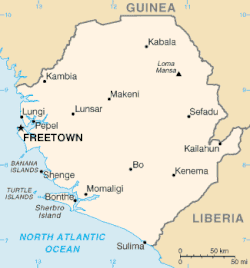
Key Facts
- Operation Palliser began on May 7, 2000, initially focusing on the evacuation of foreign citizens.
- The Revolutionary United Front (RUF) was the primary rebel force fighting the Sierra Leonean government.
- Operation Barras was a high-stakes special forces mission that rescued six British soldiers captured by the West Side Boys.
- The conflict was fueled by blood diamonds (conflict diamonds) smuggled through Liberia.
- Over 50,000 people eventually passed through the Disarmament, Demobilisation, and Reintegration (DDR) process.
The Evolution of the Mission
From Evacuation to Stabilization
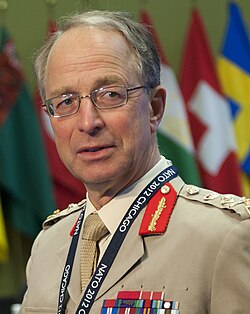
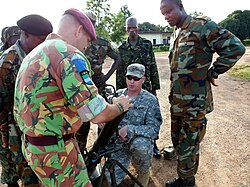
The British government initially dispatched an Operational Reconnaissance and Liaison Team (ORLT) to prepare for evacuations. While most foreign nationals left within the first 48 hours, the mandate expanded as British forces began assisting the United Nations Mission in Sierra Leone (UNAMSIL) and the Sierra Leone Army (SLA).
The first direct combat occurred on May 17, 2000, when the RUF attacked a British position near Lungi airport. The rebels were forced to retreat after a series of firefights, providing a significant psychological victory for the British forces.
Logistical Feats and Air Power
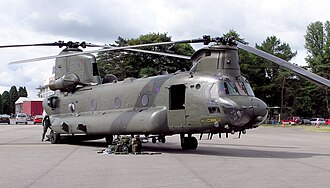
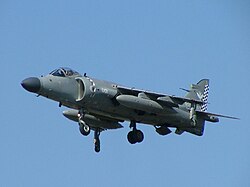
The operation required rapid deployment of diverse assets. The Royal Air Force (RAF) utilized CH-47 Chinooks for transport; notably, two Chinooks flew 3,000 miles from the UK to Freetown, marking the longest self-deployment of helicopters in British history. Additionally, Sea Harriers provided essential reconnaissance and reassurance.
Overcoming Crisis: Operation Barras
As the British began training the SLA to professionalize the national military, a crisis emerged when a patrol was captured by the West Side Boys, a rogue militia. While five soldiers were released through negotiations, six remained captive.
Three weeks later, British special forces executed Operation Barras, a daring rescue mission that freed the remaining soldiers. This success was critical; analysts suggest that a failure in this mission might have forced a total British withdrawal from the country.
Ending the Conflict and the Role of Diamonds
The RUF's ability to wage war was heavily dependent on the exploitation of diamonds, which were smuggled into Liberia under the leadership of Charles Taylor. These stones became known as blood diamonds due to their role in funding the violence.
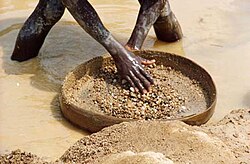
Through a combination of military pressure, political negotiations, and UN sanctions on Liberian diamonds, the RUF was forced into a ceasefire. This led to the DDR (Disarmament, Demobilisation, and Reintegration) process, which saw the disarmament of over 50,000 combatants by March 2002.
Long-term Impact and Legacy
The intervention was a cornerstone of Prime Minister Tony Blair's foreign policy, emphasizing the need for high-readiness forces. The success of the mission led to the creation of the Special Forces Support Group (SFSG) and influenced the development of European Union Battlegroups.

British involvement continued long after the main combat operations ended. The UK provided the largest contingent to the International Military Assistance and Training Team (IMATT), helping to merge various forces into the Republic of Sierra Leone Armed Forces in 2002.
| Operation Name | Primary Objective | Key Outcome |
|---|---|---|
| Operation Palliser | Evacuation and Stabilization | Secured Lungi airport; deterred RUF advance. |
| Operation Barras | Hostage Rescue | Rescued 6 soldiers from West Side Boys. |
| Operation Basilica | SLA Training | Trained ~8,500 SLA personnel in professional warfare. |
| DDR Process | Disarmament | Over 50,000 combatants disarmed by 2002. |
Frequently Asked Questions
What was the primary goal of Operation Palliser?
Initially, the goal was the non-combatant evacuation of foreign citizens from Freetown. However, it expanded to support UN peacekeepers and the Sierra Leone Army to stabilize the country.
What are "blood diamonds" in the context of this conflict?
Blood diamonds are diamonds mined in war zones and sold to fund military activity. In Sierra Leone, the RUF smuggled diamonds through Liberia to finance their insurgency.
Who was Foday Sankoh?
Foday Sankoh was the leader of the Revolutionary United Front (RUF). His capture by Sierra Leonean forces on May 17, 2000, created a power vacuum that weakened the rebel movement.
How did the British military help the Sierra Leone Army (SLA)?
Through Operation Basilica and the IMATT, British forces provided infantry training, instruction on the Geneva Convention, and advice on restructuring the military into a unified command.
What was the significance of Operation Barras?
Operation Barras was a special forces mission to rescue British soldiers captured by the West Side Boys. Its success restored confidence in the mission and prevented a potential political withdrawal from Sierra Leone.