Sibling Rivalry in Religion, Folklore, and Popular Culture
Sibling rivalry—the competition and conflict between brothers and sisters—is a universal human experience. From the earliest religious texts to modern cinema and celebrity news, the tension between siblings often serves as a powerful catalyst for drama, tragedy, and moral lessons. Whether driven by jealousy, a struggle for inheritance, or a quest for parental affection, these dynamics reflect deep-seated psychological struggles that resonate across cultures.
Key Facts
- Religious Roots: Early texts like the Bible and Qur'an use sibling conflict (e.g., Cain and Abel) to illustrate themes of jealousy and morality.
- Folklore Patterns: The Aarne-Thompson-Uther (ATU) Index categorizes numerous fairy tales where sibling rivalry drives the plot, often involving a "diligent" sibling and a "lazy" or "cruel" one.
- Literary Tropes: From Shakespeare to George R.R. Martin, writers use sibling antagonism to create political instability and personal tragedy.
- Real-World Impact: High-profile rivalries in sports, music, and politics demonstrate that these tensions persist into adulthood.
Sibling Conflict in Religion and Mythology
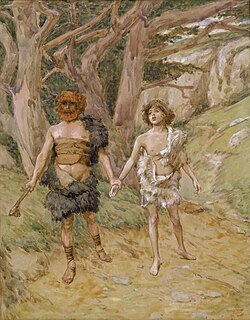
Some of the most enduring stories of sibling rivalry are found in sacred texts and ancient myths. In the Book of Genesis (also present in the Qur'an), the story of Cain and Abel depicts how jealousy over divine favor can lead to the first act of murder. Other biblical examples include Esau's jealousy over Jacob's blessing, the competition between sisters Leah and Rachel for Jacob's love, and the brothers who sold Joseph into slavery.
Beyond the Bible, mythology offers similar narratives. The legend of Romulus and Remus describes twin brothers fighting for control over the founding of Rome, a struggle that ended with Romulus killing Remus.
Patterns in Folk and Fairy Tales
Fairy tales frequently employ sibling rivalry as a central plot device. Many of these stories are categorized by the Aarne-Thompson-Uther (ATU) Index, a system used to classify folktales by their narrative structures. In these tales, jealousy often escalates to betrayal or attempted murder.
Common ATU Tale Types
- The Betrayed Hero: In ATU 301 ("The Three Stolen Princesses"), brothers trap their powerful sibling in a subterranean realm by cutting a rescue rope.
- The Moral Contrast: ATU 480 ("The Kind and Unkind Girls") pits a diligent sibling against a lazy one, with the former rewarded by a supernatural entity and the latter punished.
- The Underestimated Sibling: In ATU 530 ("The Princess on the Glass Hill") and ATU 550 ("The Golden Bird"), older brothers dismiss their youngest sibling as a "fool," only for the youngest to succeed where they failed.
- The Cruel Family: ATU 510A ("Cinderella") and ATU 511 ("One-Eye, Two-Eyes, and Three-Eyes") focus on the maltreatment of a sibling by their family or step-siblings.
- The Fatal Secret: ATU 780 ("The Singing Bone") involves a sibling murder where a musical instrument made from the victim's bone reveals the crime.
Sibling Rivalry in Literature and Media
Literature often uses sibling conflict to explore power and identity. William Shakespeare frequently utilized this theme: King Lear shows a father provoking rivalry among his daughters, while Richard III features a protagonist driven by rivalry with King Edward. Other examples include the antagonism between Orlando and Oliver in As You Like It and the friction between Kate and Bianca in The Taming of the Shrew.
Modern literature continues this trend. John Steinbeck's East of Eden mirrors the Cain and Abel narrative through the characters Cal and Aron Trask. In George R.R. Martin's A Song of Ice and Fire, the struggle for the Iron Throne is epitomized by the conflict between Stannis and Renly Baratheon, as well as the "Dance of the Dragons" between Rhaenyra Targaryen and Aegon II Targaryen.
In film and television, these themes are adapted to reflect different life stages. Child characters often compete for parental affection or struggle with the arrival of a new baby. Adult rivalries are often portrayed in sitcoms for comic effect or in crime dramas where professional or personal jealousy turns fatal. Notable cinematic explorations include the 1975 film Deewar and the 2016 film Kapoor & Sons.
Real-Life Examples of Public Rivalries
The media often highlights sibling tensions among famous figures, particularly those in the same profession. In sports, the Manning brothers (Peyton and Eli) and the Williams sisters (Venus and Serena) have been frequently compared. In music, the turbulent relationships of Liam and Noel Gallagher (Oasis) and Ray and Dave Davies (The Kinks) are well-documented.
Personal fallouts have also occurred in the arts and politics. Actresses Olivia de Havilland and Joan Fontaine stopped speaking in 1975, and the Andrews Sisters experienced severe personal clashes despite their professional success. In politics, the 2010 Labour Party leadership election created a strained relationship between Ed and David Miliband, while journalists Christopher and Peter Hitchens had public disagreements over religion and politics.
| Domain | Key Examples | Primary Driver |
|---|---|---|
| Religion/Myth | Cain & Abel, Romulus & Remus | Divine favor, Power |
| Folklore (ATU) | Cinderella, The Golden Bird | Jealousy, Moral disparity |
| Literature | King Lear, A Song of Ice and Fire | Inheritance, Political control |
| Real Life | The Gallagher brothers, The Williams sisters | Professional competition, Personal views |
Frequently Asked Questions
What is the Aarne-Thompson-Uther Index?
The Aarne-Thompson-Uther (ATU) Index is a classification system used by folklorists to categorize folktales based on their plot structures and recurring motifs, such as sibling rivalry.
How does sibling rivalry manifest in Shakespeare's plays?
Shakespeare uses it to drive plot and character motivation, such as the political rivalry in Richard III or the familial tension between the daughters of King Lear.
Are there examples of sibling rivalry in modern fantasy literature?
Yes, in A Song of Ice and Fire, the conflict between Stannis and Renly Baratheon and the war between Rhaenyra and Aegon II Targaryen are central to the story's political struggle.
Does sibling rivalry always lead to negative outcomes in folklore?
Not always. While some tales end in murder, others, like "The Princess on the Glass Hill," show the "foolish" youngest sibling eventually succeeding and overcoming the disdain of their older brothers.
Which real-life siblings are famous for their professional rivalries?
Notable examples include tennis players Venus and Serena Williams, football players Peyton and Eli Manning, and musicians Liam and Noel Gallagher.