Shinbundang Line: Seoul's High-Speed Driverless Metro
The Shinbundang Line, also known as the DX Line (Dynamic Express Line), is a cutting-edge commuter rail system within the Seoul Metropolitan Subway network. Spanning 33.4 km (20.8 mi), it serves as a vital artery connecting the bustling districts of Sinsa and Gwanggyo. Renowned for its efficiency, it is the fastest subway line in South Korea, utilizing next-generation rolling stock capable of speeds exceeding 90 km/h (56 mph).
As the fifth subway system globally to operate completely driverless, the Shinbundang Line represents a leap in urban transit technology, reducing travel time between its termini to just 42 minutes.
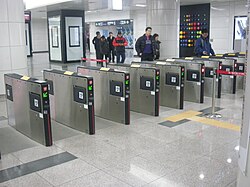
Key Facts
- Total Length: 33.4 km (20.8 mi).
- Termini: Sinsa Station and Gwanggyo Station.
- Operation: Fully driverless (automated).
- Top Speed: Over 90 km/h (56 mph).
- Technology: Communications-Based Train Control (CBTC).
- Number of Stations: 16 operational stations.
Development and Expansion Phases
The line was developed in stages to address the growing traffic demands between central Seoul and the residential hubs of Gyeonggi-do.
Phase 1: The Foundation
Construction began in mid-2005 and concluded in October 2011. This initial 17.3 km stretch was designed to alleviate traffic from inner Seoul to the residential area of Bundang. Despite a delay caused by severe flooding in July 2011, the line officially opened on October 28, 2011, with a total public and private investment of approximately 1.169 trillion won.
Phase 2: Southern Extension
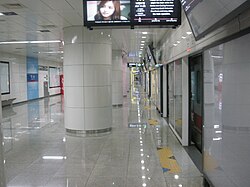
Opened on January 30, 2016, Phase 2 extended the line south to serve Suji-gu in Yongin and Gwanggyo New Town in Suwon. This phase was critical for residents of Suji-gu, an area that developed organically with large apartment complexes and suffered from heavy road congestion. A notable feature of this phase is the Gwanggyo Jungang (Ajou Univ.) station, which includes an underground bus transfer station with screen doors for seamless transit.
Phase 3 and Future Extensions
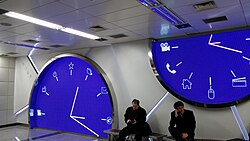
Phase 3 focused on northern expansion. The section from Gangnam to Sinsa opened on May 28, 2022. Further extension from Sinsa to Yongsan is planned, though it is expected to open no earlier than 2027 due to complexities involving the Yongsan Garrison and potential track sharing with the GTX A line.
Additionally, Phase 4 is planned to extend the line southwest to Hwaseo and Homaesil stations in Suwon, with an expected opening date no earlier than 2027. There have also been proposals to push the line even further north toward Gwanghwamun and Gyeongbokgung stations to better serve the central business district.
Technical Specifications and Operation
The Shinbundang Line employs Communications-Based Train Control (CBTC), a state-of-the-art signaling system that uses two-way digital radio communication between trains and wayside equipment. This ensures high reliability and allows for tight headways.
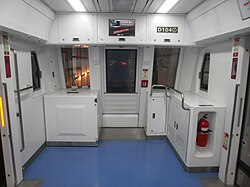
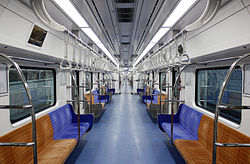
Trains typically run every 5 minutes during peak hours and every 8 minutes during off-peak periods. While platforms are designed to accommodate 10-car trains (200 meters), the system currently utilizes 6-car trains built by Hyundai Rotem.
Service Hours
From Gangnam station, services operate from 05:30 until 24:50 on weekdays, and until 23:48 on weekends and public holidays. It is important to note that the last trains to Gwanggyo depart earlier (24:26 on weekdays), with subsequent trains terminating at Jeongja station.
Route and Station Overview
The line connects key hubs across Seoul, Seongnam, Yongin, and Suwon.
| Station Number | Station Name | Location | Key Transfer/Feature |
|---|---|---|---|
| D04 | Sinsa | Seoul | Northern Terminus |
| D07 | Gangnam | Seoul | Line 2 Transfer |
| D08 | Yangjae | Seoul | Line 3 Transfer |
| D11 | Pangyo | Seongnam | Jungbunaeryuk KTX |
| D12 | Jeongja | Seongnam | Bundang Line Transfer |
| D18 | Gwanggyo Jungang | Suwon | Underground Bus Transfer |
| D19 | Gwanggyo | Suwon | Southern Terminus |
Frequently Asked Questions
Why is the fare for the Shinbundang Line higher than other Seoul subway lines?
The Shinbundang Line utilizes a different fare structure that includes zone-based surcharges in addition to the regular Seoul subway fares. This is partly due to the involvement of different private investors across its various construction phases.
Is the Shinbundang Line really driverless?
Yes, it is completely automated and driverless. It was the second such line to open in South Korea and the fifth in the world, featuring a front window that allows passengers to view the tracks.
How fast is the Shinbundang Line?
It is the fastest subway line in South Korea, with trains capable of traveling at speeds over 90 km/h (56 mph), allowing a trip from Sinsa to Gwanggyo in approximately 42 minutes.
When will the extension to Yongsan be completed?
While the extension to Sinsa is already open, the further stretch to Yongsan is currently delayed and is expected to open no earlier than 2027.
What is CBTC technology?
CBTC stands for Communications-Based Train Control. It is a signaling system that uses high-resolution location data and digital radio communication to manage train movements safely and efficiently, allowing for more frequent train arrivals.