Seosan: A Journey Through South Korea's Historic West Coast Hub
Located at the northwestern edge of South Chungcheong Province, Seosan serves as a vital transportation hub on Korea's west coast. While it may appear as a quiet municipal city, it acts as a gateway to a wealth of historical treasures and serene rural landscapes. Situated just 125 km south of Seoul, Seosan offers a unique opportunity for travelers to escape the bustling crowds of major metropolitan centers and immerse themselves in authentic Korean heritage.
The city is strategically positioned where major expressways and national highways intersect, making it easily accessible for those exploring the western region of the country. Beyond its logistical importance, Seosan is a place where ancient Buddhist art, Joseon-era military architecture, and poignant religious history converge.
Key Facts
- Location: Northwestern South Chungcheong Province, South Korea.
- Population: Approximately 175,144 (as of September 2024).
- Major Attractions: Haemieupseong Fortress, Yeonghyeon-ri Rock-carved Buddha Triad, and Gaesimsa Temple.
- Transportation: Served by Express and Intercity buses; nearest railway is Hongseong Station.
- Local Specialties: Oysters, garlic, gegukji (crab and kimchi broth), and marinated blue crab.
Historical and Cultural Landmarks
Haemieupseong Fortress and Yeosutgol Holy Ground
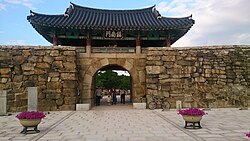
One of the most significant sites in the region is Haemieupseong Fortress. Completed in 1491 during the reign of King Seongjong, it is a rare example of a Joseon-era fortress built on a flat plain rather than a mountain. Historically, it served as a military command post to defend against pirates along the western coast. While much of the structure was modified during urban expansion in the 20th century, a major restoration in 1973 preserved its historical integrity, including the original South Gate.
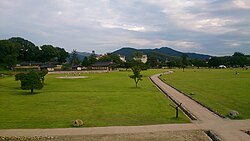
The area holds deep spiritual significance for Korean Catholics. Nearby, the Yeosutgol Holy Ground marks the site of the 1866 Byeongin Persecutions. This memorial site honors those who were martyred for their faith and serves as a major pilgrimage destination.
Ancient Buddhist Art and Temples
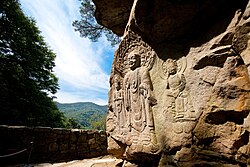
For lovers of ancient art, the Yeonghyeon-ri Rock-carved Buddha Triad is an essential stop. Dating back to the late 6th or early 7th century during the Baekje period, this National Treasure features a Buddha standing on a lotus leaf, flanked by two bodhisattvas. To see the carving in its best light, visitors should arrive in the morning when the rising sun illuminates the triad.
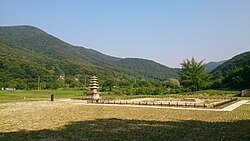
Just 500 meters from the Buddha triad lies Bowonsa, a temple site from the Unified Silla period. It features an iconic Baekje-style pagoda and serves as a tranquil space for meditation. For those seeking a more active experience, Gaesimsa temple offers a glimpse into 15th-century wooden architecture. It houses a 14th-century Amitabha Buddha statue and a 15th-century hanging mural, both designated as National Treasures.
Hikers can connect these sites via the Aramegil Hiking Trails, which link Gaesimsa to Bowonsa and Yeonghyeon-ri through a scenic 90 to 120-minute trek.
Geography and Climate
Seosan experiences a humid subtropical/continental climate. Spring brings mild temperatures but is often accompanied by hwangsa (Asian Dust) blowing from the mainland, leading locals to wear face masks. Summers are characterized by a three-week monsoon season with heavy rainfall, while winters are generally mild with occasional snow from late November through early March.
| Metric | Value |
|---|---|
| Average Temperature | 11.8 °C (53.2 °F) |
| Annual Precipitation | 1,253.9 mm (49.37 in) |
| Annual Sunshine Hours | 2,224.8 hours |
| Average Relative Humidity | 73.8% |
City Life and Infrastructure
Transportation and Education
While Seosan lacks a direct railway station, it is well-connected by bus. Express buses to Seoul's Gangnam Terminal run every half hour, with travel times ranging from 90 minutes to 2.5 hours depending on traffic. For higher education, Hanseo University provides diverse programs, including aviation and flight training, as well as chiropractic and engineering disciplines.
Sports and Local Flavors
Sports enthusiasts can visit the Seosan Baseball Stadium, which serves as the second team stadium for the Hanwha Eagles. After exploring the city, visitors should sample local delicacies. Seosan is famous for its fresh oysters and garlic, and the signature dish gegukji—a savory, spicy broth made with crab meat and kimchi.
Frequently Asked Questions
How do I get to Haemieupseong Fortress from Seosan city center?
The fortress is approximately 12 km from the city. You can reach it in about 15 minutes by car or local bus, or enjoy a 45-minute bicycle ride.
What is the best time of day to visit the Yeonghyeon-ri Rock-carved Buddha Triad?
The carving is best viewed in the morning, as the rising sun provides the ideal illumination to see the details of the triad.
Is there a train station in Seosan?
No, Seosan does not have its own railway station. The nearest station is Hongseong Station on the Janghang Line, located about 40 km south of the city.
What should I prepare for when visiting in the spring?
While the spring scenery is beautiful, you should be prepared for hwangsa (Asian Dust). It is common for residents to wear face masks during this season.
What are the must-try local foods in Seosan?
You should try gegukji (a crab and kimchi broth), marinated blue crab with soybean sauce, and local oysters and garlic.