Seongnam FC: A Legacy of Dominance in South Korean Football
Seongnam FC (Seongnam Simin Peuro Chukgudan) stands as one of the most decorated professional football clubs in South Korea and the wider Asian Football Confederation. Currently competing in K League 2, the second tier of the national system, the club carries a storied history of success, including seven K League 1 titles and two AFC Champions League trophies. Its historical significance is further cemented by its ranking as the fifth-best Asian club of the 20th century by the IFFHS.
Key Facts
- Founded: March 18, 1989 (originally as Ilhwa Chunma).
- Home Ground: Tancheon Stadium (Capacity: 16,146).
- Major Honors: 7 K League 1 titles, 2 AFC Champions League titles, and 3 Korean FA Cups.
- Nickname: Kkachi (The Magpies).
- Ownership: Seongnam City Council.
- Current League: K League 2.
The Ilhwa Chunma Era (1989–2013)
The club's origins date back to 1975, when Sun Myung Moon of the Tongil Group sought to establish a professional team. After facing initial hurdles with the Korea Football Association (KFA), the club was officially founded on March 18, 1989, as Ilhwa Chunma. Under the leadership of head coach Park Jong-hwan, the club quickly became a powerhouse.
Early success arrived rapidly. By 1992, the club won its first League Cup, followed by a dominant run of three consecutive league titles from 1993 to 1995. Even when the league format was altered in 1995 to prevent a third straight title, Ilhwa Chunma prevailed.
Transition and Relocation
Following a period of decline in the late 1990s—marked by the departure of key players like goalkeeper Valeri Sarychev—the club experienced a slump, finishing last in the league for two consecutive seasons (1998 and 1999). However, they managed to secure the 1999 Korean FA Cup title.
In 2000, the club relocated to the satellite city of Seongnam and was renamed Seongnam Ilhwa Chunma. This move sparked a golden era, with the club winning three more consecutive league titles between 2001 and 2003. They also captured the A3 Champions Cup in 2004.

Continental Glory
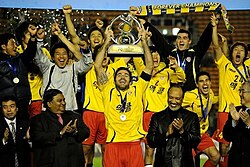
Under manager Kim Hak-bum, the club achieved a record-breaking seventh K League title in 2006. The club's international prestige peaked in 2010 under manager Shin Tae-yong, when they won the AFC Champions League by defeating Zob Ahan 3-1 in the final. This victory led to a fourth-place finish in the 2010 FIFA Club World Cup.
The Seongnam FC Era (2014–Present)
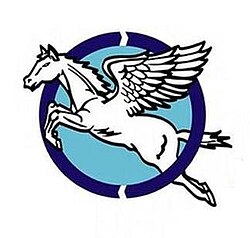
In October 2013, the Seongnam City Council took over the club from Ilhwa Sports, rebranding it as Seongnam FC. This transition brought significant identity changes: the club's symbol shifted from the cheonma (winged horse) to the magpie, and the team colors changed from yellow to black.
The modern era has been more volatile. After a period of stability, the club suffered its first-ever relegation to the second division in 2016. Although they secured a quick promotion back to the first division under manager Nam Ki-il, they were relegated again in 2022. As of the 2025 season, the club continues to compete in K League 2.
Stadium and Training Facilities
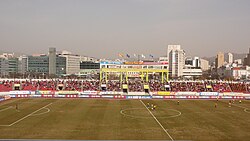
Since 2005, the club has played at Tancheon Stadium in Yatap-dong. During the 2000s, the venue was nicknamed the "Tancheon Fortress" due to the club's formidable home record in continental competitions.
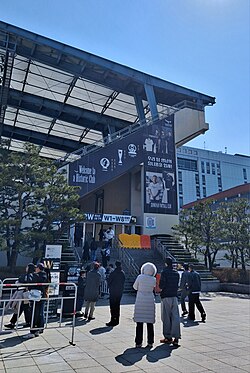
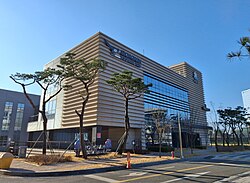
To support its athletic development, the club opened the Seongnam Football Center in December 2021. Built at a cost of 26 billion won, this state-of-the-art facility in Jeongja-dong features a natural grass field, medical facilities, and a physical therapy room.
Supporters and Culture
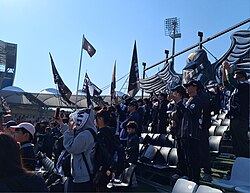
The club maintains a passionate fan base, including the Black List supporters' group, who occupy the Black Zone stand at Tancheon Stadium, contributing to the intense atmosphere during home matches.
Club Overview Summary
| Category | Details |
|---|---|
| Full Name | Seongnam Football Club (성남시민프로축구단) |
| Founded | March 18, 1989 |
| Current League | K League 2 |
| Stadium | Tancheon Stadium |
| Capacity | 16,146 |
| Major Titles | 7 K League 1, 2 AFC Champions League, 3 FA Cups |
| Current Manager | Jeon Kyung-jun |
Frequently Asked Questions
Why did the club change its name from Ilhwa Chunma to Seongnam FC?
The change occurred in 2013 when the Seongnam City Council took over ownership of the club from Ilhwa Sports, transitioning it into a city-owned professional club.
What is the significance of the magpie symbol?
The magpie (Kkachi) was adopted as the club's symbol during the rebranding to Seongnam FC because it is the official symbol of Seongnam City.
How many times has Seongnam FC won the K League 1?
The club has won the K League 1 title a record seven times (1993, 1994, 1995, 2001, 2002, 2003, and 2006).
What is the "Tancheon Fortress"?
This is the nickname given to Tancheon Stadium during the 2000s, reflecting the club's strong and successful home record during their AFC Champions League campaigns.
Has the club ever played outside of Seongnam?
Yes, the club was originally based in Seoul and later moved to Cheonan (as Cheonan Ilhwa Chunma) before finally relocating to Seongnam in 2000.