Seminole History: The Resilience of Florida's Unconquered Tribe
The story of the Seminole people is one of adaptation, survival, and an unwavering spirit of independence. Emerging from a blend of diverse Indigenous cultures and escaped enslaved people, the Seminole constructed a unique identity in the challenging landscapes of Florida. Their journey from a collection of refugees to a unified nation is a testament to their ability to navigate the pressures of European colonization and American expansion.
Origins and the Process of Ethnogenesis
Long before the arrival of Europeans in the early 1500s, Florida was home to various Indigenous cultures, including the Apalachee, Timucua, and Calusa. However, the introduction of Eurasian infectious diseases and conflict with Spanish colonists caused these populations to decline drastically. By the early 1700s, much of the region was sparsely populated, leaving a vacuum that attracted new arrivals.
During the 18th century, a stream of Muscogee Creek people began migrating into the Florida panhandle to escape English colonists to the north. They were joined by other refugees, such as the Yuchi and Yamasee, as well as bands of Choctaw and Chickasaw. Alongside these Indigenous groups, African Americans escaping slavery in the Southern Colonies also sought refuge in the Florida wilderness.
Through a process of ethnogenesis—the creation of a new, distinct ethnic identity—these diverse groups intermingled to form the Seminole. The name is derived from the Mvskoke' word simano-li, an adaptation of the Spanish cimarrón, meaning "wild" or "runaway."
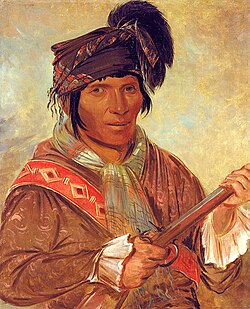
Language and Culture
The unified Seminole people spoke two primary languages from the Muskogean family: Creek and Mikasuki (a dialect of Hitchiti). While Mikasuki remained a traditional language, Creek became the dominant tongue for social and political discourse, particularly during high-level negotiations.
The Rise of the Seminole Nation (1700s–1821)
As the Seminole established themselves, they developed a thriving trade network and a sophisticated political structure. They were led by a dynasty of chiefs from the Alachua chiefdom, founded by Cowkeeper. Micanopy later served as the principal chief from 1825 until 1849.
A critical component of this society was the Black Seminoles. These were escaped enslaved African Americans who settled near Seminole towns, paying tribute to the tribe while maintaining their own Gullah culture. This alliance infuriated Southern planters, as Florida became a sanctuary for those fleeing bondage.
Conflict and the Seminole Wars
Tensions escalated as the United States sought to recapture escaped slaves and acquire more land. The First Seminole War (1817–1818), led by General Andrew Jackson, resulted in effective U.S. control of the Florida panhandle. This was formalized in 1821 via the Adams-Onís Treaty, through which Spain ceded Florida to the United States.
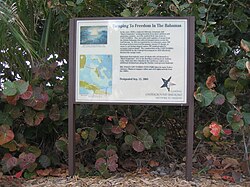
Following the acquisition, the U.S. government pressured the Seminole to relocate. The Treaty of Camp Moultrie (1823) seized 24 million acres of northern Florida, forcing the tribe into a much smaller reservation in the Everglades. Meanwhile, many Black Seminoles escaped from Cape Florida to the Bahamas, establishing the village of Red Bays on Andros Island.
The Second Seminole War
The conflict reached a peak during the Second Seminole War (1835–1842). Led by the warrior Osceola, a force of approximately 1,400 warriors—including 800 Black Seminole allies—fought against a U.S. Army that peaked at 9,000 troops. The Seminole utilized guerrilla tactics, using the dense Everglades for protection and ambush.
Despite their resilience, the war ended in 1842 after a decade of fighting and a U.S. expenditure of roughly $40 million. Approximately 3,000 Seminoles and 800 Black Seminoles were forcibly exiled to the Indian Territory in modern-day Oklahoma.
The Unconquered Legacy
Following the Third Seminole War (1855–1858), a small group of roughly 200 survivors retreated deep into the Everglades. These individuals never surrendered to the U.S. government. Because of this, the Florida Seminoles maintain that they are the only tribe in America that never signed a formal peace treaty with the United States.
Key Facts
- Ethnogenesis: The Seminole identity formed from a mix of Lower Creeks, Yuchi, Choctaw, Chickasaw, and escaped African Americans.
- Language: The tribe historically utilized both Creek and Mikasuki languages.
- Black Seminoles: Escaped slaves who formed strategic alliances with the Seminole and maintained Gullah cultural traits.
- The Everglades: The geography of southern Florida was essential for the tribe's guerrilla warfare and eventual survival.
- Unconquered Status: A remnant of the tribe never surrendered or signed a peace treaty with the U.S. government.
| Event/Treaty | Year(s) | Key Outcome |
|---|---|---|
| First Seminole War | 1817–1818 | U.S. gained control of the Florida panhandle. |
| Adams-Onís Treaty | 1821 | Spain ceded Florida to the United States. |
| Treaty of Camp Moultrie | 1823 | U.S. seized 24 million acres in northern Florida. |
| Second Seminole War | 1835–1842 | Forced removal of thousands to Indian Territory. |
| Third Seminole War | 1855–1858 | Final remnants retreated into the Everglades. |
Frequently Asked Questions
Who were the Black Seminoles?
The Black Seminoles were escaped African Americans from Southern plantations who settled near Seminole towns. They formed a symbiotic relationship with the tribe, paying tribute and fighting as allies, while preserving elements of their Gullah culture.
What does the word "Seminole" mean?
The name comes from the Mvskoke' word simano-li, which is an adaptation of the Spanish word cimarrón, meaning "wild" or "runaway." It essentially referred to them as "wild men."
Who was Osceola?
Osceola was a prominent Seminole leader who led the resistance during the Second Seminole War. He is remembered for using guerrilla tactics in the Everglades before being captured under a flag of truce in 1837.
Why are the Seminoles called "unconquered"?
They are called unconquered because a small group of survivors retreated so deep into the Everglades that the U.S. military could not remove them, and they never signed a formal peace treaty with the United States.
Where did the exiled Seminoles go?
The majority of the tribe, including approximately 3,000 Seminoles and 800 Black Seminoles, were forcibly relocated to the Indian Territory, which is now the state of Oklahoma.