Selim I: The Resolute Sultan Who Expanded the Ottoman Empire
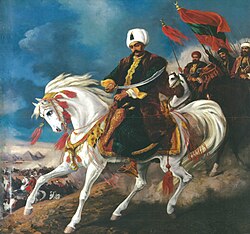
Known to history as Selim the Grim or Selim the Resolute (Turkish: Yavuz Sultan Selim), Selim I was the Sultan of the Ottoman Empire from 1512 to 1520. Though his reign lasted only eight years, it was a period of unprecedented territorial growth. By the time of his death, Selim had increased the size of the empire by seventy percent, bringing its total area to approximately 3.4 million square kilometers.
His legacy is defined by a strategic shift in Ottoman focus, moving away from European frontiers to consolidate power in the Middle East and North Africa. Through decisive military campaigns, he dismantled the Mamluk Sultanate and checked the rise of the Safavid Empire, fundamentally altering the geopolitical landscape of the Islamic world.
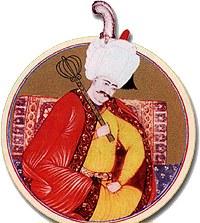
Key Facts
- Reign: 24 April 1512 – 22 September 1520.
- Territorial Growth: Expanded the empire by 70% in just eight years.
- Major Conquests: Annexed the Mamluk Sultanate, including Egypt, the Levant, and the Hejaz.
- Religious Title: Became the Custodian of the Two Holy Mosques (Mecca and Medina) and claimed the Ottoman Caliphate.
- Successor: His son, Suleiman I (Suleiman the Magnificent).
Early Life and Rise to Power
Selim was born on 10 October 1470 in Amasya to Sultan Bayezid II and Ayşe Gülbahar Hatun. His early years were spent preparing for leadership; at age nine, he was sent to Istanbul for circumcision, and by 1487, his father appointed him the Prince-Governor of the Trebizond Sanjak (administrative district).
During his tenure in Trebizond, Selim proved his military capabilities. In 1505, he successfully repelled a Safavid army of 3,000 men with a force of only 450, chasing the enemy back to Erzincan. He further extended Ottoman influence by invading western Georgia in 1508, capturing the cities of Imereti and Guria.
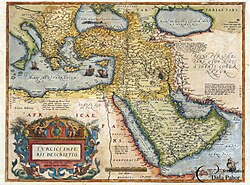
The Conquest of the Middle East
The Conflict with the Safavid Empire
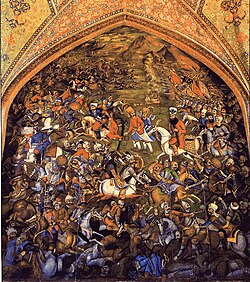
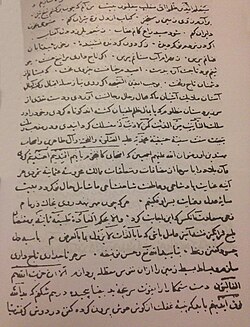
In 1514, Selim turned his attention to the Safavid Empire to halt the spread of Shiism into Ottoman territories. This conflict was marked by intense ideological rivalry and belligerent correspondence between Selim and Shah Ismail I. To secure his rear, Selim ordered the massacre of 50,000 Alevis, whom he viewed as internal enemies.
The campaign culminated in the capture of the Safavid capital, Tabriz, on 7 September 1514. While the Ottomans annexed Eastern Anatolia and Upper Mesopotamia, internal discontent among the Janissaries (the elite infantry corps) prevented Selim from pushing deeper into Persian territory.
The Fall of the Mamluks
Following his victory over the Safavids, Selim targeted the Mamluk Sultanate of Egypt. The Mamluks were defeated in two primary engagements: the Battle of Marj Dabiq on 24 August 1516 and the Battle of Ridaniya on 22 January 1517.
These victories led to the total annexation of the Mamluk territories, spanning from Syria and Palestine to Egypt and the Arabian Peninsula. This conquest granted the Ottomans control over the holy cities of Mecca and Medina. In a gesture of piety, Selim adopted the title Khādimü'l-Ḥaremeyn, meaning "The Servant of the Two Holy Cities," rather than "The Ruler."
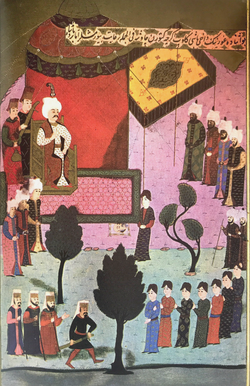
The final resistance led by Tumanbay ended in March 1517. After a series of clashes, Tumanbay was captured and executed on 13 April 1517 at the Bab Zuweila in Cairo.
The Caliphate and Later Years
With the fall of the Mamluks, Selim claimed the title of Caliph (Amir al-Mu'minin), the spiritual leader of the Muslim community, succeeding Al-Mutawakkil III. This move solidified the Ottoman Sultan's role as the preeminent leader of the Sunni Islamic world.
Selim's personal life included two known consorts: Hafsa Hatun, the mother of Suleiman I, and Ayşe Hatun. He fathered at least six sons and nine daughters, including the future Suleiman the Magnificent.
Death and Legacy
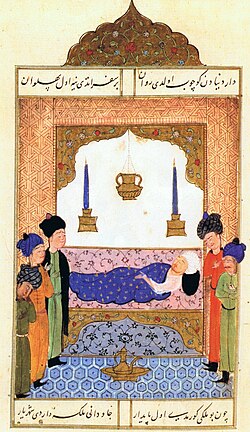
Sultan Selim I died on 22 September 1520 in Çorlu at the age of 49. He was buried in the Yavuz Selim Mosque in the Fatih district of Istanbul, a structure commissioned by his son, Suleiman I, and designed by the architect Alaüddin.
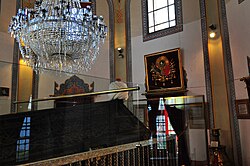
![Yavuz Selim Mosque was commissioned by the Ottoman sultan Suleiman I in memory of his father Selim I, who died in 1520. The architect was Alaüddin (Acem Alisi).[46]](/images/43/4e/434e1cce15fca2feb5381d29854e50d25f70e2ce6c15178453cb51324a629805.jpg)
| Category | Details |
|---|---|
| Reign Period | 1512–1520 |
| Key Rivals | Shah Ismail I (Safavids), Mamluk Sultanate |
| Major Battles | Chaldiran, Marj Dabiq, Ridaniya |
| Territorial Gains | Egypt, Levant, Hejaz, Eastern Anatolia |
| Religious Titles | Caliph, Servant of the Two Holy Cities |
Frequently Asked Questions
Why was Selim I called "the Grim"?
He earned the epithet "the Grim" (or "the Resolute" in Turkish) due to his uncompromising nature, his ruthless military tactics, and his severe handling of internal rebellions and political rivals.
How did Selim I change the size of the Ottoman Empire?
Selim I expanded the empire's territory by approximately 70%, growing it to about 3.4 million square kilometers by conquering the Mamluk Sultanate and parts of the Safavid Empire.
What was the significance of the conquest of Egypt?
The conquest of Egypt gave the Ottomans control over the Levant and the Hejaz, allowing them to protect the holy cities of Mecca and Medina and claim the Caliphate.
Who succeeded Selim I as Sultan?
He was succeeded by his son, Suleiman I, who is widely known in the West as Suleiman the Magnificent.
What was the result of the conflict with the Safavids?
The Ottomans won a decisive victory at the Battle of Chaldiran and captured Tabriz, effectively annexing Eastern Anatolia and Upper Mesopotamia.