Second Hawaiian Renaissance: A Cultural and Political Revival
Beginning in 1970, the Second Hawaiian Renaissance emerged as a powerful movement of cultural and political activism among the Kanaka Maoli (Native Hawaiians). Drawing inspiration from broader cultural shifts of the late 1960s, this era marked a profound reclamation of identity, tradition, and sovereignty after decades of systemic suppression.
The spark for this increase in self-identity can be traced back to 1964, when writer John Dominis Holt, IV published the influential essay "On Being Hawaiian." This work played a critical role in restoring pride in Hawaiian heritage and challenging the negative stereotypes that had persisted for years.
Key Facts
- Timeline: Started in 1970, peaking during the decade and waning by 1980, though some view it as an ongoing movement.
- Cultural Focus: Revival of the Hawaiian language, Pidgin, hula, and traditional crafts.
- Navigation: Re-adoption of non-instrument wayfinding through the voyage of the Hōkūleʻa.
- Political Wins: Establishment of the Office of Hawaiian Affairs via the 1978 Constitution and the reclamation of lands like Kahoʻolawe.
- Agricultural Revival: Return to loʻi kalo (taro patch) farming and mālama ʻāina (traditional land healing and restoration).
The Sound of the Renaissance
Music served as a primary vehicle for the movement's expression. The era saw a resurgence of traditional sounds and the elevation of legendary artists. Gabby Pahinui, through his work with the Sons of Hawaii and Keola, became a central figure. Simultaneously, Kapono Beamer advanced traditionalist slack-key music—a unique Hawaiian guitar style—utilizing signature twin-hole guitar designs from the Guitar and Lute Workshop.
Other pivotal musicians included Dennis Pavao and the Kaʻapana brothers, Ledward and Nedward. Together with Pavao, they formed the falsetto trio Hui ʻOhana. Additionally, the group Olomana contributed significantly to the period's soundtrack with evocative songs such as "O Malia" and "Mele O Kahoolawe."
Reviving Ancient Arts and Traditions
Beyond music, the movement breathed new life into the physical and linguistic expressions of Hawaiian culture. The Merrie Monarch Festival, founded in 1964 by Helene Hale, catalyzed a resurgence in the study and practice of ancient hula dancing—forms that had been developed and performed prior to 1893.
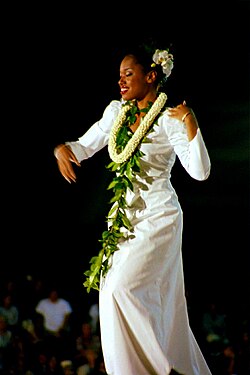
This cultural awakening extended to the academic and domestic spheres, fostering a renewed interest in Hawaiian studies, the Hawaiian language, and traditional folk arts.
The Return to the Sea
One of the most visible achievements of the Renaissance was the revival of Polynesian voyaging. In 1975, the Polynesian Voyaging Society constructed the Hōkūleʻa, a replica of an ancient Polynesian voyaging canoe. This vessel proved the viability of non-instrument wayfinding—the art of navigating the open ocean using stars, currents, and wildlife.
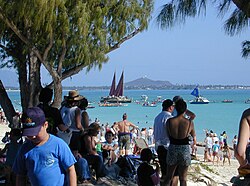
The creator and first navigator of the Hōkūleʻa, Ben Finney, became an icon of the movement, sparking a global interest in Polynesian maritime history and capabilities.
Political Activism and Land Rights
The Second Hawaiian Renaissance was not merely artistic; it was deeply political. The movement sought the restoration of Hawaiian independence and addressed the rights of Native Hawaiians. These efforts led to significant legal and territorial milestones, including the 1978 Constitution, which created the Office of Hawaiian Affairs.
Land struggles were central to this activism, particularly in Kalama Valley, Kahoʻolawe, and Waiāhole-Waikāne. A major victory was the reclamation of federal land, such as Kahoʻolawe, returning it to the state. This period also saw the return to traditional land management, specifically loʻi kalo farming and the practice of mālama ʻāina, focusing on forestry and ecological restoration.
| Category | Key Figures / Entities | Major Outcomes |
|---|---|---|
| Music | Gabby Pahinui, Kapono Beamer, Hui ʻOhana | Revival of slack-key and falsetto styles |
| Dance | Helene Hale (Merrie Monarch Festival) | Resurgence of ancient hula |
| Navigation | Ben Finney, Polynesian Voyaging Society | Launch of Hōkūleʻa; wayfinding revival |
| Politics/Land | Office of Hawaiian Affairs | 1978 Constitution; reclamation of Kahoʻolawe |
| Identity | John Dominis Holt, IV | Shift in self-perception via "On Being Hawaiian" |
Frequently Asked Questions
When did the Second Hawaiian Renaissance take place?
The movement is considered to have started in 1970, reaching its peak during the 1970s and largely waning by 1980, though some consider it a contemporary, ongoing movement.
What was the significance of the Hōkūleʻa?
The Hōkūleʻa was a replica of an ancient Polynesian voyaging canoe that demonstrated the effectiveness of non-instrument wayfinding navigation, helping to restore pride in Polynesian maritime heritage.
Who was John Dominis Holt, IV?
He was a writer whose 1964 essay, "On Being Hawaiian," helped combat negative stereotypes and inspired a renewed sense of pride and self-identity among Native Hawaiians.
What political changes resulted from this movement?
Key outcomes included the creation of the Office of Hawaiian Affairs through the Constitution of 1978 and the reclamation of federal lands, such as Kahoʻolawe, for the state.
What are loʻi kalo and mālama ʻāina?
Loʻi kalo refers to traditional taro patch farming, while mālama ʻāina refers to the traditional practice of land healing, restoration, and forestry.