Secession Movements: The Global History of Political Separation
A secession movement occurs when a specific population advocates for the right to break away from an existing political entity to form its own independent nation-state. While "secession" is the primary term, these movements often describe their goals using various terms depending on the desired outcome, such as autonomy (self-governing status within a larger state), separatism, self-determination, or decolonization (the process of a colony gaining independence).
Throughout history, these movements have been driven by diverse factors, including ethnic divides, economic disparities, cultural preservation, and reactions to political oppression. From the dissolution of vast empires to modern disputes over regional governance, the drive for sovereignty remains a powerful force in global geopolitics.
Key Facts

- Diverse Terminology: Movements may be labeled as devolution, decentralization, partition, or sovereignty movements.
- Common Drivers: Key motivations include ethnic identity, economic grievances (taxation), and cultural erasure.
- Legal Status: Some secessions are recognized internationally, while others are unilateral and contested.
- Outcomes: Results range from peaceful diplomatic separations to violent civil wars and total dissolution of the parent state.
Major Historical Secessions and Attempts

The map of the modern world has been shaped by successful and failed attempts to redraw national boundaries. Some of the most significant examples include the United Provinces of the Netherlands breaking from the Spanish Empire (1566–1648) and the various Spanish American wars of independence.
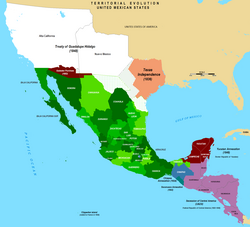
In North America, the Texas Revolution (1835–36) led to Texas leaving Mexico, while the American Civil War was triggered by the secession of the Confederate States of America from the Union.
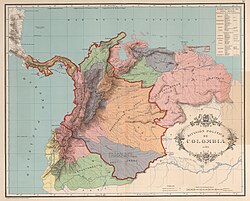
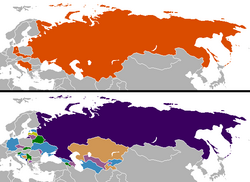
Other notable shifts include Panama seceding from Colombia in 1903 during the U.S. acquisition of the Panama Canal, and the Irish Republic leaving the United Kingdom. In the 20th century, the dissolution of the Soviet Union in 1991 saw numerous republics gain independence, and Finland's 1917 vote to leave Soviet Russia sparked the Finnish Civil War.
Conflict and Reintegration
Not all secession attempts result in permanent independence. In Nigeria, the Eastern Region established the Republic of Biafra between 1967 and 1970, but the state returned to Nigeria after a brutal civil war.

Regional Case Studies
The Americas
In Brazil, the province of Pernambuco attempted to secede from the Portuguese and Brazilian Empires five times between 1645 and 1848, though each attempt was crushed. In modern times, the "The South is My Country" movement advocates for the independence of Southern Brazil, citing economic wealth and ethnic European identity.
Canada has faced long-standing tensions between English and French speakers. The Quebec sovereignty movement emerged in the late 20th century, rooted in the historical division of Lower and Upper Canada under the Constitutional Act of 1791.
Europe and Eurasia
The collapse of the Cold War era led to significant boundary changes across Eurasia. Yugoslavia's dissolution in the 1990s saw Croatia, Slovenia, Bosnia and Herzegovina, and North Macedonia declare independence, often accompanied by violent conflict.
In Italy, "neo-Bourbonism" advocates for the secession of Southern regions (including Sicily and Calabria) to restore a state similar to the Kingdom of the Two Sicilies. Meanwhile, the United Kingdom experienced a unique form of secession known as Brexit, where the country voted to leave the European Union in 2016 and formally departed in 2020.

Africa and Asia
South Sudan provides a recent example of successful secession; following a 2011 referendum where 98.83% voted in favor, it became independent from Sudan. In Cameroon, the "Anglophone Crisis" led to the 2017 declaration of independence by Ambazonia, rooted in the incomplete decolonization of British Southern Cameroons.
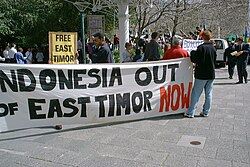
In Asia, the Karabakh movement (1988–1991) sought the reunification of Nagorno-Karabakh with Armenia, driven by fears of cultural erasure under Azerbaijani rule. East Timor also represents a significant movement toward independence in the region.
Summary of Notable Secessionist Movements
| Region/Entity | Parent State/Entity | Key Period/Date | Outcome |
|---|---|---|---|
| South Sudan | Sudan | 2011 | Successful Independence |
| United Kingdom | European Union | 2016–2020 | Successful Exit (Brexit) |
| Biafra | Nigeria | 1967–1970 | Reintegrated after war |
| Texas | Mexico | 1836 | Successful (later joined USA) |
| Soviet Republics | Soviet Union | 1991 | Successful Dissolution |
| Kosovo | Serbia | 2008 | Unilateral (Partial Recognition) |
Frequently Asked Questions
What is the difference between autonomy and secession?
Autonomy refers to a region gaining the power to govern its own internal affairs while remaining part of a larger sovereign state. Secession is the act of completely breaking away to form a new, independent sovereign nation.
Can a state unilaterally secede from the United States?
According to the 1869 U.S. Supreme Court ruling in Texas v. White, unilateral secession is not permitted, as the union between states is considered indissoluble except through revolution or the consent of the other states.
What was the primary cause of the South Sudan secession?
The secession was the result of the 2005 Naivasha Agreement, which led to a 2011 referendum where an overwhelming majority (98.83%) voted for independence from Sudan.
What is "neo-Bourbonism" in Italy?
Neo-Bourbonism is an ideology in Southern Italy that advocates for the secession of regions like Sicily and Calabria to recreate a state similar to the historical Kingdom of the Two Sicilies, which existed under the House of Bourbon.
Why did the Republic of Biafra fail to remain independent?
The Republic of Biafra, which seceded from Nigeria between 1967 and 1970, was forced to return to Nigeria after losing the Nigerian Civil War.