Scottish National Party
The Scottish National Party (SNP) is a centre-left political party dedicated to the cause of Scottish independence. Founded on April 7, 1934, through the merger of the National Party of Scotland and the Scottish Party, the SNP has evolved from a marginal political movement into the dominant force in Scottish politics. The party advocates for Scotland to regain its independence and re-join the European Union, blending Scottish nationalism with the principles of social democracy.
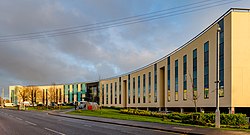
Operating from its headquarters at Gordon Lamb House in Edinburgh, the party maintains a robust organizational structure including specialized wings for students (SNP Students), youth (Young Scots for Independence), and LGBT members (Out for Independence). As of August 2026, the party boasts a membership of approximately 51,000.
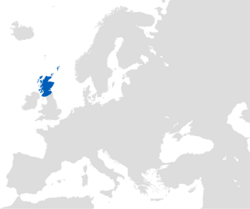
Key Facts
- Founded: April 7, 1934.
- Core Ideology: Scottish nationalism, independence, and social democracy.
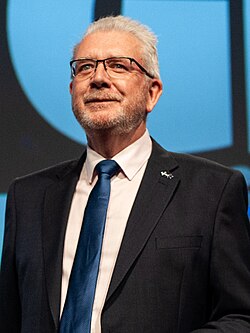
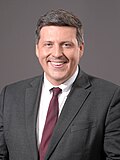
- Current Leader: John Swinney (since May 6, 2024).
- European Affiliation: Member of the European Free Alliance.
- Primary Goal: Independence for Scotland and re-entry into the European Union.
- Political Position: Centre-left.
Historical Evolution
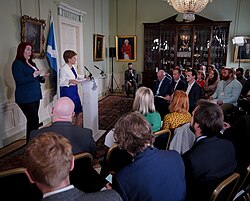
Foundation and Early Breakthroughs (1934–1970)
The SNP began its journey under the leadership of Alexander MacEwen, the party's first leader from 1934 to 1936. For several decades, the party remained a minor player in the UK political landscape, struggling to secure seats in the House of Commons.
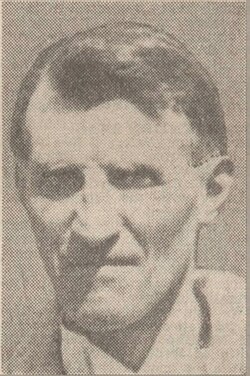
Rising Influence and Factionalism (1970s–1980s)
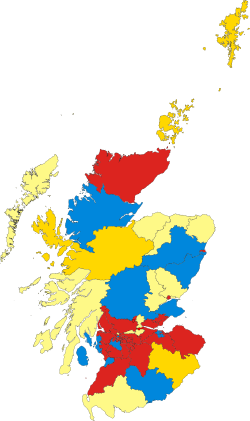
The 1970s marked a turning point as the SNP became a notable political force. In October 1974, the party achieved a historic milestone by winning 11 constituencies, a record that stood for decades. This era also saw the rise of the "79 Group," a faction that sought to push the party further to the left.
The Salmond and Sturgeon Eras (1990s–2023)
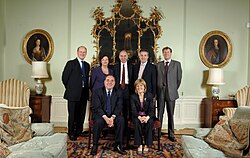
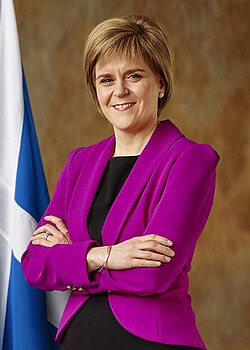
Under the leadership of Alex Salmond, the SNP transitioned from a party of protest to a party of government. Salmond served as First Minister from 2007 to 2014, overseeing the abolition of university tuition fees. Following Salmond, Nicola Sturgeon led the party and served as First Minister for eight years (November 2014 to March 2023), cementing the party's dominance in the Scottish Parliament.
Recent Leadership and Current Status
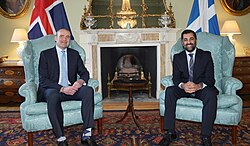
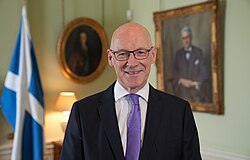
Following Nicola Sturgeon's resignation, Humza Yousaf served as First Minister from March 2023 to May 2024. On May 6, 2024, John Swinney assumed the party leadership, becoming First Minister on May 8. The party continues to navigate complex legal and political challenges regarding the possibility of a second independence referendum.
Policies and Ideology
Economy and Constitution
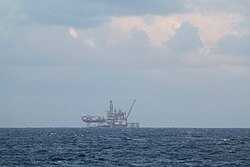
The SNP's economic platform has historically emphasized the utilization of Scotland's natural resources. Following the discovery of oil in the North Sea, the party famously campaigned under the slogan "It's Scotland's oil." Constitutionally, the party is divided between fundamentalists, who seek immediate independence, and gradualists, who favor a step-by-step approach to autonomy.
Foreign Affairs and Defence
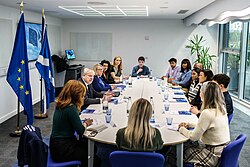
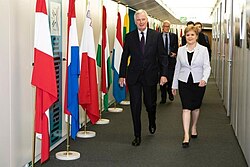
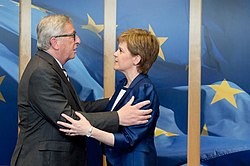
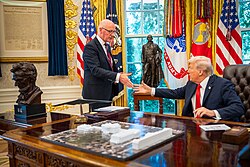
Pro-Europeanism is a central pillar of the SNP's identity. The party strongly advocates for Scotland's return to the European Union. While historically skeptical of some military alliances, the party has increasingly shown support for Atlanticist institutions such as NATO.
Health and Education
The SNP has implemented several social-democratic policies, including the abolition of parking charges at hospitals and the removal of tuition fees for university students.
Electoral Performance Summary
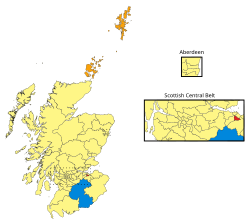
The SNP's electoral trajectory shows a dramatic rise in the 21st century, particularly within the Scottish Parliament and the House of Commons during the 2015 general election.
| Election Type | Peak Performance Year | Key Achievement | Result |
|---|---|---|---|
| House of Commons | 2015 | Seats Won | 56 / 59 seats (50% vote) |
| Scottish Parliament | 2011 | Majority Government | 69 / 129 seats |
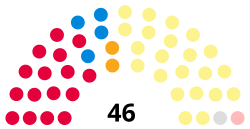
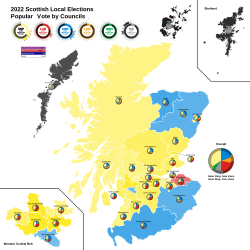
| Local Councils | 2022 | Total Councillors | 453 / 1,226 |
Frequently Asked Questions
What is the primary goal of the SNP?
The primary goal of the Scottish National Party is to achieve independence for Scotland from the United Kingdom and to subsequently re-join the European Union.
Who is the current leader of the SNP?
John Swinney is the current leader of the party, having taken office on May 6, 2024.
What is the difference between fundamentalists and gradualists in the SNP?
Fundamentalists are members who advocate for a direct and immediate push for independence, whereas gradualists believe in achieving independence through a phased approach of increasing autonomy.
Which major social policies has the SNP implemented?
Notable policies include the abolition of university tuition fees and the removal of parking charges at hospitals.
How did the SNP perform in the 2015 UK General Election?
The SNP achieved a landslide victory in Scotland, winning 56 out of 59 available seats and securing 50% of the popular vote.