Scottish Local Elections: Voting Systems and Eligibility
Local government in Scotland relies on a specific democratic framework to ensure fair representation across its diverse geography. From the bustling streets of Glasgow to the remote islands of the Hebrides, the process of electing councillors is designed to reflect the will of the electorate through a proportional system.
The Single Transferable Vote (STV) System
Since 2007, all local authority elections in Scotland have utilized the Single Transferable Vote (STV). STV is a proportional representation system used in multi-member wards, where voters rank candidates in order of preference rather than selecting a single individual. This method ensures that fewer votes are wasted and that the resulting council composition more accurately reflects the overall share of votes cast for different parties or candidates.
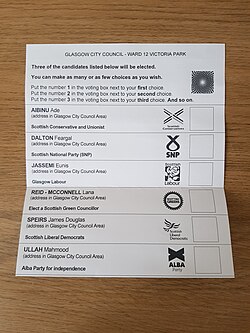
Ward Composition and Distribution
Most mainland wards are designed to be represented by between two and five councillors. However, there are exceptions for inhabited islands, where single-councillor wards are permitted. The distribution of seats across the 32 local authorities is primarily concentrated in three- and four-seat districts.
Currently, there are specific outliers in seat distribution: one single-seat district (Arran), seven two-seat districts, and three five-seat districts (located in North Ayrshire). Wards with one, two, or five councillors are only contested in four specific council areas where boundaries were redrawn after 2017: North Ayrshire, Orkney, Shetland, and Na h-Eileanan an Iar.
Key Facts
- Voting Method: Single Transferable Vote (STV) has been used since 2007.
- Ward Sizes: Mainland wards typically have 2 to 5 councillors.
- Island Exception: Single-member wards are allowed for inhabited islands.
- Voting Age: Eligible voters must be 16 years of age or older on polling day.
- Dual Registration: Voters with two homes in different electoral areas may register and vote in both.
Voter Eligibility and Registration
Eligibility to vote in Scottish local elections is broad, ensuring that a wide range of residents can participate in their local governance. To be entitled to vote, an individual must be a registered elector and be at least 16 years old on the day of the poll.
Eligible electors include:
- British citizens.
- Foreign nationals with leave to remain.
- Refugees.
In certain circumstances, a person may be eligible to vote in more than one local council election. For example, university students who maintain both a term-time address and a family home may register at both locations, provided the addresses are in different electoral areas.
| Feature | Details |
|---|---|
| Election Method | Single Transferable Vote (STV) |
| Minimum Voting Age | 16 years |
| Mainland Ward Size | 2 to 5 councillors |
| Eligible Nationalities | British citizens, foreign nationals with leave to remain, and refugees |
| Council Areas with Redrawn Boundaries (Post-2017) | Na h-Eileanan an Iar, North Ayrshire, Orkney, and Shetland |
Frequently Asked Questions
What is the Single Transferable Vote (STV)?
STV is a proportional voting system used in Scottish local elections since 2007 that allows voters to rank candidates by preference in multi-member wards.
Who is eligible to vote in Scottish local elections?
Any registered elector aged 16 or over on polling day is eligible, including British citizens, refugees, and foreign nationals with leave to remain.
Can I vote in two different council areas?
Yes, if you have two homes (such as a student with a term-time and home address) located in different electoral areas, you can register and vote in both.
Are there any single-member wards in Scotland?
Yes, single-councillor wards are permitted where the ward includes an inhabited island, such as the one-seat district of Arran.
Which council areas have redrawn boundaries since 2017?
The four council areas with redrawn boundaries after 2017 are North Ayrshire, Orkney, Shetland, and Na h-Eileanan an Iar.