Schultheiß: The Role of the Municipal Leader in Medieval Germany
In the complex administrative landscape of medieval Germany, the Schultheiß served as a pivotal figure in local governance. Functioning similarly to a modern-day mayor, the Schultheiß acted as the head of a municipality or as a Vogt—an executive official representing the interests of the ruling authority.
The very name of the office reveals its primary purpose. Derived from the German words Schuld (debt) and heißen (to order), the title literally describes the official's duty to command the payment of debts and taxes. As a villicus (an official administrator), the Schultheiß was responsible for ensuring that his assigned village or county, known as a villicatio, fulfilled its financial obligations and performed the required services for the ruler.
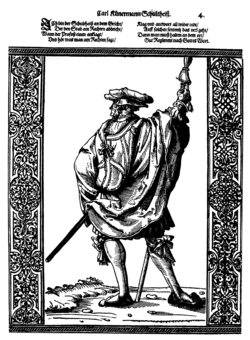
Evolution of the Office
Over time, the application of the title expanded to fit different scales of settlement. While the role began with general administrative duties, it eventually branched into specific designations: the Stadtschultheiß served as the head of a town, while the Dorfschultheiß led a village.
The office itself was referred to by various names across different eras. In the 15th century, terms such as Scholtisse, Schultessy, Schultissīe, and Schultissei were common. In Latin records, the office was described as sculdasia in the 10th century and scultetia by the 13th century.
Key Facts
- Primary Function: Collecting taxes and managing services owed to the ruler.
- Etymology: Derived from Schuld (debt) and heißen (to order).
- Equivalent Roles: Comparable to a modern mayor or a medieval Vogt.
- Earliest Record: First appeared as sculdahis in the Edictum Rothari of 643 AD.
- Regional Variants: Known as Schulte or Schulze in Germany, and Schultheiss in Switzerland.
Linguistic and International Influence
The influence of the Schultheiß office extended far beyond the borders of Germany, leaving a linguistic mark across Europe. The title evolved from Old High German sculdheizo and Middle High German Schultheize, with Latinized versions appearing as scultetus or sculteus.
Many European languages adopted versions of this title to describe similar local administrative roles:
- Polish: sołtys
- Hungarian: soltész
- Slovak: šoltýs and škultét
- Italian: scoltetto and sculdascio
- Romanian: șoltuz
- Dutch: schout
| Period/Region | Term/Spelling | Context |
|---|---|---|
| 643 AD | sculdahis | Edictum Rothari (Post-Roman Latin) |
| 723 AD | sculdahis | Lombard laws of Liutprand |
| 10th Century | sculdasia | Latinized office name |
| 13th Century | scultetia | Latinized office name |
| Medieval Germany | Stadtschultheiß | Head of a town |
| Medieval Germany | Dorfschultheiß | Head of a village |
Frequently Asked Questions
What was the primary responsibility of a Schultheiß?
The primary responsibility was to act as an executive official for the ruler, ensuring that the assigned village or county paid its taxes and performed the required services.
How does the name Schultheiß relate to its function?
The name is a combination of the German words for "debt" (Schuld) and "to order" (heißen), reflecting the official's duty to order the payment of debts to the sovereign.
When was the title first documented?
The title first appears in the Edictum Rothari of 643 AD, spelled as sculdahis.
What is the difference between a Stadtschultheiß and a Dorfschultheiß?
A Stadtschultheiß was the head of a town, whereas a Dorfschultheiß was the head of a village.
Did this role exist outside of Germany?
Yes, similar roles and titles existed across Europe, including the sołtys in Poland, the soltész in Hungary, and the schout in the Netherlands.