Satin Weave: History, Types, and Applications of Lustrous Fabrics
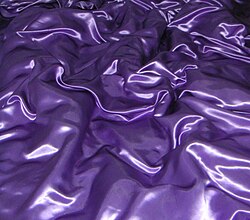
Satin is renowned for its characteristic glossy surface and smooth, lustrous feel. As one of the three fundamental types of textile weaves—alongside plain and twill weaves—it is prized for its aesthetic appeal, though it is less durable and more prone to snagging than other constructions. Typically, a satin fabric features a high-sheen top surface and a duller reverse side.
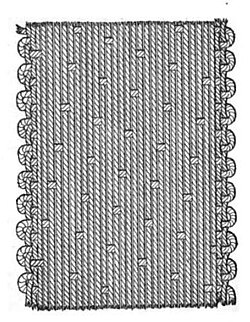
The secret to this radiance lies in the floats—missed interfacings where the yarn skips over several perpendicular threads. In a warp-faced satin, the warp yarns (the vertical threads) float over the weft yarns (the horizontal threads). Because the fibers are not interlaced as frequently as in a plain weave, light is not scattered; instead, it reflects strongly, creating a mirror-like sheen.
Key Facts
- Structure: Defined by four or more weft yarns floating over a warp yarn, or four warp yarns floating over a single weft yarn.
- Terminology: Fabrics made from filament fibers (silk, polyester, nylon) are called satin, while those made from short-staple yarns (cotton) are called sateen.
- Origin: Developed in ancient China, originally using only silk.
- Etymology: The name derives from zaituni, the Arabic term for silk from the Chinese port of Quanzhou (known as Zayton in Europe).
- Characteristics: High luster, excellent drape, and high flexibility, but low durability.
The History and Origin of Satin
Satin originated in ancient China, where it was crafted exclusively from silk. Early Chinese variations included styles known as duan, zhusi, ling, jin, wusi, and basi. Historical evidence suggests that the six-end warp satin weave likely evolved from the six-end warp twill weave during the Northern Song and Tang dynasties.
During the 13th and 14th centuries (the Yuan dynasty), the port city of Quanzhou became a critical hub for the Maritime Silk Road. Arab merchants imported silk from this city, referring to it as zaituni. This term eventually evolved into the English word "satin" as the material spread through the Arab world and into Europe during the late Middle Ages.
Technical Classifications of Satin Weaves
Satin weaves are generally more flexible and drape better than plain weaves. The level of pliability depends on the number of harnesses (the number of threads the yarn passes over before interlacing).
- 4-Harness Satin (4HS): Also known as crowfoot satin, the fill yarn passes over three warp yarns and under one. It is more pliable than a plain weave.
- 5-Harness Satin (5HS): The fill yarn passes over four warp yarns and under one.
- 8-Harness Satin (8HS): The fill yarn passes over seven warp yarns and under one, making it the most pliable of the standard satin weaves.
Common Types of Satin Fabrics
Depending on the materials used and the weaving technique, satin takes many forms:
| Type | Key Characteristics |
|---|---|
| Charmeuse | Lightweight, draping fabric with a dull reverse. |
| Duchesse Satin | Heavy, stiff, and particularly luxurious. |
| Sateen | Satin weave made from short-staple yarns like cotton. |
| Double Faced | Glossy surfaces on both sides; can feature different patterns. |
| Polysatin | Satin made from polyester fibers. |
| Baronet | Rayon or silk front with a cotton back. |
| Faconne | Satin that is jacquard woven. |
Other specialized versions include Antique satin (satin-back shantung with uneven weft yarns), Gattar (silk warp with cotton weft), and Slipper satin, which is a stiff, medium-to-heavy weight fabric.
Practical Applications of Satin
The versatility of the satin weave allows it to be used across various industries, from high fashion to home interiors.
Fashion and Apparel
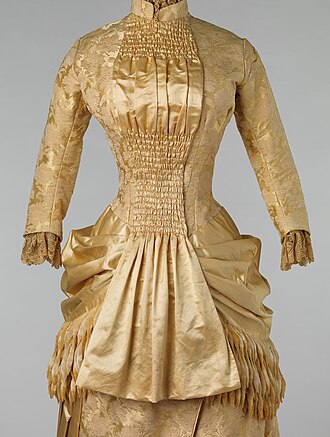
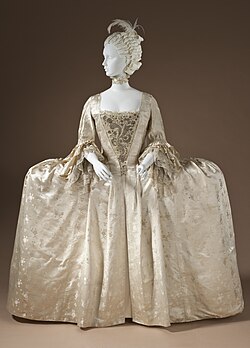
Due to its elegant drape and shine, satin is a staple for evening gowns, bridal wear, blouses, and lingerie. It is also used for more structured items like neckties, shirts, and boxer shorts. In the world of dance, it is the primary material for ballet pointe shoes.
Home and Interior Design
Satin has a long history in luxury interiors, famously used for ornamental furniture at the Palace of Versailles. Today, it remains popular for upholstery, pillow covers, and bed linens due to its silky texture.
Accessories and Crafting
The fashion industry utilizes satin for clutches and evening bags. Additionally, satin ribbons are widely used in crafting for decorative flowers, corsages, and rosette leis.
Frequently Asked Questions
What is the difference between satin and sateen?
The difference lies in the fiber used. Satin is made from filament fibers such as silk, nylon, or polyester. Sateen is made from short-staple yarns, most commonly cotton.
Why is satin so shiny?
Satin is shiny because of "floats." The weave allows yarns to pass over several other yarns without interlacing, creating a smooth surface that reflects light more effectively than other weaves.
Is satin a fabric or a weave?
Technically, satin is a weave (a method of interlacing yarns). When this weave is applied to filament fibers, the resulting fabric is called a satin.
Why does satin snag easily?
Because the yarns "float" over long distances without being locked in by frequent interlacings, the threads are more exposed and can be easily pulled or caught, leading to snags.
Where did the word "satin" come from?
It comes from the Arabic word zaituni, which referred to the silk imported from the Chinese port of Quanzhou, known to Europeans as Zayton.