Santos, Brazil: The Gateway of Latin American Trade and Culture
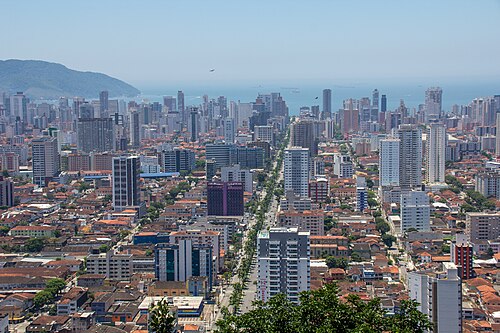
Located in the state of São Paulo, Santos (officially the Municipality of Estância Balneária de Santos) is a city of immense historical and economic significance. Founded in 1546 by Portuguese nobleman Brás Cubas, it serves as the primary hub of the Baixada Santista metropolitan region. Situated largely on the island of São Vicente, Santos blends a rich colonial past with its status as a modern industrial powerhouse.
From its world-record-breaking gardens to its role as a global trade artery, Santos is a city where nature and commerce coexist. Whether it is the legacy of the legendary footballer Pelé or the aromatic history of the coffee trade, the city offers a unique glimpse into the soul of Brazil.
Key Facts
- Economic Powerhouse: Home to the Port of Santos, the largest seaport in Latin America, handling nearly 29% of Brazil's international trade.
- World Record: Boasts the world's largest beachfront garden, stretching 5,335 meters in length.
- Cultural Icons: Home to the Coffee Museum and the Museum of Pelé.
- Geography: Located on the island of São Vicente, approximately 50 km from the city of São Paulo.
- Climate: An exceptional tropical rainforest climate (Köppen Af) with high annual precipitation.
History and Evolution
Early Colonization
The region's history dates back to 1502, when Amerigo Vespucci's expedition explored the coast and named the island São Vicente. By 1531, as the Portuguese crown shifted focus from India to Brazil, Martim Afonso de Sousa arrived to demarcate territories. He discovered a thriving trading village founded by Cosme Fernandes, which laid the groundwork for the settlement's growth.
The Coffee Era and Modernization
At the turn of the 20th century, Santos transformed into a wealthy urban center driven by the export of coffee. This commodity not only funded the city's growth but also established Santos as an indispensable outlet for the production of São Paulo State. The city's infrastructure evolved with the addition of century-old canals and the establishment of the Roman Catholic Diocese of Santos in 1924.
Tourism and Natural Discovery
Tourism became a primary economic driver starting in the 1910s with the construction of the International Hotel and Parque Balneário. In 1935, the Orla e Jardins da Praia de Santos was founded; today, this botanical garden is recognized by the Guinness World Records as the largest of its kind, spanning from José Menino to Ponta da Praia.
Geography and Climate
Santos is divided into two distinct zones: a densely urbanized insular area and a continental area, 70% of which is protected. The insular portion, shared with the municipality of São Vicente, is mostly flat, though the Mass of São Vicente features hills reaching up to 200 meters.
The Coastal Landscape
The city is famous for its diverse beaches, including José Menino, Pompeia, Gonzaga, Boqueirão, Embaré, Aparecida, and Ponta da Praia. It also encompasses several islands, such as Urubuqueçaba, Barnabé, and Diana. Environmental preservation is a priority, evidenced by the Laje de Santos Marine State Park, the first marine park created by the state in 1993.
A Unique Tropical Climate
Santos features a tropical rainforest climate (Köppen Af), which is rare for its location outside the Amazon Basin. The city experiences warm temperatures year-round, with averages around 25°C in summer and 19°C in winter. Rainfall is significant, averaging approximately 2,000 mm annually, with no true dry season.
Economy and Infrastructure
The Port of Santos
The Port of Santos is the heartbeat of the city's economy. As the largest seaport in Latin America, it handles a vast array of goods. Key exports include soybeans, sugar, corn, and pulp, while primary imports consist of fertilizers, diesel, gasoil, and wheat. In 2010 alone, the port handled 96 million tons of cargo and 2.7 million TEUs (Twenty-foot Equivalent Units).
Transportation and Connectivity
While the Santos Air Force Base (BAST) is located in nearby Guarujá, the city maintains a unique rail legacy. A heritage tram system operates in the Valango district, anchored by the historic Valango Station. This site once served as the terminus for the São Paulo Railway, which connected the coast to the interior of the state.
Culture and Notable Figures
Museums of Global Significance
- Coffee Museum: Opened in 1998 in the former palace where world coffee prices were once negotiated. It traces the journey of coffee from cultivation to the final cup.
- Museum of Pelé: Opened in 2014, this museum celebrates the life and career of the "King of Football," showcasing his trophies and statistics.
Prominent Personalities
Santos has been home to many influential figures, including José Bonifácio de Andrada e Silva, the "Patriarch of Independence" and a noted mineralogist, and Bartolomeu de Gusmão, a pioneer in hot-air balloon prototypes. In sports, the city is synonymous with football legends like Pelé, Gilmar, and Pepe.
| Attribute | Detail |
|---|---|
| Official Name | Municipality of Estância Balneária de Santos |
| Population (2025 Est.) | 429,547 |
| Area | 280.67 km² |
| HDI (2010) | 0.840 (Very High) |
| Main Industry | Maritime Trade / Tourism |
| Climate Type | Tropical Rainforest (Af) |
Frequently Asked Questions
What is the significance of the Port of Santos?
The Port of Santos is the largest seaport in Latin America and is critical to Brazil's economy, accounting for nearly 29% of the country's total international trade flow.
Why is the beachfront garden in Santos famous?
It is recognized by the Guinness World Records as the largest beachfront garden in the world, measuring approximately 5.3 kilometers in length.
What can visitors see at the Coffee Museum?
Visitors can explore the history of coffee production, view old production tools, and visit the site where global coffee prices were historically negotiated.
Who is Pelé and why does he have a museum in Santos?
Pelé is widely considered the greatest football player of all time. He spent the majority of his career with Santos Futebol Clube, making the city the natural home for a museum dedicated to his achievements.
What is the weather like in Santos?
Santos has a tropical rainforest climate with warm temperatures year-round and high rainfall, averaging about 2,000 mm annually, with no distinct dry season.