Sanctum Sanctorum: The History and Meaning of the Holy of Holies
The term sanctum sanctorum evokes images of profound mystery and absolute sanctity. Rooted in ancient religious traditions, this Latin phrase describes the most sacred space within a temple or sanctuary, serving as the focal point of spiritual devotion and divine presence.
Origins and Linguistic Roots
The phrase is a Latin translation of the Hebrew term קֹדֶשׁ הַקֳּדָשִׁים (Qṓḏeš HaQŏḏāšîm), which literally translates to the Holy of Holies. In its original context, this referred to the innermost sanctuary of the Ancient Israelites, first established within the Tabernacle—a portable earthly dwelling place for the divine—and later integrated into the permanent Temple in Jerusalem.
Evolution of the Term in Architecture and Religion
While the term began with Israelite tradition, its application expanded over centuries into other religious and architectural contexts. In church architecture, the phrase is often used to describe spaces that imitate the original Tabernacle.
The plural form, sancta sanctorum, is also utilized. In some contexts, this serves as a synecdoche—a figure of speech where a part represents the whole—referring specifically to the holy relics housed within a sanctuary. This variation is notably found in the Vulgate, the late-4th-century Latin translation of the Bible.
One prominent example of this derivative usage is the Sancta Sanctorum chapel, located within the complex of the Archbasilica of Saint John Lateran in Rome.
Cross-Cultural Parallels: The Garbhagriha
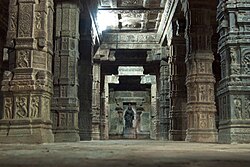
The concept of a most holy inner chamber is not exclusive to Abrahamic traditions. In Hindu temple architecture, the Garbhagriha—the innermost sanctum where the primary deity is housed—is frequently compared to a sanctum sanctorum. Because of this functional and spiritual similarity, the Garbhagriha is sometimes translated into English using the Latin term.
Key Facts
- Literal Meaning: "Holy of Holies."
- Hebrew Origin: Derived from Qṓḏeš HaQŏḏāšîm.
- Primary Context: Originally the holiest site for Ancient Israelites in the Tabernacle and Temple in Jerusalem.
- Latin Variation: The Vulgate uses the plural sancta sanctorum.
- Roman Example: The Sancta Sanctorum chapel at the Archbasilica of Saint John Lateran.
- Hindu Equivalent: The Garbhagriha is often translated as a sanctum sanctorum.
| Tradition/Context | Specific Term/Location | Primary Meaning |
|---|---|---|
| Ancient Israelite | Tabernacle / Temple in Jerusalem | The holiest place of the Israelites |
| Catholic/Latin | Archbasilica of Saint John Lateran | A specific chapel and its holy relics |
| Hinduism | Garbhagriha | The innermost shrine of a temple |
Frequently Asked Questions
What does sanctum sanctorum mean literally?
It is a Latin phrase meaning "Holy of Holies," translated from the Hebrew Qṓḏeš HaQŏḏāšîm.
Where was the original sanctum sanctorum located?
It was located inside the Tabernacle and subsequently inside the Temple in Jerusalem, serving as the holiest site for the Ancient Israelites.
What is the difference between sanctum sanctorum and sancta sanctorum?
While sanctum sanctorum is the singular form, sancta sanctorum is the plural form used in the Vulgate and can refer to the holy relics within a sanctuary.
Is there a sanctum sanctorum in Rome?
Yes, the term denotes the Sancta Sanctorum chapel located within the complex of the Archbasilica of Saint John Lateran.
How does the Garbhagriha relate to this term?
The Garbhagriha is the innermost sanctuary of a Hindu temple; due to its similar role as the most sacred space, it is often translated into English as a sanctum sanctorum.