Samba Dance Styles: From Carnival Energy to Intimate Pagode
Samba is more than just a dance; it is a vibrant expression of Brazilian culture, blending African rhythms with European influences. From the explosive energy of the Rio de Janeiro Carnival to the sophisticated melodies of Bossa nova, Samba manifests in various forms, each with its own unique history, rhythm, and social function.
Key Facts
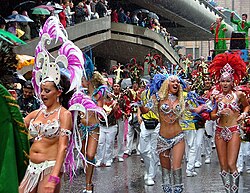
- Samba no pé is the iconic solo dance seen in Carnival parades.
- Samba de Gafieira is a partner dance influenced by Tango and Waltz.
- Samba Pagode uses hand-played percussion for a softer, more intimate sound.
- Samba Axé is a choreographed, high-energy style from Bahia that mimics song lyrics.
- Samba-reggae blends reggae beats with Afro-Brazilian and Candomblé dance movements.
- Samba-rock combines the African ginga (body flow) with European ballroom etiquette.
Samba no pé: The Heart of Carnival
Samba no pé (literally "samba in the foot") is a solo dance often performed impromptu. The dance is characterized by a straight torso and a rhythmic bending of the knees. Moving in a 2/4 rhythm with three steps per measure, the movement resembles a "step-ball-change" (counted as and-a-one, and-a-two).
The basic movement involves one foot moving slightly outward while the other moves toward the front. As the weight shifts, the hip on the bending leg lowers, creating a fluid, undulating motion. While men typically keep their entire foot on the ground, women—often in high heels—dance on the balls of their feet. Professionals may increase the complexity to four steps per measure and incorporate expressive arm movements.
Regional variations exist across Brazil. In Rio de Janeiro, dancers keep their knees closer together, whereas in Bahia, dancers tend to tilt their legs outward.
Partner Samba Styles
Samba de Gafieira
Emerging in the 1940s, Samba de Gafieira takes its name from the gafieiras, the popular urban nightclubs of Rio de Janeiro. This partner dance evolved from the Maxixe and the arrival of Choro (a samba musical style). While it discarded the Polka elements of Maxixe, it retained the entwined leg movements of the Argentine tango, though it employs a more relaxed posture. It is often viewed as a fusion of Waltz and Tango.
Samba Pagode
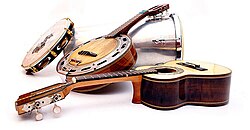
Samba Pagode is a more intimate partner dance. The word pagode translates to "fun" or "merrymaking" and refers to informal gatherings of musicians and dancers. Originating in São Paulo, this style is defined by its specific rhythmic texture created by three hand-played percussion instruments: the tanta, the repique-de-mao, and the pandeiro. This hand-played approach creates a softer sound compared to the loud batucada (percussion ensemble) used by large Samba schools.
Modern and Regional Evolutions
Samba Axé
Starting in 1992 in Bahia, Samba Axé replaced the Lambada as the dominant holiday dance in Northeast Brazil. It is a highly energetic solo dance that blends Samba no pé with aerobics. Unlike other styles, Samba Axé is completely choreographed to mimic the lyrics of the song, often incorporating ludic (playful) elements. Because groups like "É o Tchan" release new choreography with every song, the genre is constantly evolving.
Samba-reggae
Samba-reggae fuses reggae beats with Samba drums and is heavily influenced by Afro-Brazilian and Candomblé (an Afro-Brazilian religion) dance. Popularized by artists like Daniela Mercury, it is often performed in a "follow-the-leader" style in social settings. The percussionists are integral to the performance; surdos (bass drums) perform choreographies with mallets, while the fundos (lead surdos) may toss their drums high into the air.
Samba-rock
Originating in São Paulo, Samba-rock is a playful Latin nightclub dance. It blends the African ginga—the fluid body flow found in Capoeira—with the formal etiquette of European ballroom dancing. It is a versatile style that can be danced to R&B, reggae, or samba pagode.
Other Notable Samba Variations
Beyond the primary dance styles, several musical variations define the genre:
- Bossa nova: A sophisticated fusion of samba and jazz, known for complex harmonies and smooth, melodic vocals.
- Partido alto: A traditional Afro-Brazilian style characterized by an improvisational structure.
- Samba-canção: Literally "samba-song," this is a slower-paced version of the rhythm.
| Style | Type | Key Characteristic | Origin/Influence |
|---|---|---|---|
| Samba no pé | Solo | Fast footwork, 2/4 rhythm | Carnival Parades |
| Samba de Gafieira | Partner | Entwined legs, relaxed posture | Tango & Waltz |
| Samba Pagode | Partner | Intimate, soft percussion | São Paulo |
| Samba Axé | Solo | Choreographed, aerobic | Bahia |
| Samba-reggae | Group/Solo | African-influenced, drum-led | Reggae & Candomblé |
| Samba-rock | Partner | Ginga flow & ballroom etiquette | São Paulo |
Frequently Asked Questions
What is the difference between Samba no pé and Ballroom Samba?
Samba no pé is a traditional Brazilian solo dance characterized by rapid footwork and hip movement seen in Carnivals, whereas Ballroom Samba is a standardized competitive partner dance.
Which instruments are used in Samba Pagode?
Samba Pagode utilizes three specific hand-played percussion instruments: the tanta, the repique-de-mao, and the pandeiro.
How does Samba Axé differ from other Samba styles?
Samba Axé is uniquely choreographed to match the lyrics of the music and incorporates aerobic movements, making it more of a performance-based dance than an impromptu one.
What is 'ginga' in the context of Samba-rock?
Ginga refers to the fluid body flow originating from Capoeira, which manifests in the hips and feet during Samba-rock dancing.
Where did Samba de Gafieira originate?
It emerged in the 1940s in the gafieiras, which were popular urban nightclubs in Rio de Janeiro.