Salvador Dalí: The Master of Surrealism and Eccentricity
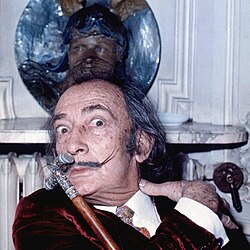
Salvador Dalí remains one of the most iconic figures in art history, known as much for his flamboyant personality and signature waxed mustache as for his technical mastery of painting. A pioneer of Surrealism—an artistic movement that seeks to release the unconscious mind by depicting dreamlike, illogical scenes—Dalí blended meticulous realism with bizarre, hallucinatory imagery to challenge the boundaries of reality.
Born in Figueres, Catalonia, Spain, Dalí's journey took him from the academic halls of the San Fernando School of Fine Arts in Madrid to the avant-garde circles of Paris. Throughout his prolific career, he expanded his creative reach beyond the canvas, venturing into sculpture, film, photography, jewelry, and fashion.
Key Facts
- Full Name: Salvador Domingo Felipe Jacinto Dalí Doménech.
- Primary Movements: Surrealism, Cubism, and Dada.
- Most Famous Work: The Persistence of Memory (1931).
- Lifelong Muse: His wife, Gala Dalí.
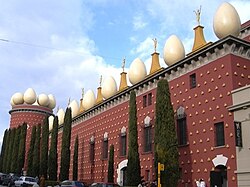
- Major Legacy: The Dalí Theatre-Museum in Figueres, which houses the world's largest collection of his work.
- Death: Passed away on January 23, 1989, at the age of 84.
Artistic Evolution and Major Works
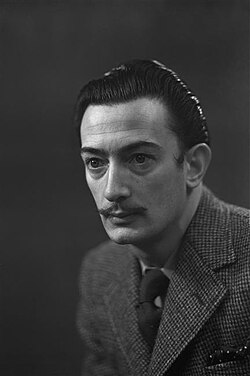
Dalí's early years were marked by a restless exploration of style. He experimented with Cubism and Dada before finding his true calling in Surrealism. His work often featured recurring symbols—such as melting clocks, elephants with spindly legs, and ants—which served as a visual language for his obsessions with time, decay, and the subconscious.
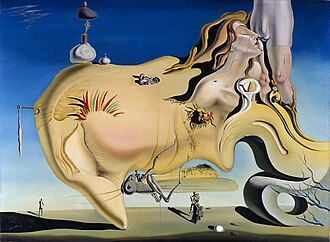
One of his most provocative early works, The Great Masturbator (1929), showcased his interest in psychology and desire. This was followed by his most globally recognized piece, The Persistence of Memory (1931), which redefined how the world perceived the fluidity of time.
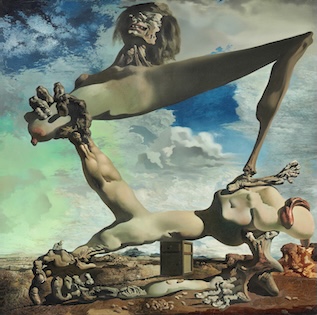
As political tensions rose in Europe, Dalí's work reflected the chaos of the era. Soft Construction with Boiled Beans (Premonition of Civil War) (1936) serves as a visceral commentary on the fragmentation and horror of the Spanish Civil War.
Expanding the Creative Horizon
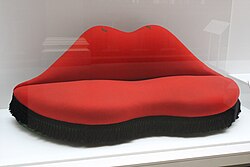
Dalí did not limit himself to oil on canvas. He collaborated with director Luis Buñuel to create groundbreaking surrealist films, including Un Chien Andalou (1929) and L'Age d'Or (1930). His curiosity also led him to design objects that blurred the line between art and utility, such as the Lobster Telephone (1936) and the Mae West Lips Sofa (1937).
Life Beyond the Canvas
Dalí's personal life was inextricably linked to his art. His marriage to Gala in 1934 provided him with emotional stability and a business manager who helped navigate his skyrocketing fame. Together, they became a powerhouse couple in the international art scene, spending significant time in Paris and the United States between 1946 and 1948.
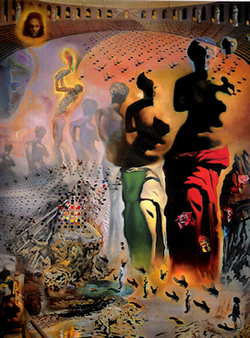
In his later years, Dalí returned to Spain, where he continued to produce massive works like The Hallucinogenic Toreador (1970). He also embraced science and religion, integrating themes of nuclear physics and spirituality into his later paintings, such as Crucifixion (Corpus Hypercubus) (1954).
Honors and Final Years
Dalí's contributions to culture were recognized globally. He was named a Knight Grand Cross of the Order of Isabella the Catholic in 1964 and the Order of Charles III in 1981. In 1982, King Juan Carlos created him the 1st Marquess of Dalí de Púbol.
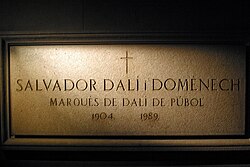
He spent his final years in Figueres, where he designed the Dalí Theatre-Museum. Upon his death in 1989, he was interred in a crypt located beneath the museum, ensuring that his final resting place was as much a piece of art as his paintings.
Summary of Dalí's Legacy
| Category | Details |
|---|---|
| Birth/Death | 1904–1989 (Figueres, Spain) |
| Education | San Fernando School of Fine Arts, Madrid |
| Key Collaborators | Gala Dalí (Spouse), Luis Buñuel (Film) |
| Notable Museums | Dalí Theatre-Museum, Reina Sofia Museum, Salvador Dalí House Museum |
| Diverse Mediums | Painting, Sculpture, Film, Jewelry, Fashion, Writing |
Frequently Asked Questions
![Dress by Adrian with Wesley Simpson textile illustrated by Dali (1947)[202]](/images/57/92/5792f918a77bf01a5b27a931b22662b3cf0a3d5cb7fc7d27bd7e2411c49c84f3.jpg)
![Dalí in the 1960s, sporting his "very aggressive" mustache,[230] holding his pet ocelot, Babou](/images/e1/20/e120074274124eae9cedff1a452e7812beec40e2ca1d0babd8a2d82e27f7d4cb.jpg)
What is Salvador Dalí most famous for?
Dalí is most famous for his contributions to Surrealism and his painting The Persistence of Memory, featuring the iconic melting clocks. He is also remembered for his eccentric public persona and his ability to blend hyper-realistic technique with dreamlike imagery.
Who was Gala Dalí?
Gala was Dalí's wife, muse, and business manager. She played a critical role in his life and career, appearing in many of his paintings and managing the commercial aspects of his art.
Where can I see Dalí's work today?
The largest collection of his work is held at the Dalí Theatre-Museum in Figueres, Spain. Other significant collections are found at the Museo Nacional Centro de Arte Reina Sofía in Madrid and the Salvador Dalí House Museum in Port Lligat.
Did Dalí do more than just paint?
Yes, Dalí was a multidisciplinary artist. He worked in sculpture, photography, and jewelry design, wrote books, and collaborated on avant-garde films. He even ventured into fashion, designing textiles and clothing.
What was the significance of the 'Lobster Telephone'?
The Lobster Telephone is a prime example of Dalí's surrealist objects. By combining two unrelated items—a telephone and a lobster—he aimed to create a "surrealist object" that challenged the viewer's expectations and evoked subconscious associations.