Saint Louis Cemeteries: The Historic Above-Ground Vaults of New Orleans
New Orleans is world-renowned for its unique funerary architecture, most notably the above-ground vaults—stone tombs built above the earth to accommodate the city's high water table. Among the most significant of these sites are the three Catholic cemeteries known as Saint Louis (Cimetière Saint-Louis). These historic grounds serve as open-air museums, preserving the diverse social, political, and cultural history of Louisiana.
Cemeteries No. 1 and No. 2 are recognized for their immense historical value, holding placements on both the National Register of Historic Places and the Louisiana African American Heritage Trail.
Key Facts
- Saint Louis No. 1 is the oldest of the three, established in 1789.
- Saint Louis No. 2 was consecrated in 1823 and features Greek, Gothic, and Exotic Revival styles.
- Saint Louis No. 3 opened in 1854 and is known for its elaborate 19th-century marble tombs.
- The cemeteries are managed by the Roman Catholic Archdiocese of New Orleans.
- Many tombs are constructed as vaults due to the geography of New Orleans.
Saint Louis Cemetery No. 1
Founded in 1789, Saint Louis Cemetery No. 1 became the city's primary burial ground after a devastating fire in 1788 led to the redesign of the city and the closure of the older St. Peter Cemetery. Located just one block beyond the French Quarter's inland border, this Neo-Classical site spans a single square block but houses thousands of individuals.
The cemetery is famous for its eclectic residents. It is the resting place of Etienne de Boré, the first mayor of New Orleans and a sugar industry pioneer, and Homer Plessy, the central figure in the 1896 Plessy v. Ferguson civil rights case. Other notable figures include the chess champion Paul Morphy, the architect Benjamin Latrobe, and the Voodoo priestess Marie Laveau, who is believed to be interred in the Glapion family crypt. In a modern twist, actor Nicolas Cage purchased a pyramid-shaped tomb here for his future use.
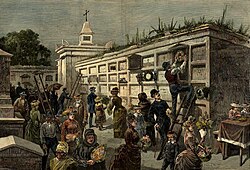
While the cemetery has been in continuous use since its inception, access has changed. As of March 1, 2015, the Roman Catholic Archdiocese closed the site to the general public to combat vandalism. Currently, access is granted to tomb owners via permits and to tour companies through a paid annual fee.
Saint Louis Cemetery No. 2
Consecrated in 1823, Saint Louis Cemetery No. 2 is located three blocks from No. 1, bordering Claiborne Avenue. This site is architecturally diverse, showcasing Greek Revival, Gothic Revival, and Exotic Revival styles.
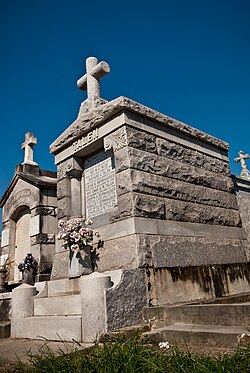
This cemetery is a significant site for African American history. It is the final resting place of Andre Cailloux, a Union hero of the American Civil War, and Oscar Dunn, the first elected Black lieutenant governor of a U.S. state. It also houses the remains of various political figures, including former Louisiana Governor Jacques Villeré and former Haitian President Pierre Nord Alexis.
The site is also a sanctuary for the city's musical legacy, with jazz and rhythm and blues musicians such as Ernie K-Doe and Danny Barker interred here. Despite experiencing minor flooding during Hurricane Katrina, the tombs remained largely intact, leaving only a visible waterline on the structures.
Saint Louis Cemetery No. 3
Opened in 1854, Saint Louis Cemetery No. 3 is located approximately two miles from the French Quarter near Bayou St. John. This cemetery is distinguished by its more elaborate crypts, featuring high-quality 19th-century marble work.
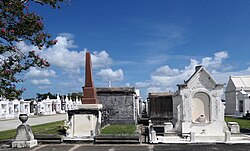
Notable residents include the photographer E. J. Bellocq, painter Ralston Crawford, and ragtime composer Paul Sarebresole. It is also the final resting place of jazz pianist Sweet Emma Barrett and former Mayor Ernest N. "Dutch" Morial, who was reinterred here in 2014 in a new family tomb.
In addition to Catholic burials, Saint Louis No. 3 contains a dedicated Greek Orthodox section. Like Cemetery No. 2, it suffered flooding during Hurricane Katrina in 2005, though the damage was primarily limited to surface plaster and debris.
Summary of Saint Louis Cemeteries
| Feature | Saint Louis No. 1 | Saint Louis No. 2 | Saint Louis No. 3 |
|---|---|---|---|
| Established | 1789 | 1823 | 1854 |
| Architectural Style | Neo-Classical | Greek, Gothic, & Exotic Revival | Elaborate 19th-century Marble |
| NRHP Status | Listed (1975) | Listed (1975) | Not Specified |
| Key Notable Figures | Marie Laveau, Homer Plessy | Andre Cailloux, Oscar Dunn | Dutch Morial, E. J. Bellocq |
| Location | Near French Quarter | Bordering Claiborne Ave | Near Bayou St. John |
Frequently Asked Questions
Why are the graves in Saint Louis Cemeteries above ground?
The above-ground vaults were constructed because of New Orleans' low elevation and high water table, which would cause traditional underground coffins to float or flood.
Can the general public visit Saint Louis Cemetery No. 1?
Since March 2015, the cemetery has been closed to the general public to prevent vandalism. Visitors can typically only enter via authorized tour companies or if they are family members who own a tomb and possess a pass.
Who is Marie Laveau and where is she buried?
Marie Laveau was a renowned Voodoo priestess in New Orleans. She is believed to be interred within the Glapion family crypt in Saint Louis Cemetery No. 1.
Which cemetery is the oldest?
Saint Louis Cemetery No. 1 is the oldest, having opened in 1789 to replace the defunct St. Peter Cemetery.
How did Hurricane Katrina affect these cemeteries?
Both Cemetery No. 2 and No. 3 experienced flooding. Cemetery No. 2 showed visible waterlines on its structures, while Cemetery No. 3 suffered some plaster damage from debris, but both remained largely structurally intact.