Sacnoth: The History of the Cult RPG Developer
The landscape of 1990s Japanese role-playing games (JRPGs) was often defined by massive studios, but some of the most unique experiences came from smaller, independent ventures. Sacnoth was one such studio, founded by creative minds seeking to break away from the rigid hierarchies of the industry to experiment with genre-blending and atmospheric storytelling.
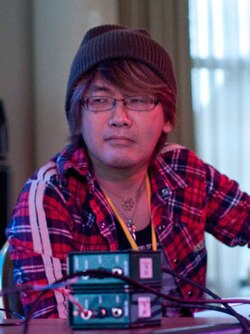
Founded in Tokyo on April 30, 1997, Sacnoth was the brainchild of Hiroki Kikuta. A former composer at Square known for his work on Secret of Mana, Trials of Mana, and Soukaigi, Kikuta desired a directorial role that the strict structure at Square would not permit. Through a business advisor, he connected with the chairman of SNK, who provided the funding necessary to launch the studio. While SNK financed the operation, the company remained an independent developer with full creative control over its products.
Key Facts
- Founder: Hiroki Kikuta, former Square composer.
- Key Titles: Koudelka, Shadow Hearts trilogy, Dive Alert, and Faselei!.
- Evolution: Renamed to Nautilus in 2002 after acquisition by Aruze.
- Genre Focus: Specialized in blending RPG mechanics with horror and alternative history.
- Platform Legacy: Recognized as one of the premier developers for the Neo Geo Pocket Color (NGPC).
The Early Years: 1997–2000
Sacnoth began its journey by developing two projects simultaneously: the PlayStation title Koudelka and the Dive Alert duology for the Neo Geo Pocket Color (NGPC). While Dive Alert served as an early highlight for the portable console in Japan and one of its final releases in North America, Koudelka represented Kikuta's personal ambition to create a "horror RPG."
As the director, producer, writer, and composer of Koudelka, Kikuta initially envisioned a departure from RPG trends, aiming to merge simulation and adventure game mechanics. However, due to staff reluctance, the game ultimately utilized a traditional turn-based battle system. Following the game's 1999 release, Kikuta resigned as CEO to found the music label Norstrilia, leaving Jun Mihara to take the helm.
The studio's final project under SNK was Faselei!, a tactical RPG for the NGPC released in 1999. This era ended abruptly when SNK faced financial difficulties and was acquired by Aruze in January 2000, leading to the eventual discontinuation of the NGPC hardware in June 2000.
The Shadow Hearts Era and Transition to Nautilus
Following the foundation laid by Koudelka, the studio shifted focus to the PlayStation 2 with Shadow Hearts (2001). Directed and written by art director Matsuzo Machida (credited as Matsuzo Itakura) and produced by Jun Mihara, the game evolved the setting of Koudelka into a traditional RPG that blended Lovecraftian horror (atmospheric horror inspired by H.P. Lovecraft) with alternative history.
In November 2002, Aruze acquired Sacnoth and renamed the studio Nautilus. The new entity balanced the development of the Shadow Hearts series with supporting Aruze's pachinko machine production. This led to the 2004 release of Shadow Hearts: Covenant, which incorporated more comedic elements based on player feedback, as well as a subsequent director's cut.
The final entry in the series, Shadow Hearts: From the New World (2005), was developed on a tight schedule. Designed as a spin-off with new characters to attract a broader audience, it focused on refining the existing battle system rather than introducing new mechanics. Despite its release in Japan and later in Western markets via third-party publishers, further sequels were never realized.
Dissolution and Legacy
The decline of the studio began around February 2007, when Nautilus disappeared from Aruze's financial statements. On September 21, 2007, the studio was renamed Aruze Global Trading as part of a corporate restructuring, shifting away from game development entirely. By February 1, 2009, it was merged into Aruze Marketing Japan, which was subsequently absorbed into the parent company, Aruze, in June 2009.
Despite its dissolution, Sacnoth's legacy persists. It is remembered as part of a wave of studios founded by former Square talent, alongside Monolith Soft, Love-de-Lic, and Mistwalker. While critics have had mixed views on Koudelka, the Shadow Hearts series maintains a dedicated cult following for its unique setting and design. Additionally, Faselei! remains a highly sought-after collector's item and is cited as one of the finest titles ever released for the NGPC.
| Period | Studio Name | Key Releases | Primary Platforms |
|---|---|---|---|
| 1997–2000 | Sacnoth | Koudelka, Dive Alert, Faselei! | PlayStation, NGPC |
| 2001–2002 | Sacnoth | Shadow Hearts | PlayStation 2 |
| 2002–2007 | Nautilus | Shadow Hearts: Covenant, Shadow Hearts: From the New World | PlayStation 2 |
| 2007–2009 | Aruze Global Trading | None (Non-gaming) | N/A |
Frequently Asked Questions
Who founded Sacnoth and why?
Sacnoth was founded by Hiroki Kikuta, a former Square composer. He started the company to escape the strict hierarchical structure of Square, which prevented him from moving beyond composing into a directorial role.
What is the relationship between Koudelka and Shadow Hearts?
Shadow Hearts used the setting established in Koudelka to create a more traditional RPG experience, blending alternative history with Lovecraftian horror elements.
What happened to the studio after it became Nautilus?
As Nautilus, the studio continued the Shadow Hearts series while also assisting Aruze with pachinko machine production. It was eventually renamed Aruze Global Trading and merged into Aruze Marketing Japan before being fully absorbed by Aruze.
Which games are considered the studio's most successful?
The Shadow Hearts series is highly regarded for its gameplay and setting, while Faselei! is remembered as one of the best games for the Neo Geo Pocket Color.
Where did the staff go after the studio closed?
Several former staff members from Sacnoth eventually joined Feelplus, contributing to the development of titles such as Lost Odyssey and Ninety-Nine Nights II.