Russian Olympic Committee: A History of Governance, Sanctions, and Controversy
The Russian Olympic Committee (ROC) serves as the national governing body for Olympic sports in Russia. From its early 20th-century origins to its complex relationship with the International Olympic Committee (IOC) in the modern era, the ROC has navigated a turbulent path marked by political shifts, systemic doping scandals, and geopolitical conflicts.
Foundations and Early Evolution
The organization was established in 1911 during a meeting of Russian Sports Societies in Saint Petersburg. The meeting took place at the Imperial Russian Society for Saving on the Water on Sadovaya Street 50, where the committee's Statute was adopted and its first members were elected. Vyacheslav Sreznevsky served as the first chairman of the committee.
Between 1950 and 1992, the entity functioned essentially as the Soviet Olympic Committee, headquartered in Moscow.
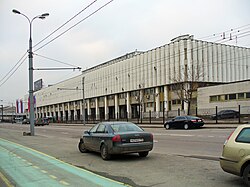
The transition to its modern form began on December 1, 1989, when the All-Russian Olympic Committee was created as an independent public organization within the Soviet framework. It was officially renamed the Russian Olympic Committee on August 13, 1992. By September 1992, during the 101st Session of the IOC, the ROC received full recognition as the legal successor to the Soviet Olympic Committee.
The Doping Crisis and Initial Sanctions (2017–2019)
The ROC faced a severe crisis on December 5, 2017, when the IOC suspended the committee due to its involvement in a state-sponsored doping program. This led to a ban from the 2018 Winter Olympics in Pyeongchang and a requirement to pay $15 million in costs. IOC President Thomas Bach described the situation as an "unprecedented attack on the integrity of the Olympic Games and sport."
The suspension was lifted on February 28, 2018, after the IOC completed doping test checks for athletes who had participated in the Pyeongchang Games, despite two athletes failing drug tests.
In May 2018, former fencer Stanislav Pozdnyakov was elected President of the ROC, a position he held through re-elections in 2022 and 2024. However, further turmoil arrived on December 9, 2019, when the World Anti-Doping Agency (WADA)—the global body monitoring doping in sports—banned Russia from all international sport for four years. WADA found that the Russian Anti-Doping Agency had manipulated data to protect athletes involved in the state-sponsored scheme.
Following an appeal to the Court of Arbitration for Sport (CAS), the penalty was reduced on December 17, 2020. Russia was permitted to participate in the Olympics and other international events for two years, but could not use its name, flag, or anthem. Athletes were required to compete as a "Neutral Athlete" or "Neutral Team," though uniforms could still feature the word "Russia" and the colors of the Russian flag.
Geopolitical Conflict and Suspension (2020–2025)
On February 19, 2021, the IOC specified that the team would compete under the acronym "ROC." While the flag of the Russian Olympic Committee replaced the national flag, uniforms could not mention the word "Russian." After the IOC rejected the song "Katyusha" as a replacement anthem, a fragment of Pyotr Tchaikovsky's Piano Concerto No. 1 was approved on April 22, 2021.
The ROC's leadership became increasingly entangled in politics following the 2022 invasion of Ukraine. In September 2022, President Stanislav Pozdnyakov urged athletes to serve their country in the invasion, calling it an "honourable duty." This prompted ROC Secretary General Anastasia Davydova, an Olympic synchronized swimming champion, to resign in protest and move to Dubai.
Tensions peaked on October 12, 2023, when the IOC suspended the ROC's membership. This action followed the ROC's unilateral transfer of four Ukrainian regions—Donetsk Oblast, Luhansk Oblast, Kherson Oblast, and Zaporizhzhia Oblast—to its own jurisdiction. The IOC ruled this a breach of the Olympic Charter (the codification of the fundamental principles of Olympism) as it violated the territorial integrity of the National Olympic Committee of Ukraine.
As a result, the ROC lost its status as a National Olympic Committee and its access to Olympic Movement funding. Leadership changes followed: Mikhail Degtyarev was elected president on December 13, 2024, and on December 10, 2025, the title of the head of the ROC was changed from president to chairman.
Path Toward Reinstatement (2025–Present)
In 2025, under the leadership of Kirsty Coventry, the IOC began signaling a shift toward inclusivity, considering the return of Russia to the Games despite the ongoing conflict.
On July 7, 2026, the IOC provisionally lifted the ban on the ROC to coincide with the qualification period for the 2028 Summer and Winter Youth Olympics. The IOC cited the fact that the ROC no longer controlled sporting bodies in occupied Ukrainian territories and argued that athletes should not be held responsible for government actions. While the IOC remains undecided on the use of the Russian flag and anthem and continues to refuse hosting events in Russia, athletes may compete if they meet anti-doping requirements.
This decision was welcomed by ROC Chairman Mikhail Degtyarev but condemned by the Ukrainian Ministry of Foreign Affairs and the UK Culture Secretary, Lisa Nandy, who cited Russia's history of disregarding anti-doping regulations.
Key Facts
- Founded: 1911 in Saint Petersburg.
- Legal Status: Recognized by the IOC in September 1992 as the successor to the Soviet Olympic Committee.
- Major Sanctions: Suspended in 2017 (doping) and 2023 (territorial violations of the Olympic Charter).
- Neutral Status: Competed as "ROC" with Tchaikovsky's Piano Concerto No. 1 as the anthem during periods of sanction.
- Current Leadership: Mikhail Degtyarev (Chairman).
| Period/Date | Status/Event | Primary Reason |
|---|---|---|
| 2017–2018 | Suspended | State-sponsored doping program |
| 2019–2021 | Neutral Status ("ROC") | WADA data manipulation findings |
| Oct 2023 | Membership Suspended | Annexation of Ukrainian regions |
| July 2026 | Provisionally Lifted | Cessation of control over occupied territories |
Frequently Asked Questions
Why was the ROC suspended in 2017?
The ROC was suspended by the IOC due to its participation in a state-sponsored doping program, which led to a ban from the 2018 Winter Olympics and a $15 million fine.
What does it mean to compete as a "Neutral Athlete"?
It means athletes cannot use their national name, flag, or anthem. In the case of the ROC, they competed under the acronym "ROC" and used a fragment of Tchaikovsky's Piano Concerto No. 1 instead of the national anthem.
Why did the IOC suspend the ROC in October 2023?
The suspension occurred because the ROC unilaterally transferred four regions of Ukraine (Donetsk, Luhansk, Kherson, and Zaporizhzhia) to its jurisdiction, violating the territorial integrity of the National Olympic Committee of Ukraine and the Olympic Charter.
Who is the current head of the Russian Olympic Committee?
Mikhail Degtyarev was elected as the head of the ROC on December 13, 2024. As of December 10, 2025, his official title is Chairman.
What is the current status of the ROC as of 2026?
The IOC provisionally lifted the ban on July 7, 2026, allowing athletes to qualify for the 2028 Olympics, provided they meet anti-doping requirements, though the use of national symbols remains undecided.