Russian Language Distribution and Status in Europe
The Russian language maintains a complex and varied presence across the European continent. From its role as a primary official language in the Russian Federation to its status as a minority or foreign tongue in Western and Central Europe, the linguistic landscape is shaped by historical ties, political shifts, and migration patterns. While it remains a dominant force in several Eastern European nations, many countries have undergone processes of derussification—the reduction of the Russian language's influence in public and official life.
Key Facts
- Russia has the highest concentration of speakers, with 138 million people indicating Russian skills in 2010.
- Germany hosts the largest Russian-speaking population outside the former Soviet Union, totaling approximately 3 million people.
- Belarus is the only other country where Russian is co-official alongside the national language.
- In the Baltic states (Estonia, Latvia, Lithuania), Russian has no official status and is seeing a decline in use among younger generations.
- Ukraine has seen a significant shift toward the Ukrainian language, with 83% of citizens supporting it as the sole state language as of 2022.
The Russian Federation and Belarus
In Russia, the language is official and ubiquitous. According to the 2010 census, 99.4% of the population possessed Russian language skills, with 118.6 million native speakers. While it shares official status with regional languages in ethnic autonomies like Tatarstan and Yakutia, it remains the primary medium for 94% of students. However, in regions such as Chechnya and Dagestan, the Russian-speaking population has declined due to exodus and Islamization.
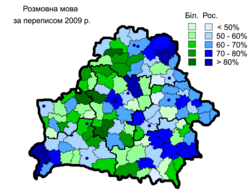
Belarus presents a unique case where Russian is co-official with Belarusian. Following a 1995 referendum, Russian was reinstated as a state language. It is currently the dominant language in most spheres, including government information and websites. Estimates from 2006 indicated that 77% of the population was fluent, with 67% using it as their primary language for work or social interaction.
The Baltic States: Estonia, Latvia, and Lithuania
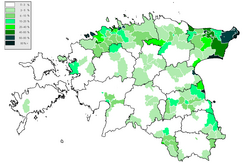
The Baltic region has seen a marked transition away from Russian. In Estonia, Russian is classified as a foreign language. While 67.8% of the population could speak Russian historically, fluency is dropping sharply among youth; only 19% of 10- to 14-year-olds claimed proficiency in 2000, compared to 53% of 15- to 19-year-olds.
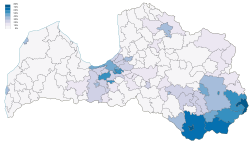
Latvia maintains a significant Russian-speaking minority (26.9% as of 2011), yet the language holds no official status. A 2012 referendum to make Russian a second state language was rejected by 75% of voters. Since 2019, Russian-language instruction has been gradually phased out of public high schools and private universities, except for specific cultural subjects.
Lithuania has the smallest Russian-speaking minority of the three (5.0% in 2008). While 63% of the population could speak Russian as of 2011, primarily among older generations, English has replaced it as the lingua franca (a bridge language used between speakers of different native tongues) for approximately 80% of young people.
Ukraine and Moldova
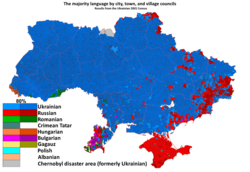
In Ukraine, Russian is recognized as a minority language. The linguistic landscape has shifted dramatically since independence. While a 2004 estimate cited 29 million active speakers, recent data shows a strong trend toward Ukrainian. A 2022 RATING poll found that 83% of Ukrainians believe Ukrainian should be the only state language. By August 2023, only 9% of polled citizens reported speaking Russian at home.
Moldova treats Russian as a recognized minority language and a tool for interethnic communication. It holds co-official status in the autonomous regions of Gagauzia and Transnistria. As of 2014, Russian is the native language for 9.68% of the population.
Russian in Other European Regions
Central and Southern Europe
Germany hosts roughly 3 million Russian speakers, comprising ethnic Germans (Aussiedler), ethnic Russians, and Jews. In Bulgaria, 19% of the population understands Russian well enough to follow media, the highest proportion among non-Soviet European countries. Romania's Russian speakers are primarily Lipovans—practitioners of the Lipovan Orthodox Old-Rite Church—concentrated in the Dobruja region.
Northern Europe and the Mediterranean
In Finland, Russian is one of the most spoken immigrant languages (1.7% of the total population). Its popularity grew due to trade and tourism until 2022, after which a decline was noted following the invasion of Ukraine. In Cyprus, the 2011 census recorded 20,984 Russian speakers, representing 2.5% of the population.
The Caucasus
Georgia recognizes Russian as a minority language, though it has no official status. The government has pursued Georgianization, favoring Georgian and English for signage. However, Russian remains co-official in the breakaway republics of Abkhazia and South Ossetia.
Summary of Russian Language Presence
| Country | Legal Status | Key Demographic Note |
|---|---|---|
| Russia | Official | 99.4% have Russian language skills (2010) |
| Belarus | Co-official | 67% use it as main language for work/family (2006) |
| Ukraine | Minority Language | Only 9% speak Russian at home (2023) |
| Estonia | Foreign Language | Fluency declining rapidly among youth |
| Latvia | No Official Status | 26.9% ethnic Russians (2011) |
| Lithuania | No Official Status | English has replaced Russian as lingua franca |
| Germany | N/A | ~3 million speakers (largest non-Soviet population) |
Frequently Asked Questions
Which European country has the most Russian speakers outside of Russia?
Germany has the highest Russian-speaking population outside the former Soviet Union, with approximately 3 million people.
Is Russian an official language in Belarus?
Yes, Russian is co-official alongside Belarusian according to the Constitution of Belarus.
How has the status of Russian changed in Ukraine recently?
There has been a significant decline in the use of Russian in everyday life. As of 2023, only 9% of polled Ukrainians usually speak Russian at home, and 83% believe Ukrainian should be the only state language.
What is the status of the Russian language in the Baltic states?
In Estonia, Latvia, and Lithuania, Russian has no official status. In Estonia, it is considered a foreign language, and in Latvia and Lithuania, it is increasingly being replaced by English among younger generations.
Where is Russian co-official in Moldova?
Russian holds co-official status alongside Romanian in the autonomous regions of Gagauzia and Transnistria.