Royal Victorian Order
The Royal Victorian Order is a prestigious dynastic order of knighthood established to recognize distinguished personal service to the Sovereign. Unlike many other honours that may be granted on the advice of government ministers, this order remains within the personal gift of the monarch, allowing them to reward individuals who have provided exceptional service to the Crown and the Royal Family.
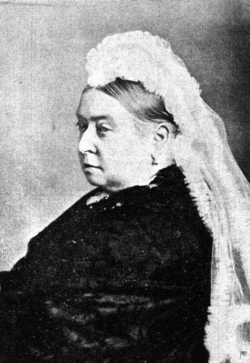
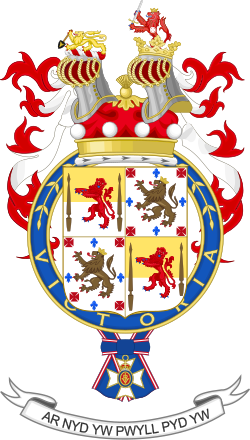
Founded on April 21, 1896, by Queen Victoria, the order carries the motto "Victoria" and serves as a mark of royal appreciation for those who have served the monarchy with loyalty and dedication.
Key Facts
- Established: April 21, 1896, by Queen Victoria.
- Purpose: Awarded for personal service to the Sovereign.
- Sovereign: King Charles III.
- Grand Master: Anne, Princess Royal.
- Eligibility: Open to both British and foreign nationals, as well as men and women.
- Structure: Comprises five grades of membership and the Royal Victorian Medal.
History and Evolution
From its inception, the Royal Victorian Order was designed to be inclusive of international figures. In 1896, the first foreign recipients were the Mayor of Nice and the Prefect of Alpes-Maritimes. Over time, the order's precedence and eligibility have evolved.
Until 1917, Commanders of the order held precedence immediately after knights bachelor. In 1936, King Edward VIII expanded the order's inclusivity by opening membership to women. The role of Grand Master was later created in 1937, first held by Queen Elizabeth (the Queen Mother) until 2002, and subsequently by Anne, Princess Royal, since 2007.
Composition and Governance
The order is headed by the reigning monarch as the Sovereign. Supporting the Sovereign is the Grand Master and a team of five key officials:
- Chancellor: Held by the Lord Chamberlain (currently the Lord Benyon).
- Secretary: Held by the Keeper of the Privy Purse and Treasurer to the King.
- Registrar: Held by the Secretary to the Central Chancery of the Orders of Knighthood.
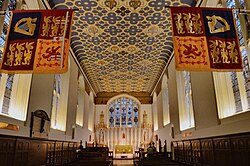
- Chaplain: Held by the Chaplain of the King's Chapel of the Savoy.
- Genealogist: An official responsible for ancestral records.
Grades and Insignia
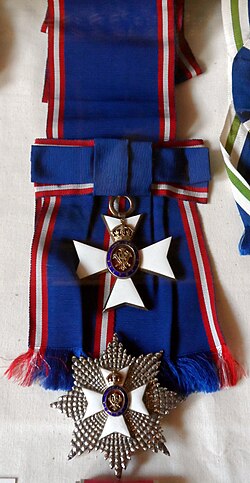
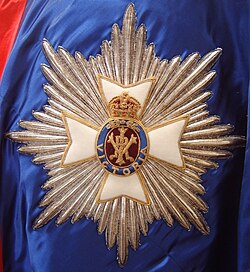
The Royal Victorian Order is divided into several levels, each with specific post-nominal letters and insignia. The most senior rank is the Knight or Dame Grand Cross, followed by Knight or Dame Commander, Commander, Lieutenant, and Member. Additionally, the Royal Victorian Medal (RVM) may be awarded.
| Grade | Prefix | Post-nominals |
|---|---|---|
| Knight/Dame Grand Cross | Sir / Dame | GCVO |
| Knight/Dame Commander | Sir / Dame | KCVO / DCVO |
| Commander | — | CVO |
| Lieutenant | — | LVO |
| Member | — | MVO |
| Royal Victorian Medal | — | RVM |
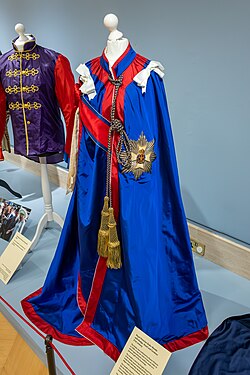
The insignia consists of a blue ribbon with red-white-red stripe edging. Foreign members are distinguished by an additional central white stripe on their ribbon. The width of the ribbon varies by grade, ranging from 82.5 millimetres for Knights Grand Cross to 31.7 millimetres for other members.
International and Commonwealth Appointments
The order maintains a strong presence across the Commonwealth. In Canada, appointments resumed in 1972 for those rendering service to the monarch's representatives. To ensure the order remains non-political, the practice of notifying the Canadian Prime Minister of nominees ended in 1982. Canada also hosts the only Royal Victorian Order Association within the Commonwealth realms.
Honorary appointments are frequently granted to foreign heads of state and diplomats. Notable honorary members have included Emperor Akihito of Japan, King Harald V of Norway, and King Felipe VI of Spain.

Frequently Asked Questions
Who decides who is appointed to the Royal Victorian Order?
The appointments are made personally by the Sovereign, as the order is within the monarch's own gift rather than being based on government recommendations.
What is the difference between a member and an honorary member?
While both are recognized for service, honorary members (typically foreign nationals) have a distinct ribbon that includes an additional central white stripe.
Can women be members of the Royal Victorian Order?
Yes, the order was opened to women by King Edward VIII in 1936.
What is the role of the Grand Master?
The Grand Master is the second-highest authority in the order, following the Sovereign. This position is currently held by Anne, Princess Royal.
Where is the official chapel of the order?
The King's Chapel of the Savoy serves as the chapel for the Royal Victorian Order.