Royal Hospital School Traditions and Naval Heritage
The Royal Hospital School (RHS) maintains a rich cultural identity deeply intertwined with the Royal Navy and seafaring history. Over its 300-year existence, the institution has blended academic life with naval discipline, creating a unique environment where students engage in ceremonial practices and traditions that mirror maritime life.
From the precision of the parade square to the echoes of the chapel organ, these customs foster a sense of continuity and pride among the student body.
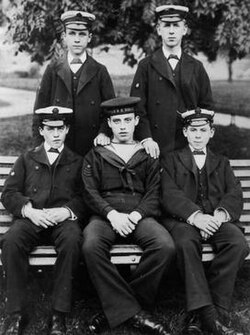
Key Facts
- Naval Influence: Traditions are heavily based on Royal Navy customs, including uniforms and ceremonial guards.
- Musical Excellence: The school features a £3.6 million Reade Music School and a band modeled on the Royal Marines.
- Student Leadership: Prefects and student leaders hold specific naval ranks, from Petty Officers to Warrant Officers.
- Historical Ties: The school has a long-standing connection with composer Benjamin Britten.
Naval Uniforms and Ceremonial Ranks
While students wear standard school attire for daily lessons, Naval uniforms are worn for ceremonial occasions. The most prominent of these is Divisions (often referred to in school slang as "Divis" or "Divvies"), a ceremony where each house organizes into Junior and Senior squads to march on the parade square, accompanied by the marching band and the Guard of Honour.
Leadership within the school is reflected through a structured system of naval ranks:
- House Petty Officers (POs): Identified by a chevron on their left arm.
- School Chiefs: Approximately 20 Upper 6th Formers who wear Chief Petty Officer ranks and uniforms, including canes.
- Deputy Heads of School: Two boys and two girls who hold the rank of Warrant Officer (Second Class).
- Heads of School: One boy and one girl who hold the rank of Warrant Officer (First Class).
Musical Traditions and Facilities
Music is a cornerstone of the RHS experience. All pupils are required to attend weekly congregation practice (known colloquially as "Congo"). To support this commitment, the school opened the £3.6 million Reade Music School in 2008.
The school's marching band is a central feature of campus life. Managed by a former member of the Royal Marines Band Service, the ensemble follows the style of the Royal Marines. During Divisions, the band forms its own division, which is larger than the house divisions. The band has toured internationally, visiting the USA and Sri Lanka, and performs classic marches such as Heart of Oak, A Life on the Ocean Wave, the Royal Salute, and the Holbrook March.
The school's musical legacy includes a significant collaboration with Benjamin Britten. On June 18, 1958, band members performed in the orchestra for the premiere of Britten's Noye's Fludde at Orford Church in Suffolk as part of the Aldeburgh Festival. Additionally, the school chapel houses a grand four-manual organ installed in 1933 by William Hill & Son & Norman & Beard Ltd.
School Songs
The school's repertoire includes several significant pieces:
- Go Forth With God by Martin Shaw (tune of Toc H).
- Eternal Father, Strong to Save.
- Jerusalem.
- Holbrook, composed by Benjamin Britten.
- Holbrook March, composed by Lt Col Sir Vivian Dunn KCVO OBE FRSA of the Royal Marines.
School Life and Events
The academic year is punctuated by a variety of traditional events that blend social gathering with formal commemoration. These include the Trafalgar Dinner, Remembrance Sunday, and the Leavers Ball, as well as community-focused events like House Shout, school plays, and alumni reunions.
| Category | Key Examples |
|---|---|
| Ceremonies | Divisions, Guard of Honour, Speech Day |
| Naval Ranks | Warrant Officer, Chief Petty Officer, Petty Officer |
| Annual Events | Trafalgar Dinner, Burns Night, Remembrance Sunday |
| Musical Assets | Reade Music School, Four-manual chapel organ |
The Language of RHS: School Slang
Over three centuries, the school has developed a unique lexicon. Much of this slang is derived from naval terminology, while other terms are specific to the school's internal culture:
- Civvies: Civilian clothing.
- DH: The Dining Hall.
- Mess: A meal.
- Stand easy: Break time.
- Chiefs: School prefects.
Frequently Asked Questions
What is the "Divisions" ceremony?
Divisions is a ceremonial event where students wear Naval uniforms and form Junior and Senior squads by house to march on the parade square, accompanied by the school's marching band.
Who are the "Chiefs" at Royal Hospital School?
The Chiefs are approximately 20 students from the Upper 6th Form who serve as school prefects and wear the rank and uniform of a Chief Petty Officer, which includes carrying canes.
What is the significance of the Reade Music School?
Opened in 2008 at a cost of £3.6 million, the Reade Music School provides the facilities necessary to support the school's extensive musical traditions and required weekly congregation practices.
How is the marching band structured?
The band is modeled after the Royal Marines and is managed by a former member of the Royal Marines Band Service. It operates as its own large division during ceremonial parades.
What naval ranks are held by the student heads of school?
The Heads of School (one boy and one girl) hold the rank of Warrant Officer (First Class), while the Deputy Heads hold the rank of Warrant Officer (Second Class).