Rosario Government: Structure, Administration, and Urban Innovation
Located on the western shore of the Paraná River, Rosario is the largest city in the province of Santa Fe and the third most populated city in Argentina, with approximately 910,000 inhabitants according to the 2001 census. As a first-category municipality—a designation for cities with more than 200,000 residents—its governance is dictated by the Provincial Organic Law of Municipalities (Ley Provincial Nº 2756/39).
Key Facts
- Government Structure: Divided into an Executive branch (Mayor) and a Legislative branch (Deliberative Council).
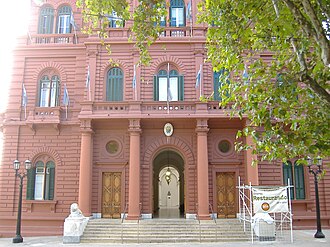
- Executive Seat: The Palacio de los Leones.
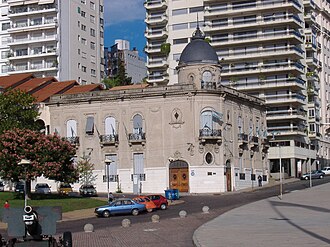
- Legislative Seat: The Palacio Vassallo.
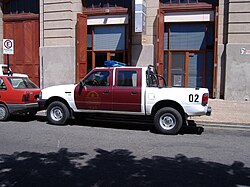
- Urban Guard: Pioneer of the GUM, a non-armed municipal patrol force.
- Global Recognition: Awarded by the UNDP in 2003 as a model of successful local governance in Latin America.
The Branches of Municipal Government
The Executive Branch
The Executive branch is led by the Mayor (Intendente), who is elected by direct popular vote for a four-year term. The Mayor oversees a wide array of Secretariats that manage critical city functions, including Finance and Economy, Health, Public Works, and Culture and Education. Notably, in 2005, Rosario established the Human Rights Secretariat, the first municipal-level office of its kind in Argentina.
The administrative heart of the Executive branch is the Municipalidad, housed in the historic Palacio de los Leones, situated next to the city's Cathedral.
The Legislative Branch
Local legislation is the responsibility of the Deliberative Council (Concejo Municipal). This body is tasked with passing municipal regulations known as ordenanzas. The Council consists of 21 members (Concejales), with half of the seats renewed every two years. The Council operates out of the Palacio Vassallo.
Political Leadership and Evolution
Since the return to democracy in 1983, Rosario has seen a shift in political leadership. The first post-democracy mayor, Horacio Usandizaga of the Radical Party, resigned in 1989 after fulfilling a promise to do so if Carlos Menem won the presidency. Following this, the city has been largely led by members of the Socialist Party, including Hermes Binner and Miguel Lifschitz, leading up to the term of Mónica Fein (2011–2015).
Urban Organization and Governance
To better serve its population, Rosario is divided into six administrative districts: Center, North, Northwest, West, Southwest, and South. Each district features Municipal District Centers that organize cultural events and provide essential services to local residents.
This commitment to efficient administration earned the city international acclaim. In December 2003, the United Nations Development Programme (UNDP) recognized Rosario as a model for local governance and development in Latin America. This recognition led to the city hosting the "Experiencia Rosario" Fair on Governance in 2005.
The Municipal Urban Guard (GUM)
Rosario pioneered the Municipal Urban Guard (Guardia Urbana Municipal, or GUM), a specialized patrol force launched on June 29, 2004. Unlike the provincial police, GUM agents are unarmed and do not have the authority to make arrests. Instead, they focus on public safety and order by reporting traffic violations, closing illegal commercial establishments, and providing first aid.
The GUM patrols high-traffic areas such as monuments, squares, and pedestrian streets. The success of this model led other cities, including Buenos Aires and Rafaela, to explore or adopt similar municipal guard systems.
Ambitions for Autonomy and Federalization
There is a persistent push among local institutions to grant Rosario the status of an Autonomous City, similar to the status held by Buenos Aires. This movement, rooted in the early 20th-century ideas of politician Lisandro de la Torre, would allow the city to independently organize its government and enact its own tax regulations.
Furthermore, some political and legal experts have proposed moving the National Congress to Rosario. This project, officially presented in November 2005 by regional governors and Mayor Miguel Lifschitz, suggests turning Rosario into a federal capital to decentralize the national government. Proponents argue that this would move legislators away from the "urban neurosis" of Buenos Aires and leverage Rosario's status as a productive, fast-growing pole.
Summary of Rosario's Governance
| Feature | Details |
|---|---|
| Municipality Category | First-category (Over 200,000 inhabitants) |
| Executive Head | Mayor (Intendente) - 4 year term |
| Legislative Body | Deliberative Council (21 members) |
| Administrative Divisions | 6 Districts (Center, North, NW, West, SW, South) |
| Special Security Force | Municipal Urban Guard (GUM) - Unarmed |
Frequently Asked Questions
What is the role of the Deliberative Council in Rosario?
The Deliberative Council is the legislative branch of the city government. It is responsible for creating and passing municipal regulations, known as ordenanzas, to govern the city.
How does the Municipal Urban Guard (GUM) differ from the police?
Unlike the provincial police, GUM agents are municipal employees who are unarmed and cannot perform arrests. They focus on traffic reports, first aid, and monitoring public spaces to provide a dissuasive presence.
Why is Rosario considered a "first-category municipality"?
Under Santa Fe's Provincial Organic Law of Municipalities, any municipality with a population exceeding 200,000 inhabitants is classified as first-category.
What is the goal of the push for municipal autonomy?
The goal is to achieve a legal status similar to that of Buenos Aires, which would allow Rosario to independently manage its government, pass its own laws, and establish its own tax regulations.
What is the significance of the Palacio de los Leones?
The Palacio de los Leones serves as the official seat of the Executive branch (the Municipalidad) and is located in the historical core of the city.