Roller Skating: A Comprehensive History and Guide to Modern Styles
Roller skating is the act of traveling on surfaces using roller skates, serving as a versatile activity that spans recreation, competitive sport, and urban transportation. While dedicated spaces like roller rinks and skate parks are designed specifically for the activity, skaters frequently utilize streets, sidewalks, and bike paths to navigate their environments.
From its origins in 18th-century performing arts to the neon-lit roller discos of the 1970s and the modern resurgence during the COVID-19 pandemic, roller skating has experienced several waves of popularity. It has also held significant cultural importance within Black and LGBT histories.
Key Facts
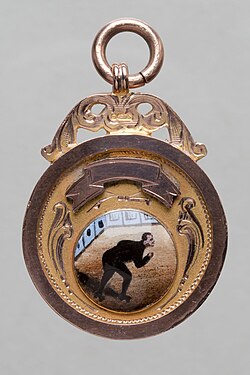
- Origins: First recorded in a 1743 London stage performance.
- The Quad Revolution: James Leonard Plimpton designed the four-wheeled turning skate in 1863, enabling easier maneuverability.
- Golden Age: The period from the 1930s to the 1950s saw a massive boom in U.S. skating rinks.
- Modern Governance: World Skate, formed in 2017, oversees over 130 national federations.
- Diverse Disciplines: Includes speed skating, roller derby, roller hockey, and artistic skating.
The Evolution of Roller Skating
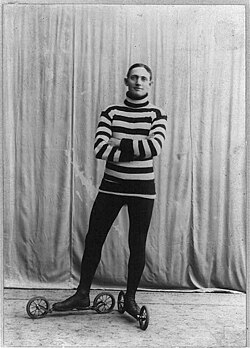
![Young man on the Edvard Petrini's pedaled roller skates,[12] known as Takypod in Sweden, circa 1910](/images/68/53/6853d71ce708201dd90559cb71889fded7ba7b22824844bd8d392e9f3c922f69.jpg)
Early Beginnings and Technical Breakthroughs
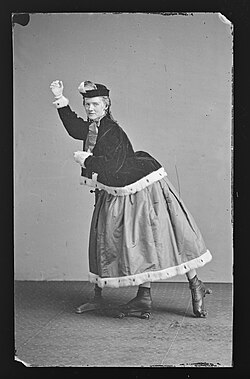
The earliest known roller skates appeared in 18th-century Europe, primarily used in theater and musical performances to simulate ice skating. These primitive designs limited skaters to moving in straight lines, as turning was nearly impossible.
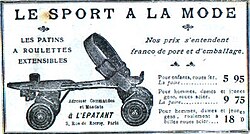
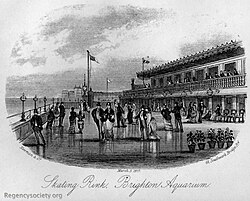
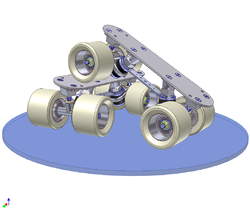
By the 1840s, the activity moved beyond the stage. In Berlin, waitresses used skates to serve customers in beer halls, and ballet and opera productions like Le prophète featured skating, sparking popularity across Europe in the 1850s. The introduction of rubber wheels in 1859 and the 1863 invention of the quad skate—four wheels set in two side-by-side pairs—by James Leonard Plimpton revolutionized the sport by allowing skaters to curve and turn.
The Rise of Mass Production and the Golden Age
Between 1880 and 1910, roller skating became a global phenomenon. Mass production, led by figures like Micajah C. Henley in Indiana, made skates accessible to the general public in Europe, North and South America, and Australia. This era saw the birth of specialized disciplines such as speed and figure skating.
Following a dip in interest, the 1930s through the 1950s marked the Golden Age of Roller Skating. In the United States, numerous rinks opened, often featuring electric organ music to accompany skaters.
Cultural Shifts: Disco and Inline Skating
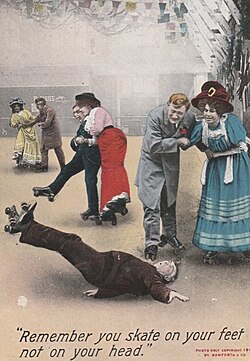
The 1970s introduced the roller disco trend, which originated predominantly among Black and gay skaters, blending disco music with skating. By the late 1980s and 1990s, the focus shifted toward inline skating. This was propelled by the company Rollerblade, Inc., founded by Scott and Brennan Olson, who redesigned inline skates using modern materials and ice hockey boots for off-ice training.
Types of Roller Skating
Artistic and Jam Skating
Artistic skating includes precision teams where groups of 6 to 30 skaters create complex geometric patterns and choreographed movements to music. In contrast, jam skating is a high-energy style that blends dance, gymnastics, and skating.
Competitive Sports
- Speed Skating: Originally performed on quads, this discipline saw its first national competition in 1938 in Detroit, Michigan.
- Roller Derby: A team sport played on an oval track. While it began as a speed skating demonstration in the 1930s, it saw a grassroots revival in the early 2000s, primarily as a women's sport.
- Roller Hockey: An umbrella term for hockey variants played on skates. Quad hockey (rink hockey) dates back to the 19th century and was a demonstration sport at the 1992 Barcelona Olympics.
Social and Group Skating
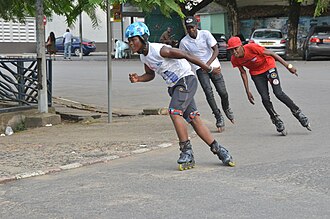
Group skating involves large gatherings of skaters navigating city streets. Notable examples include the San Francisco Midnight Rollers and the Pari Roller in Paris, the latter of which has seen up to 35,000 participants in a single night. Poland's Nightskating Warszawa holds a significant record for participant numbers.
Equipment and Safety
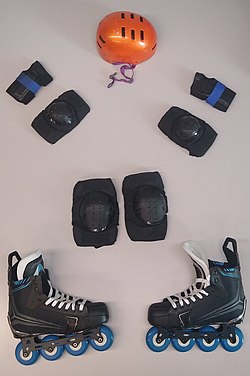
Modern skating requires specific gear depending on the discipline. While quad skates remain popular for dance and derby, inline skates are often preferred for distance and speed. For safety, typical protective gear includes helmets, elbow pads, wrist guards, and knee pads.
| Year | Event/Innovation | Significance |
|---|---|---|
| 1743 | First recorded use | London stage performance |
| 1863 | Quad skate design | Enabled turning and maneuverability |
| 1876 | Ball bearing wheels | Modernized skate and skateboard wheels |
| 1930s-50s | Golden Age | Massive growth of U.S. skating rinks |
| 1970s | Roller Disco | Cultural fusion of music and skating |
| 1990s | Inline Boom | Popularization of "Rollerblades" |
Frequently Asked Questions
What is the difference between quad skates and inline skates?
Quad skates have four wheels arranged in two side-by-side pairs, providing more stability and a different feel for dancing and derby. Inline skates have wheels arranged in a single line, which generally allows for greater speed and easier outdoor navigation.
Who invented the modern roller skate wheel?
William Brown and Joseph Henry Hughes are credited with the development of the ball or roller bearing race in the late 1870s, which is the foundation for modern roller skate and skateboard wheels.
What is the Golden Age of Roller Skating?
The Golden Age refers to the period between the 1930s and 1950s, characterized by the proliferation of skating rinks across the United States and the integration of electric organ music.
What is the governing body for roller sports?
World Skate is the current international governing body, formed in 2017 through the merger of the Fédération Internationale de Roller Sports and the International Skateboarding Federation.
Is roller derby still played on banked tracks?
Yes, while many modern leagues follow the flat track guidelines of the Women's Flat Track Derby Association, some leagues still utilize the banked tracks used in the sport's original 1930s format.