Rocket Engines: Principles, Propulsion Types, and Engineering Challenges
A rocket engine, or rocket motor, is a reaction engine that generates thrust by ejecting reaction mass rearward. This process follows Newton's third law of motion: for every action, there is an equal and opposite reaction. In most practical applications, this reaction mass is a high-speed jet of high-temperature gas produced by the combustion of propellant stored within the vehicle.
Unlike jet engines or pulse engines, which rely on atmospheric oxygen, rocket engines carry their own oxidiser. This critical distinction allows them to operate in the vacuum of space and achieve extreme speeds, potentially exceeding escape velocity if sufficient delta V (the change in velocity) is provided. From missiles and artillery shells to sophisticated space vehicles, rocket engines are the primary drivers of modern aerospace exploration and defense.
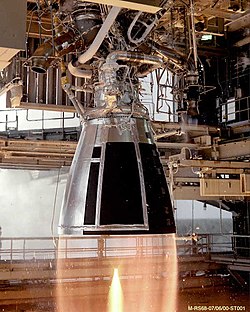
Key Facts
- Thrust Generation: Produced by ejecting high-speed gas rearward via Newton's third law.
- Self-Sufficiency: Rockets carry both fuel and oxidiser, enabling operation in a vacuum.
- Efficiency Metric: Specific impulse (Isp) measures propellant efficiency, often expressed in seconds.
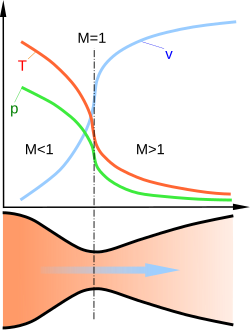
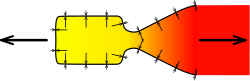
- Nozzle Function: The de Laval nozzle accelerates exhaust gases to supersonic speeds.
- Thermal Management: Combustion temperatures can reach up to 6,000 °F (3,300 °C).
Core Principles of Operation
The fundamental goal of a rocket engine is to accelerate fluid to high speeds through a nozzle. This is typically achieved by the high-pressure combustion of solid or liquid propellants within a combustion chamber. The pressures involved can range from 150 to 4,350 pounds per square inch (10 to 300 bar).
As the gases expand through the nozzle, they transition to supersonic speeds. The reaction to this rapid expulsion pushes the vehicle in the opposite direction. To maximize thermal efficiency, engineers aim for high temperatures and pressures, guided by the laws of thermodynamics.
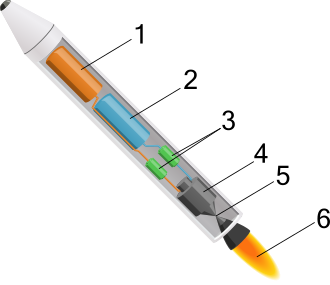
The Role of the Nozzle
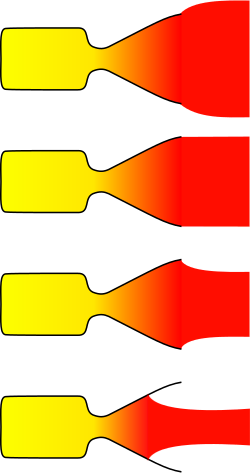
The nozzle is essential for converting thermal energy into kinetic energy. The efficiency of this process depends on the relationship between the exit pressure of the gas and the ambient atmospheric pressure. There are four primary expansion regimes:
- Under-expanded: The exit pressure is greater than the ambient pressure.
- Perfectly expanded: The exit pressure equals the ambient pressure, representing optimal efficiency.
- Over-expanded: The exit pressure is less than the ambient pressure.
- Grossly over-expanded: Extreme pressure differences that can cause flow separation.
Propulsion Technologies
Rocket engines are categorized by how they generate energy and the state of their propellants.
Chemical Propulsion
Chemical rockets rely on exothermic reduction-oxidation (redox) reactions. These are the most common engines used today and are divided into several types:
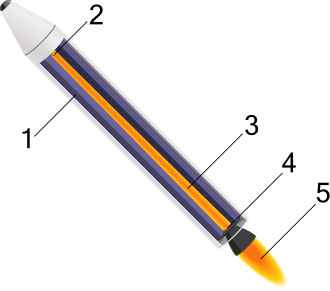
- Solid-propellant rockets: Use a self-sustaining solid fuel/oxidiser mixture (grain) with a central hole.
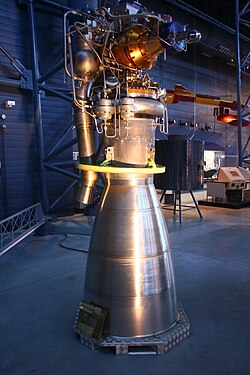
- Liquid-propellant rockets: Use liquid fuel and oxidiser, often providing higher performance and throttleability.
- Hybrid rockets: Combine solid and liquid components for simpler control and lower combustion temperatures.
- Bipropellant rockets: Use two distinct liquids for fuel and oxidiser, offering high performance.
Non-Combusting and Alternative Propulsion
Beyond chemical combustion, several other methods exist to provide thrust:
- Cold gas thrusters: Use non-combusting gas for low-performance, non-contaminating maneuvers.
- Electric propulsion: Includes ion engines and plasma thrusters, which offer very high specific impulse but low thrust.
- Nuclear thermal rockets: Use a nuclear reactor to heat propellant (typically hydrogen), offering higher efficiency than chemical rockets but facing environmental and thrust-to-weight challenges.
Performance Metrics and Efficiency
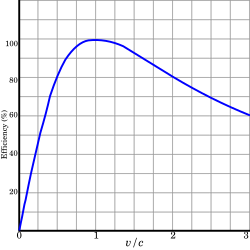
The most vital metric for evaluating a rocket engine is specific impulse (Isp). This represents the impulse delivered per unit of propellant. A higher Isp means the engine can provide more thrust for a given amount of fuel, making it more efficient.
| Engine/System | Propellant Type | Isp (seconds) |
|---|---|---|
| Space Shuttle liquid engines | LOX / LH2 | 453 |
| Space Shuttle OMS | NTO / MMH | 313 |
| Saturn V stage 1 | LOX / RP-1 | 304 |
| Space Shuttle solid motors | APCP | 268 |
Engineers also monitor the thrust-to-weight ratio, which compares the engine's thrust to its own mass. High-performance engines like the Merlin 1D exhibit significantly higher ratios than heavy nuclear or jet-based engines.
Engineering Challenges and Mechanical Issues
Designing rocket engines involves managing extreme environments. Combustion chambers must withstand immense pressures and temperatures that can reach 6,000 °F (3,300 °C). To prevent the hardware from melting, engineers use various cooling methods, such as regenerative cooling (circulating fuel around the chamber) or ablative cooling (using material that slowly erodes).
Combustion Instabilities
One of the most dangerous phenomena in rocketry is combustion instability. This occurs when pressure fluctuations within the chamber become uncontrolled, potentially destroying the engine. These instabilities are often categorized into three types:
- Chugging: Low-frequency instability.
- Buzzing: Intermediate-frequency instability.
- Screeching: High-frequency instability.
Acoustic Management
Rocket exhaust is incredibly noisy. For example, the Space Shuttle generated over 200 dB(A) of noise. To protect the vehicle and payload from acoustic damage, launch pads often use Sound Suppression Systems, which spray massive amounts of water to dampen the sound waves.
Frequently Asked Questions
What is the difference between a rocket and a jet engine?
The primary difference is that a rocket engine carries its own oxidiser, allowing it to function in a vacuum. A jet engine relies on absorbing oxygen from the surrounding atmosphere to burn its fuel.
Why is specific impulse important?
Specific impulse (Isp) is a measure of how efficiently a rocket uses its propellant. A higher Isp means the engine can produce more thrust for every kilogram of propellant consumed, which is critical for long-duration space missions.
How do rocket engines stay cool?
Because combustion temperatures can exceed the melting point of engine materials, engineers use techniques like regenerative cooling, where the cold propellant is circulated through the engine walls before being burned, or ablative cooling, where a sacrificial layer of material protects the structure.
What are shock diamonds in rocket exhaust?
Shock diamonds (visible banding) occur when a rocket engine is over-expanded. This happens when the pressure of the exhaust gas at the nozzle exit is lower than the ambient atmospheric pressure, causing the gas to undergo a series of compression and expansion waves.
What is thrust vectoring?
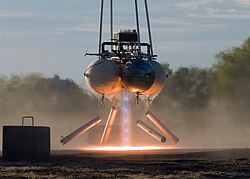
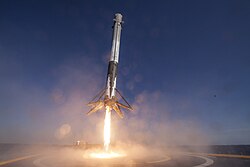
Thrust vectoring is the ability of an engine to manipulate the direction of its thrust. This is often used to control the attitude (orientation) and trajectory of the rocket during flight, such as during the landing burns of reusable boosters.