Rock Opera: The Evolution of Narrative Music
A rock opera is a collection of rock songs, often presented as a concept album, where the lyrics weave together to tell a cohesive story. Unlike traditional musical albums, rock operas utilize character roles and narrative arcs to drive the plot forward. This ambitious blend of rock energy and theatrical storytelling has not only defined entire eras of music but has also inspired spin-offs in other genres, such as the rap opera.
While they share a name with classical opera, rock operas differ in a fundamental way: they are typically not written specifically for the stage. Instead, they often mirror the structure of a classical oratorio—a large-scale musical composition for orchestra and voices—though many have since been adapted into full-scale rock musicals for the theater.
Key Facts
- Definition: A narrative-driven collection of rock songs, usually released as a concept album.
- First Major Success: The Who's Tommy (1969) was the first explicitly billed rock opera to achieve massive commercial and critical success.
- Distinction: Unlike classical opera, rock operas are primarily recorded works rather than scripted theatrical productions.
- Legacy: The genre has evolved from 1960s experimentation to modern punk and progressive metal interpretations.
The Origins and 1960s Experimentation
The seeds of the rock opera were sown in the early 1960s. Frank Zappa was among the first to use the term in 1963 while describing I Was a Teenage Malt Shop, a project intended for CBS. Although CBS rejected the demo, Zappa continued to explore the form, releasing "underground oratorios" like Absolutely Free and The M.O.I American Pageant in 1967. He later produced the full rock opera Joe's Garage in 1979.
Other early pioneers included Mark Wirtz, whose 1967 hit "Grocer Jack" was an excerpt from A Teenage Opera, and the British band Nirvana, who released The Story of Simon Simopath: A Science Fiction Pantomime in 1967. This early concept album followed the life of a lonely boy wishing to fly, blending psych-pop with baroque and classical influences.
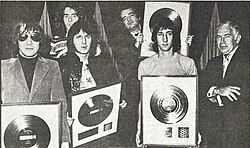
In 1968, The Pretty Things released S. F. Sorrow, which many historians regard as the first true rock opera. It chronicled the life of Sebastian F. Sorrow from birth to old age. Despite its innovation, the album failed commercially due to a lack of promotion from EMI and the simultaneous release of landmark albums by The Beatles and The Rolling Stones.
The genre reached a turning point in May 1969 with the release of Tommy by The Who. Telling the story of a "deaf, dumb and blind kid," Tommy became a global phenomenon, selling 20 million copies and earning a place in the Grammy Hall of Fame. Its success paved the way for further adaptations, including a 1975 film and a 1992 Broadway musical.
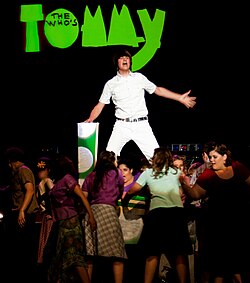
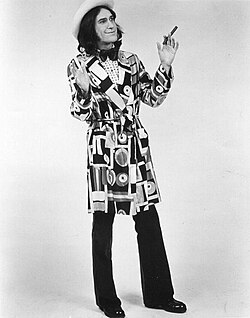
Following Tommy, The Who released Quadrophenia in 1973. Meanwhile, The Kinks made significant contributions through Ray Davies, who wrote Arthur (Or the Decline and Fall of the British Empire) in 1969. Davies continued this narrative trend with a series of works, including Lola Versus Powerman and the Moneygoround, Part One (1970) and the dystopian Preservation acts (1973-1974).
The Golden Era of the 1970s
The 1970s saw the rock opera expand into both the recording studio and the Broadway stage. Andrew Lloyd Webber and Tim Rice created Jesus Christ Superstar (1970), which was designed as a rock album from its inception. In 1972, David Bowie introduced the world to the extraterrestrial rock star in The Rise and Fall of Ziggy Stardust and the Spiders from Mars.
Other artists pushed the boundaries of the form. Lou Reed's 1973 album Berlin told a tragic story of abuse and decadence, while Genesis released the surreal The Lamb Lies Down on Broadway in 1974, featuring a spiritual awakening in New York City.
In 1977, Meat Loaf released Bat Out of Hell, produced by Jim Steinman. Steinman described the style as "Wagnerian rock," referencing composer Richard Wagner. The album became one of the best-selling records of all time, with over 50 million copies sold worldwide.
The decade culminated in Pink Floyd's 1979 double album, The Wall. This archetypal rock opera follows a character named Pink who builds an emotional wall to shield himself from trauma. The project became a cultural landmark, leading to a 1982 film and some of the highest-grossing tours in music history.
Modern Interpretations: 1980s to Present
As music evolved, the rock opera adapted. In 1989, the Fat Boys released On and On, a pioneering example of a rap opera. The progressive metal scene also embraced the format, notably Dream Theater with 1999's Metropolis Pt. 2: Scenes from a Memory, which uses hypnosis to uncover a murder mystery from a previous life.
In the 21st century, Green Day brought the genre to a new generation with the punk rock opera American Idiot (2004) and 21st Century Breakdown (2009). More recently, the band The Protomen has blended science fiction and rock in a dystopian series, including Act II: The Father of Death (2009) and Act III: This City Made Us (2026).
![In the best-known role of his career, László Pelsőczy [hu] plays the title role of Stephen in István, a király, which he played at the King's Hill and at the Szeged Open Air Festival [hu]](/images/b9/2a/b92a2bfc9a5be65509bf5db10b30a768a9fbb82a95d8866b05e91ac572458633.jpg)
Summary of Landmark Rock Operas
| Artist | Work | Year | Key Theme/Story |
|---|---|---|---|
| The Pretty Things | S. F. Sorrow | 1968 | Life cycle of Sebastian F. Sorrow |
| The Who | Tommy | 1969 | Experiences of a deaf, dumb, and blind boy |
| Andrew Lloyd Webber | Jesus Christ Superstar | 1970 | The final days of Jesus Christ |
| Pink Floyd | The Wall | 1979 | Emotional isolation and trauma of "Pink" |
| Meat Loaf | Bat Out of Hell | 1977 | Wagnerian rock narrative |
| Green Day | American Idiot | 2004 | Punk rock social commentary |
Frequently Asked Questions
What is the difference between a rock opera and a concept album?
While both are thematic, a concept album focuses on a central theme or idea, whereas a rock opera specifically tells a story with a plot and often utilizes distinct character roles.
Which album is considered the first rock opera?
Many regard The Pretty Things' S. F. Sorrow (1968) as the first, although The Who's Tommy (1969) was the first to achieve widespread commercial success and explicit billing as a rock opera.
Is a rock opera the same as a rock musical?
Not necessarily. A rock opera is typically a recorded musical work (like an album), while a rock musical is a scripted production specifically written for the stage.
What is "Wagnerian rock"?
Coined by producer Jim Steinman for Meat Loaf's Bat Out of Hell, the term refers to a grand, operatic, and highly dramatic style of rock music inspired by the works of Richard Wagner.
Are there other versions of the rock opera, such as rap operas?
Yes, the success of the rock opera inspired other genres. An example is the 1989 rap opera On and On by the Fat Boys.