Robinson Crusoe Island: History, Geography, and Biodiversity of a South Pacific Gem
Located 670 km (416 mi) west of San Antonio, Chile, Robinson Crusoe Island is the most populous of the inhabited Juan Fernández Islands. Once known as Más a Tierra (meaning 'Closer to Land'), this remote South Pacific outpost is a place where literary legend meets striking volcanic geography and rare biological diversity.
The island is most famous for its connection to the survival story of Alexander Selkirk, a Scottish sailor whose four-year solitude inspired Daniel Defoe's 1719 novel, Robinson Crusoe. To honor this literary legacy and boost tourism, the Chilean government officially renamed the island in 1966.
Key Facts
- Location: Juan Fernández Archipelago, Valparaíso Region, Chile.
- Highest Point: El Yunque, reaching 915 m (3,002 ft).
- Population: 843 residents (as of 2012), primarily in San Juan Bautista.
- Biodiversity: 63% of the 211 native plant species are endemic.
- Climate: Subtropical, moderated by the cold Humboldt Current.
- Key Industry: Spiny lobster trade.
History and Literary Legacy
The island was first named after Juan Fernández, a Spanish explorer who landed there in 1574. While there is no evidence of earlier Polynesian or Native American discovery, the island became a site of notable survival stories. Between 1681 and 1684, a Miskito man named Will was marooned here. Later, from 1704 to 1709, Alexander Selkirk lived in solitude after requesting to be left behind by his captain, Thomas Stradling, due to concerns over the seaworthiness of their ship, the Cinque Ports.
In the 19th century, the island served briefly as a young prison colony, as described by Richard Henry Dana Jr. in 1840. By the late 1800s, a permanent colony was established. Notable visitors include Joshua Slocum, who stopped here in 1896 during the first solo global circumnavigation.
World War I and the SMS Dresden
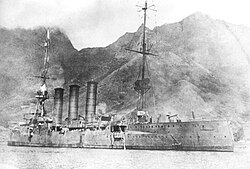
During World War I, the island became a strategic point for the German East Asia Squadron. In October 1914, Vice Admiral Maximilian von Spee used the island to re-coal his ships. The most enduring military remnant is the SMS Dresden, a German light cruiser. After the Battle of the Falklands, the Dresden sought internment by Chilean authorities in Cumberland Bay but was instead engaged by a British squadron on March 14, 1915, and subsequently scuttled by its crew.
Geography and Volcanic Origins
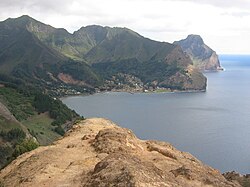
Robinson Crusoe Island is a shield volcano that rose from the ocean between 3.8 and 4.2 million years ago, situated west of the boundary between the Nazca and South American Plates. The terrain is mountainous and undulating, shaped by ancient lava flows and intense erosion that created steep ridges and valleys.
The island's highest peak is El Yunque. While a 1743 eruption is uncertain, a minor Volcanic Explosivity Index 1 eruption occurred on February 20, 1835, from a submarine vent north of Punta Bacalao, producing flames and tsunamis.
Climate Patterns
The island enjoys a subtropical climate influenced by the southeast trade winds and the cold Humboldt Current. Temperatures typically range from 3 °C (37 °F) to 28.8 °C (83.8 °F). Rainfall is heaviest in winter, with areas above 500 m experiencing nearly daily precipitation.
| Metric | Annual Mean/Total | Record High | Record Low |
|---|---|---|---|
| Temperature (°C) | 15.5 | 28.8 | 3.0 |
| Rainfall (mm) | 971.3 | N/A | N/A |
| Rainy Days | 123.0 | N/A | N/A |
Flora and Fauna
Designated as World Biosphere Reserves since 1977, the islands are of immense scientific value. The region is home to the endemic plant family Lactoridaceae and 132 endemic plant species. The fauna is equally unique, featuring the critically endangered Juan Fernández firecrown, a red hummingbird known for its needle-fine black beak.
The island is an Important Bird Area (IBA), supporting the Masatierra petrel, pink-footed shearwaters, and Juan Fernandez tit-tyrants. It also hosts the Magellanic penguin. In 1986, the island gained scientific attention when the bones of a rare spade-toothed whale were discovered.
Modern Society and Tourism
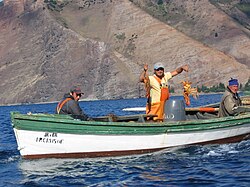
The population of 843 (2012) is concentrated in the village of San Juan Bautista. While the community maintains a rustic lifestyle centered on the spiny lobster trade, it is connected to the world via satellite internet and a three-hour flight from Santiago de Chile to the Robinson Crusoe Airfield.
Tourism is a growing sector, with hundreds of visitors annually. Popular activities include scuba diving, particularly exploring the wreck of the SMS Dresden in Cumberland Bay.
The 2010 Tsunami
On February 27, 2010, a magnitude 8.8 earthquake triggered a 3-meter (10 ft) tsunami that devastated San Juan Bautista, killing 16 people. Many lives were saved by 12-year-old Martina Maturana, who recognized the sudden drawback of the sea as a warning sign and alerted her neighbors.
Frequently Asked Questions
Was the real Robinson Crusoe based on this island?
The fictional character was partially inspired by Alexander Selkirk, a Scottish sailor who was marooned on the island from 1704 to 1709, though Daniel Defoe's novel is set in the Caribbean.
What is the main economic activity on the island?
The local economy is heavily dependent on the spiny lobster trade, supplemented by small-scale tourism.
Are there any rare animals on the island?
Yes, the island is home to the critically endangered Juan Fernández firecrown hummingbird and the Masatierra petrel, both of which are endemic to the region.
What happened to the SMS Dresden?
The German cruiser was scuttled by its own crew in Cumberland Bay on March 14, 1915, after being fired upon by a British squadron during World War I.
Is the island still volcanically active?
The last recorded eruption occurred on February 20, 1835, from a submarine vent, though it was a minor event (VEI 1).