Roberto Arlt: The Architect of the Modern Argentine Novel
Roberto Arlt was a powerhouse of 20th-century Argentine letters—a novelist, playwright, and journalist who captured the raw, chaotic energy of Buenos Aires. Unlike the polished, middle-class literature of his time, Arlt's work dove deep into the urban underworld, exploring the lives of the alienated, the criminal, and the desperate. His legacy as a pioneer of the modern Argentine novel continues to influence global literature today.
Key Facts
- Born: April 2, 1900, in Buenos Aires, Argentina.
- Died: July 26, 1942, at age 42, due to a stroke.
- Primary Roles: Novelist, dramatist, and journalist.
- Defining Style: Rough, colloquial, and surreal, focusing on urban chaos and marginalized characters.
- Major Works: Los siete locos (The Seven Madmen) and El juguete rabioso (Mad Toy).
- Journalistic Legacy: Famous for his "Aguafuertes" (Etchings) columns in El Mundo.
Early Life and the Path of an Autodidact
Born to immigrants—a father from Posen (now Poland) and a mother from Trieste—Arlt grew up in a household where German was the primary language. His childhood was marked by a stressful relationship with his father, Karl Arlt, whose severe and austere nature left a lasting impression on Roberto. This oppressive dynamic later surfaced in his writing, most notably through characters like Remo Erdosain, who mirrored Arlt's own experiences with an abusive father.
Arlt's formal education ended abruptly when he was expelled from school at age eight. This forced him to become an autodidact (a self-taught person), navigating the world through a series of odd jobs. Before finding his calling in writing, he worked as a bookstore clerk, tinsmith's apprentice, painter, mechanic, welder, dock worker, and manager in a brick factory. These diverse experiences provided him with a unique perspective on the working class and the gritty reality of city life.
Literary Evolution: From Mad Toys to Flame-Throwers
Arlt's debut novel, El juguete rabioso (Mad Toy, 1926), is a semi-autobiographical tale of Silvio, a dropout striving to become "somebody." The novel is celebrated for its contrast between the poetic language of the older narrator and the street-level slang of the characters, reflecting the turbulence of early 20th-century Buenos Aires.
He further broke literary conventions with Los siete locos (The Seven Madmen, 1929) and its sequel, Los lanzallamas (The Flame-Throwers, 1931). These works abandoned the polite norms of Argentine literature in favor of a brutal, surreal, and colloquial style. Together, they are widely regarded as his greatest achievements, depicting alienated characters pursuing insane quests amidst urban decay.
Beyond novels, Arlt explored the bizarre and the half-mad through various short stories and plays, including El amor brujo (1932). His dramatic works continued to be published and performed long after his death, with some plays appearing posthumously as late as 1971.
The "Aguafuertes": Chronicling the City
While his novels earned him critical acclaim, Arlt was most famous during his lifetime for his Aguafuertes (Etchings). These were a series of columns written for the daily newspaper El Mundo between 1928 and 1942. In these pieces, Arlt used a forthright and unpretentious style to critique the hypocrisies, beauty, and strangeness of everyday life in Buenos Aires.
His journalism often served as a tool for social exposé, targeting the failures of the Public Health System and the juvenile justice system. His curiosity extended beyond Argentina; he served as a correspondent in Rio de Janeiro in 1930 and traveled through Spain and North Africa in 1935, just before the onset of the Spanish Civil War.
Death and Lasting Influence
Exhausted by a lifetime of hardship, Roberto Arlt died of a stroke on July 26, 1942. In a final touch of irony that mirrored the bizarre nature of his stories, his coffin had to be lowered from his apartment using an operated crane. His ashes were later scattered in the Paraná River.
Arlt's influence on Latin American literature is immense. He is cited as a precursor to the 1960s "Boom" generation, including Gabriel García Márquez. The writer Roberto Bolaño once described Arlt's importance in hyperbolic terms, comparing him to Jesus Christ. His focus on the poor, the criminal, and the mad draws parallels to English-language writers like William Burroughs and Irvine Welsh, though Arlt predated them. Modern Argentine authors such as Ricardo Piglia, César Aira, and Abelardo Castillo also claim his influence.
| Category | Notable Works | Key Characteristics |
|---|---|---|
| Novels | Los siete locos, El juguete rabioso | Surreal, colloquial, urban chaos |
| Journalism | Aguafuertes porteñas | Social critique, unpretentious style |
| Plays | Saverio el Cruel, La fiesta del hierro | Alienation, bizarre quests |
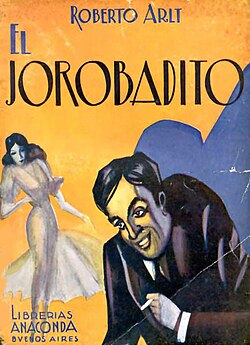
| Short Stories | El jorobadito, El criador de gorilas | Exploration of the marginalized |
Frequently Asked Questions
What is the significance of the "Aguafuertes"?
The "Aguafuertes" (Etchings) were journalistic columns in El Mundo where Arlt commented on the daily life, hypocrisies, and social issues of Buenos Aires, making him a widely recognized public voice during his lifetime.
How did Arlt's upbringing influence his writing?
Arlt's stressful relationship with his austere father and his experience as an autodidact after being expelled from school led him to write about alienation, struggle, and the lives of those on the fringes of society.
Which of his novels are considered his greatest works?
Los siete locos (The Seven Madmen) and its sequel Los lanzallamas (The Flame-Throwers) are generally regarded as his most significant literary contributions.
Who are some of the writers influenced by Roberto Arlt?
He influenced the Latin American "Boom" writers like Gabriel García Márquez, as well as contemporary Argentine authors such as Ricardo Piglia, César Aira, and Abelardo Castillo.
What was unique about Arlt's literary style?
Arlt broke away from the polite, middle-class traditions of Argentine literature by using rough, colloquial language and focusing on surreal, brutal, and alienated characters.