RISM: The Global Standard for Musical Source Documentation
For musicologists, historians, and performing artists, locating the original physical evidence of a musical composition is a fundamental part of research. RISM (Répertoire International des Sources Musicales) serves as the primary global infrastructure for this task, providing a comprehensive electronic database and a series of specialized publications that describe musical sources from around the world.
By organizing vast amounts of data from over 900 libraries, RISM bridges the gap between modern researchers and the primary sources—the original manuscripts and early prints—that define our musical heritage.
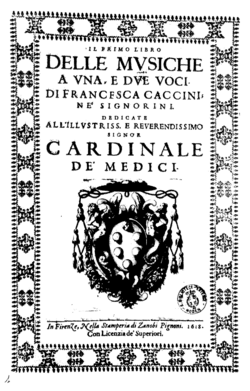
The RISM Database
The core of RISM's utility lies in its electronic database, which is accessible through two primary free online resources: the RISM Catalog (released in 2010) and RISM Online (launched in 2021 by the RISM Digital Center in Switzerland). The RISM Catalog was developed through a collaborative effort between RISM and the state libraries of Bavaria and Berlin.
As of January 2024, the database contains descriptions of 1.5 million musical sources. While the collection includes libretti (texts for operas or oratorios) and treatises (formal written explanations of music theory), the bulk of the data consists of music manuscripts and printed editions. The database specifically focuses on manuscripts dating between 1600 and 1850, and printed music published before 1945.
Detailed Source Descriptions
To ensure academic precision, every entry follows a uniform scheme with over 100 fields. This detailed approach allows researchers to find specific information, including:
- Composer details: Name and dates of birth and death.
- Work identification: Title, opus number, or catalog number.
- Technical specifications: Performing forces and format (such as full scores, individual parts, or piano reductions).
- Provenance: Previous owners, dedicatees, and the specific libraries or institutions where the item is currently preserved.
- Contextual data: Librettists and references to existing musicological literature.
For manuscripts, RISM provides data on the copyist and the time and place of origin. For printed works, it includes the publisher, year, and location of publication. A particularly powerful feature is the music incipit—the first few notes or measures of a piece—which allows researchers to identify anonymous fragments or unknown works by entering the opening melody.
Research Applications and Open Data
Beyond simple location, the database allows for complex inquiries into the reception of a piece—how a work was regarded and reissued after a composer's death. It is an essential tool for "excavating" the works of forgotten musicians who were highly regarded in their time but have since fallen out of the public consciousness.
Furthermore, the RISM Catalog provides its data under a Creative Commons license as linked open data. This allows the information to be integrated into other digital humanities projects and library catalogs worldwide.
RISM Publication Series
While the online database is now the primary tool, RISM originally developed several book-based series to organize specific repertories. Much of this data has since been migrated to the digital catalog.
Series A: Works by Composer
- Series A/I (Printed Music): Documents individual prints published between 1500 and 1800. Published by Bärenreiter, this series covers over 78,000 editions by 7,616 composers.
- Series A/II (Music Manuscripts): Focuses on handwritten music after 1600. Originally published via microfiche and CD-ROM, this series is now fully integrated into the online database.
Series B: Sources by Topic
Published by G. Henle, Series B organizes sources by specific themes or genres rather than by composer. This includes specialized catalogs for polyphonic music, music theory (including Arabic and Ancient Greek traditions), and regional collections such as Hebrew, Persian, and Slavic sources.
Series C: Directory of Music Research Libraries
Series C is a five-volume directory of libraries, archives, and private collections. It introduces the library siglum, a standardized abbreviation used to identify institutions. A siglum consists of the country code, the city, and the institution name (e.g., "I-MOe" represents Italy-Modena, Biblioteca Estense Universitaria). A complete index of these sigla has been available as a searchable database since 2011.
Key Facts
- Database Volume: 1.5 million musical sources described as of January 2024.
- Scope: Covers more than 37,000 composers across 900+ libraries.
- Primary Focus: Manuscripts (1600–1850) and printed music (pre-1945).
- Identification Tool: Uses music incipits (opening notes) to identify anonymous works.
- Standardization: Employs a unique "siglum" system to identify global music libraries.
- Accessibility: Data is available as linked open data under a Creative Commons license.
| Series | Focus | Key Characteristics |
|---|---|---|
| Series A | Composer-based | Divided into Printed Music (A/I) and Manuscripts (A/II). |
| Series B | Topic-based | Thematic catalogs (e.g., Theory, Polyphony, Regional sources). |
| Series C | Institutional | Directory of libraries using the siglum identification system. |
Frequently Asked Questions
What is a music incipit and why is it useful?
A music incipit consists of the opening notes or measures of a musical work. It is an invaluable tool for researchers attempting to identify anonymous pieces or fragments of music by matching the melody against the database.
How does the RISM library siglum system work?
The siglum is a shorthand code used to identify a library. It uses capital letters for the country, a hyphen, capital letters for the city, and lowercase letters for the specific institution (for example, "I-MOe" for the Biblioteca Estense Universitaria in Modena, Italy).
What is the difference between the RISM Catalog and RISM Online?
The RISM Catalog was released in 2010 through a partnership with the Bavarian and Berlin State Libraries. RISM Online is a newer resource launched in 2021 by the RISM Digital Center in Switzerland.
Can the RISM data be used in other projects?
Yes. The data in the RISM Catalog is provided as linked open data under a Creative Commons license, making it available for use in other library catalogs, research projects, and digital humanities initiatives.
Which time periods does the RISM database prioritize?
The database primarily focuses on music manuscripts from 1600 to 1850 and printed music published before 1945, although it does contain materials outside these date ranges.