Rio Grande: The Historic Port City of Rio Grande do Sul
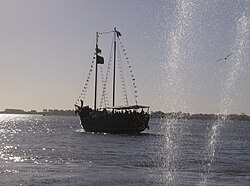
Known affectionately as the Noiva do mar (Bride of the Sea), Rio Grande is one of the oldest and most strategically significant municipalities in the Brazilian state of Rio Grande do Sul. Named after the tidal channel that connects the Atlantic Ocean to the Lagoa dos Patos and Lagoa Mirim, the city serves as a vital maritime gateway for Brazil.
From its origins as a military outpost to its tenure as the state capital, Rio Grande has evolved into an industrial powerhouse. Today, it is recognized as one of the wealthiest cities in the region, driven by its massive refinery processing Ipiranga petroleum and its port, which ranks as the second busiest in the country.
Key Facts
- Founded: 1737 by Brigadier General José da Silva Pais.
- Strategic Importance: Home to one of Brazil's most important maritime ports.
- Geography: Features Praia do Cassino, often cited as the longest beach in the world.
- Climate: Humid subtropical with strong oceanic influences.
- Population: 191,900 (2022 Census) with an estimate of 198,935 by 2025.
- HDI: 0.744 (High).
A Legacy of Defense and Governance
The history of Rio Grande is inextricably linked to the colonial struggle for South American territory. Portuguese sailors, led by Martim Afonso de Sousa, first explored the area to establish defenses against French corsairs. The region's permanent development began with the introduction of livestock following the establishment of Colônia do Sacramento in 1669.
The city was officially founded in 1737 to protect Portuguese interests, centered around the construction of the Jesus Maria e José Fort. Throughout the 18th century, the settlement grew with the arrival of colonists from Madeira and the Azores, eventually becoming its own captaincy (an administrative division) in 1760. The city's resilience was tested during periods of Spanish occupation, most notably in 1763, before being reconquered by General Rafael Pinto Bandeira in 1776.
A pivotal moment occurred during the Ragamuffin War. In 1835, revolutionary General Bento Gonçalves da Silva forced the provincial president to relocate the seat of government from Porto Alegre to Rio Grande. Consequently, Rio Grande served as the province's capital until 1845.
Geography and Natural Environment
Rio Grande is a littoral city characterized by its low elevation, with its highest point reaching only 10 meters above sea level. Due to its unique geological position, the city is known to sink approximately one centimeter every year.
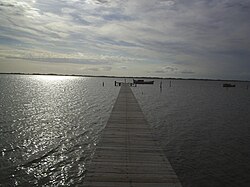
The municipality is famous for Praia do Cassino, an uninterrupted stretch of Atlantic coastline spanning roughly 250 km. Inland, the landscape consists of herbaceous vegetation typical of the Uruguayan savanna, interspersed with eucalyptus and pine plantations and coastal sand dunes. The area also encompasses part of the Taim Ecological Station and includes the Ilha dos Marinheiros, the most populous island in the Lagoa dos Patos.
Climate Overview
The city experiences a humid subtropical climate. While summers are warm, winters are relatively cool and characterized by intense winds that often lower the perceived temperature (wind chill) to around 6 °C. Precipitation is regular throughout the year, averaging 1,207 mm annually.
| Category | Detail |
|---|---|
| Total Area | 2,709.53 km² |
| Average Annual Temp | 18.3 °C |
| Hottest Month | January (Avg 23.6 °C) |
| Coldest Month | July (Avg 12.9 °C) |
| Population Density | 70.82/km² |
| Sister City | Águeda, Portugal |
Sports and Local Culture
Football is a cornerstone of local identity, highlighted by the intense "Rio-Rita" derby between SC Rio Grande and SC São Paulo. SC Rio Grande holds the distinction of being Brazil's oldest active football club. Both clubs have previously secured state championships, with SC São Paulo winning in 1933 and SC Rio Grande in 1936. Another notable club, Rio-Grandense, claimed the Campeonato Gaúcho title in 1939.
Frequently Asked Questions
What is the significance of Praia do Cassino?
Praia do Cassino is renowned for being one of the longest uninterrupted beaches in the world, stretching approximately 250 km along the Atlantic coast.
Why was Rio Grande once the capital of the province?
During the Ragamuffin War in 1835, revolutionary forces led by General Bento Gonçalves da Silva forced the provincial government to move from Porto Alegre to Rio Grande, where it remained until 1845.
What drives the economy of Rio Grande today?
The economy is primarily driven by its status as one of Brazil's most important maritime ports and its petroleum refinery, which processes Ipiranga oil.
What is the Ilha dos Marinheiros?
The Ilha dos Marinheiros is the largest and most populous island located within the Lagoa dos Patos and is part of the Rio Grande municipality.
How does the climate affect the city in winter?
While the average July temperature is 12.9 °C, intense winds frequently create a wind chill effect that drops the perceived temperature to around 6 °C.