Richard Dedekind and the Foundations of Modern Mathematics
Richard Dedekind was a pivotal figure in the evolution of mathematical thought, providing the rigorous foundations for concepts that are now central to calculus, algebra, and set theory. His work bridged the gap between intuitive mathematical practice and the formal precision required for modern analysis.
While teaching calculus at the Polytechnic school, Dedekind addressed a fundamental question regarding the nature of the number line. He developed the Dedekind cut (German: Schnitt), which serves as a standard definition of the real numbers. This concept posits that an irrational number divides the rational numbers into two distinct classes: a lesser class and a greater class. For instance, the square root of 2 separates all nonnegative numbers whose squares are less than 2 (and all negative numbers) from the positive numbers whose squares are greater than 2.
By establishing that every location on the number line continuum contains either a rational or an irrational number, Dedekind proved there are no gaps or discontinuities. He detailed these findings in his pamphlet Stetigkeit und irrationale Zahlen ("Continuity and irrational numbers"), introducing the modern concept of completeness (Vollständigkeit).
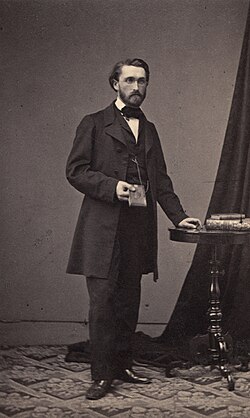
Key Facts
- Dedekind Cut: A method of defining real numbers by partitioning rational numbers into two sets.
- Infinite Sets: Defined a set as infinite if it is "similar" (equinumerous) to a proper subset of itself.
- Ideals: Introduced the notion of an ideal, a subset of algebraic integers satisfying polynomial equations, which became fundamental to ring theory.
- Axiomatization: Proposed an axiomatic foundation for natural numbers based on the number one and the successor function.
- Collaborations: Edited the works of Gauss, Riemann, and Lejeune Dirichlet.
Contributions to Set Theory and Logic
Dedekind's exploration of infinity preceded the work of Georg Cantor, the recognized founder of set theory. Dedekind defined two sets as "similar" if a one-to-one correspondence exists between them. He used this to provide the first precise definition of an infinite set: a set that is similar to a proper part of itself. A primary example is the set of natural numbers (N), which is similar to the subset of its own squares.
These insights anticipated the later work of logicists such as Bertrand Russell and Gottlob Frege. In 1888, Dedekind published Was sind und was sollen die Zahlen? ("What are numbers and what are they good for?"), where he proposed an axiomatic foundation for natural numbers. This work was later simplified by Giuseppe Peano into the standard axioms used today.
Algebraic Innovations and Ring Theory
Dedekind's study of Lejeune Dirichlet's work led him toward algebraic number fields. In 1863, he published Vorlesungen über Zahlentheorie ("Lectures on Number Theory"). While attributed to Dirichlet, historical accounts suggest Dedekind wrote the book himself, largely after Dirichlet's death.
In the 1879 and 1894 editions of this work, Dedekind introduced the concept of an ideal. An ideal is a subset of numbers composed of algebraic integers that satisfy polynomial equations with integer coefficients. This concept generalized the "ideal numbers" of Ernst Eduard Kummer and laid the groundwork for ring theory (though the term "Ring" was later introduced by David Hilbert). Dedekind's work on ideals was further developed by Hilbert and Emmy Noether.
Additionally, in 1882, Dedekind and Heinrich Martin Weber applied ideals to Riemann surfaces to provide an algebraic proof of the Riemann–Roch theorem. Around 1900, he also authored the first papers on modular lattices.
| Concept | Primary Contribution | Impact/Field |
|---|---|---|
| Dedekind Cut | Defined real numbers via rational partitions | Mathematical Analysis / Completeness |
| Infinite Sets | Defined infinity via similarity to proper subsets | Set Theory |
| Ideals | Generalization of ideal numbers | Ring Theory / Algebraic Number Theory |
| Natural Number Axioms | Introduced the successor function and number one | Foundations of Arithmetic |
| Modular Lattices | First formal papers on the subject | Order Theory / Algebra |
Professional Relationships and Legacy
Dedekind maintained complex relationships with his contemporaries. He supported Georg Cantor during disputes with Leopold Kronecker, who opposed the concept of transfinite numbers. However, recent correspondence suggests that Cantor plagiarized Dedekind's proof on infinity, leading to a breakdown in their friendship.
Frequently Asked Questions
What is a Dedekind cut?
A Dedekind cut is a way of defining a real number by dividing all rational numbers into two sets: one where every number is less than the real number, and one where every number is greater.
How did Dedekind define an infinite set?
Dedekind defined a set as infinite if it is "similar" (meaning there is a one-to-one correspondence) to a proper subset of itself.
What is the relationship between Dedekind and ring theory?
Dedekind introduced the concept of an "ideal," which is a fundamental building block of ring theory, although he did not use the word "ring" himself.
Who influenced the standard axioms for natural numbers?
Dedekind proposed the initial axiomatic foundation using the number one and the successor function, which Giuseppe Peano later refined into the standard set of axioms.
What was Dedekind's role in the Riemann-Roch theorem?
Along with Heinrich Martin Weber, Dedekind used the theory of ideals to provide an algebraic proof of the Riemann–Roch theorem in 1882.