A Comprehensive Guide to the Republic of Korea Passport
The Republic of Korea passport (대한민국 여권) is a vital travel document issued to South Korean citizens to facilitate international travel. Beyond serving as a means of transit, it acts as official proof of nationality and personal identity, including the bearer's date of birth and name.
Issued by the Ministry of Foreign Affairs and managed through provincial governments and municipalities, South Korean passports have a long history. While the first version was issued in 1948, the document has evolved significantly, moving from machine-readable formats to the highly secure biometric passports used today. Since December 21, 2021, a new generation of passports has been in circulation, featuring enhanced security and a redesigned aesthetic.
Key Facts
- Issuing Authority: Ministry of Foreign Affairs.
- Global Standing: Ranked as one of the most powerful passports in the world for travel freedom.
- Validity: 10 years for adults (18+) and 5 years for minors.
- Security: Features a polycarbonate identity page and advanced anti-forgery technology.
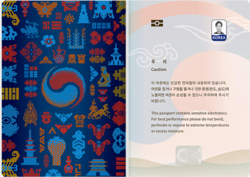
- Design: The current ordinary passport features a dark navy blue cover.
Types of South Korean Passports
Depending on the holder's role and purpose of travel, the government issues three distinct types of passports:
Ordinary Passport
Issued to general citizens for personal travel. The validity period depends on the age of the bearer: adults aged 18 and older typically receive a 10-year passport, while those under 18 receive a 5-year passport.
Diplomatic Passport
Reserved for high-ranking officials, including the President, Prime Minister, Ministers, Parliamentary Secretaries, and diplomats. These passports are designed to guarantee special treatment and protections in foreign countries.
Official Passport
Issued to members of the Parliament, provincial legislatures, and civil servants during their term of office. It is also provided to certain military personnel of the Korean Armed Forces.
Physical Appearance and Security Features
The contemporary ordinary passport is characterized by its dark navy blue cover. The front features the National Emblem of the Republic of Korea in gold, the passport's name in both Hangul (대한민국 여권) and English, and the international e-passport symbol. A stylized Taegeuk pattern is also embossed on the left side.
To prevent forgery, the new generation of passports incorporates several high-tech security measures, including:
- Polycarbonate Identity Page: A durable material that is much harder to counterfeit than traditional paper.
- Advanced Inks: Use of color-shifting, infrared, and solvent-sensitive inks.
- Tactile and Visual Elements: Holograms, intaglio printing, microprinting, and laser perforation of the passport number.
- Hidden Features: Latent images, security threads, and steganography.
Passport Costs and Validity
The cost of a South Korean passport varies based on the number of pages requested and the age of the applicant. Below is a summary of the standard pricing for biometric passports.
| Type/Age Group | Validity | Pages | Cost (KRW) |
|---|---|---|---|
| Adult (18+) | 10 Years | 58 | 52,000 |
| Adult (18+) | 10 Years | 26 | 49,000 |
| Minor (Under 18) | 5 Years | 58 | 44,000 |
| Minor (Under 8) | 5 Years | 58 | 35,000 |
| Minor (Under 18) | 5 Years | 26 | 41,000 |
| Minor (Under 8) | 5 Years | 26 | 32,000 |
Travel Freedom and Global Access
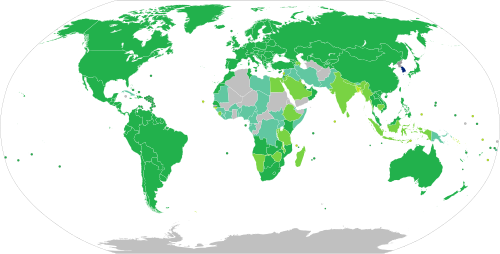
The South Korean passport is recognized globally for its immense travel freedom. As of April 2025, South Korean citizens have visa-free or visa-on-arrival access to 190 countries and territories. This places the passport in a tie for the second most powerful passport in the world according to the Henley Passport Index.
Inter-Korean Travel Considerations
While the South Korean constitution views North Korea as part of its territory, traveling across the Demilitarized Zone (DMZ) is highly restricted. Most South Koreans traveling to North Korea must do so via a third country, such as China. Special authorization from the Ministry of Unification is required for such visits. If authorized, North Korean visas are issued on separate sheets of paper rather than inside the South Korean passport itself.
Travel Restrictions and Bans
For safety reasons, the South Korean government imposes travel bans on several nations. As of the current reporting period, citizens are banned from traveling to:
- Afghanistan, Iraq, Libya, Somalia, Syria, and Yemen.
- Ukraine (due to the Russian invasion).
- Sudan (due to civil war).
- Haiti (due to conflict).
- Mali (due to security threats).
Frequently Asked Questions
What is a biometric passport?
A biometric passport is a secure travel document that contains an embedded electronic chip. This chip stores the holder's personal information and digital fingerprints, making the document much more difficult to forge.
Why did the color of the passport change?
As part of the new passport generation introduced on December 21, 2021, the cover color was changed from green to navy blue to incorporate improved security features and a modern design.
Can I use my South Korean passport to enter North Korea?
While the passport is an approved identity document, South Koreans generally cannot enter North Korea directly through the DMZ. Most travel to North Korea requires passing through another country and obtaining special authorization from the Ministry of Unification.
What are the photo requirements for a new passport?
Photos must be in color, taken within the last 6 months, and measure 35mm by 45mm with a 300 DPI resolution. The head size (from chin to forehead) must be between 32mm and 36mm.
Is my Resident Registration Number included in my new passport?
No. To enhance security, the personal ID number (Resident registration number of South Korea) was removed from passports issued after December 21, 2021.