Republic of Korea Armed Forces: Evolution, Structure, and Defense Capabilities
The Republic of Korea Armed Forces (ROK Armed Forces) represent one of the most significant and powerful standing military forces in the world. Tasked with maintaining national sovereignty and territorial integrity, the ROK military serves not only as a defensive shield for South Korea but also as a key participant in global peacekeeping, humanitarian, and disaster relief operations.
With a massive personnel strength—including both active duty and reserve components—the ROK military is a cornerstone of regional stability in East Asia. From its historical roots in the resistance against Japanese occupation to its modern status as a high-tech defense powerhouse, the evolution of the South Korean military is a testament to the nation's rapid development.

Key Facts
- Founded: 15 August 1948
- Active Personnel: Approximately 450,000 (as of 2025)
- Reserve Personnel: Approximately 3,100,000 (as of 2022)
- Defense Budget (2026): ₩ 65.9 trillion (approx. US$ 44.8 billion)
- Service Branches: Army, Navy, Marine Corps, and Air Force
- Conscription: Mandatory for males aged 18–28
Historical Foundations
The lineage of the ROK Armed Forces can be traced back to 1919 with the establishment of the Korean Liberation Army, the armed wing of the Korean government-in-exile. This force conducted various operations, including sabotage and search-and-rescue missions, against the Japanese occupation. Following Korea's liberation in 1945, the Korean Constabulary and the Korean Coast Guard were established under the United States Army Military Government in Korea.
These organizations eventually evolved into the modern ROK Army and ROK Navy. The formal founding of the Republic of Korea Armed Forces occurred on 15 August 1948, with the ROK Air Force joining the structure in October 1949.
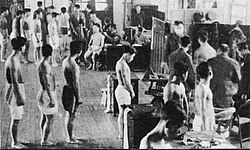
During the 1970s, the "Yulgok Plan" initiated a drive toward self-reliant national defense. This era marked the beginning of South Korea's transition from relying on foreign equipment to developing indigenous defense capabilities. By the 1990s, domestic industries were providing roughly 70 percent of the military's essential supplies, including weapons, ammunition, and communications equipment.
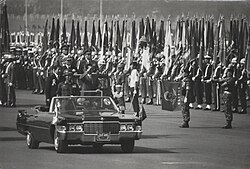
Military Structure and Service Branches
The ROK Armed Forces are organized into four distinct service branches, each specialized to meet the unique geographical and strategic challenges of the Korean Peninsula.
Republic of Korea Army (ROKA)
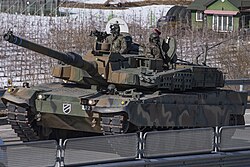
As the largest branch, the ROK Army is designed to manage the mountainous terrain of the peninsula and maintain a robust presence near the Demilitarized Zone (DMZ). The Army includes the Army Headquarters, the Aviation Command, and the Special Warfare Command. It maintains a massive inventory of armored vehicles, artillery systems, and missile defense systems to counter regional threats.
Republic of Korea Navy (ROKN) and Marine Corps
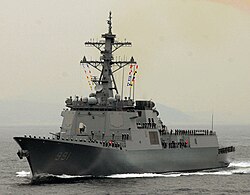
The ROK Navy is responsible for naval and amphibious operations, managing approximately 150 commissioned ships. Recent advancements include the commissioning of the 10,000-ton logistics support ship ROKS Soyang and the locally designed 3,000-ton submarine Dosan Ahn Changho. The Navy also operates the Jeju Civilian-Military Complex Port to secure vital sea lines of communication.
The Republic of Korea Marine Corps (ROKMC) operates as a specialized component of the naval forces, focusing on amphibious warfare and coastal defense.
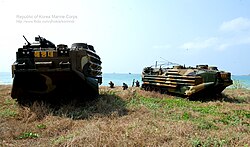
Republic of Korea Air Force (ROKAF)
The ROK Air Force provides air superiority and reconnaissance. The force continues to modernize its fleet to maintain a technological edge in the region.
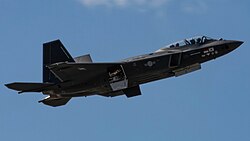
The strategic importance of the air force is highlighted by its presence in high-stakes environments, such as the Joint Security Area (JSA).
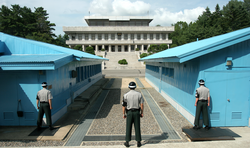
Personnel and Conscription
South Korea utilizes a system of compulsory military service. The length of service varies depending on the branch: 18 months for the Army and Marine Corps, 20 months for the Navy, and 21 months for the Air Force. While enlisted personnel serve through conscription, commissioned officers, warrant officers, and non-commissioned officers are typically volunteer-based career professionals.
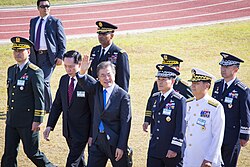
Defense Industry and Economy
South Korea has developed a world-class defense industry. Major domestic suppliers include Hanwha Aerospace, Hyundai Rotem, Korea Aerospace Industries, and LIG Defense & Aerospace, among others. This domestic strength allows the nation to maintain a high level of readiness while contributing significantly to the national economy.
| Category | Details |
|---|---|
| Total Personnel (2022) | 3,600,000 (Active & Reserve) |
| Active Duty (2025) | 450,000 |
| Reserve Strength | 3,100,000 |
| 2026 Budget | ₩ 65.9 trillion |
| GDP Percentage (2026) | 2.37% |
Frequently Asked Questions
How long is the mandatory military service in South Korea?
The length of service depends on the branch: 18 months for the Army and Marine Corps, 20 months for the Navy, and 21 months for the Air Force.
What is the purpose of 'Defense Reform 2.0'?
Defense Reform 2.0 aims to reduce the top command apparatus (reducing the number of generals and admirals) and prepare the ROK military for independent operational control authority (OPCON transfer) during wartime.
Which companies supply the South Korean military?
The military is supported by numerous domestic contractors, including Hanwha Systems, Hyundai WIA, Kia Corporation, and LIG Defense & Aerospace, as well as foreign suppliers from the US, UK, France, and Israel.
What are the primary roles of the ROK Armed Forces?
The primary roles include maintaining national sovereignty, protecting territorial integrity, participating in international peacekeeping, and providing humanitarian and disaster relief worldwide.
How does the ROK military manage its budget?
The defense budget is a significant portion of the national expenditure, with the 2026 budget projected at ₩ 65.9 trillion, representing approximately 2.37% of the GDP.