René Descartes: The Architect of Modern Philosophy and Mathematics
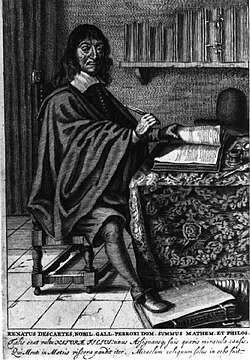
René Descartes was a towering figure of the 17th century whose work bridged the gap between the Renaissance and the Age of Enlightenment. A polymath of extraordinary range, he fundamentally reshaped how humanity understands the relationship between the mind and the physical world. By championing rationalism—the philosophical view that reason is the chief source of knowledge—Descartes sought to establish a foundation for science and philosophy that was beyond any possible doubt.
Born on March 31, 1596, in La Haye en Touraine, France, Descartes' intellectual journey began at the Jesuit College of La Flèche. He later earned a law degree (LL.B.) from the University of Poitiers in 1616. His restless curiosity led him to study at the University of Franeker and Leiden University, though he did not obtain degrees from either. His life was marked by a desire for intellectual independence, leading him to spend significant time in the Netherlands and eventually Sweden.
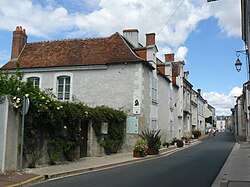
Key Facts
- Famous Dictum: "Cogito, ergo sum" (I think, therefore I am).
- Mathematical Legacy: Invented the Cartesian coordinate system and analytic geometry.
- Philosophical School: A pioneer of Foundationalism, Innatism, and Mechanism.
- Core Theory: Cartesian dualism, which separates the mind (res cogitans) from the body (res extensa).
- Death: Died on February 11, 1650, in Stockholm, Sweden, at the age of 53.
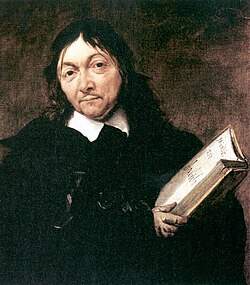
The Philosophical Quest for Certainty
Descartes is perhaps best known for his method of doubt. He decided to discard any belief that could be questioned, even slightly, to see if anything remained that was absolutely certain. This process led him to the realization that the very act of doubting proved his existence as a thinking being, resulting in the landmark phrase Cogito, ergo sum.
Mind-Body Dualism
One of his most influential and debated concepts is Cartesian dualism. Descartes proposed that the universe consists of two distinct substances: res cogitans (thinking things, such as the mind) and res extensa (extended things, such as physical matter). This created the "mind-body problem," as philosophers struggled to explain how a non-physical mind could interact with a physical body—a concept known as interactionism.
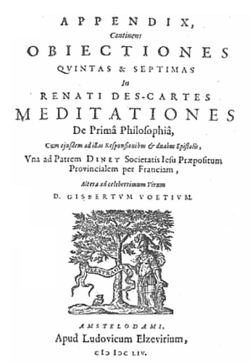
Ethics and God
Descartes' philosophy was not merely about doubt; it was about building a structure of truth. He utilized the trademark argument to posit the existence of God, suggesting that the idea of a perfect being within a finite human mind must have been placed there by God himself. This theological foundation allowed him to trust his senses and the external world, provided they were filtered through reason.
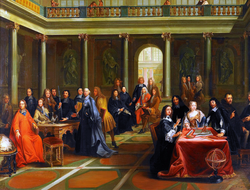
Revolutionizing Mathematics and Physics
Beyond philosophy, Descartes was a mathematical visionary. He introduced the use of x to represent unknown variables and developed exponential notation, which simplified algebraic expressions and paved the way for the development of calculus.
Analytic Geometry
His greatest mathematical achievement was the creation of analytic geometry. By introducing the Cartesian coordinate system—using x and y axes to map points in space—he bridged the gap between algebra and geometry. This allowed geometric shapes to be described by algebraic equations, a breakthrough that heavily influenced Isaac Newton's later work.

Mechanical Philosophy and Physics
In physics, Descartes advocated for mechanical philosophy, the idea that all natural phenomena could be explained by the motion and collision of physical particles. He proposed a theory of plenism, suggesting the universe was filled with matter (aether) and that celestial bodies moved in vortices.
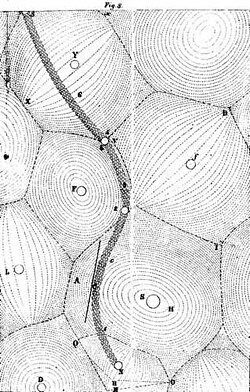
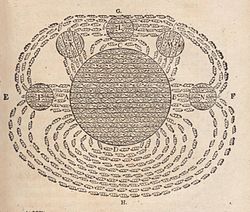
He also anticipated the modern concept of work and the conservation of momentum (which he termed quantitas motus). His studies extended into optics, glass science, and meteorology, and he even produced early diagrams of magnetic effluvia, which served as a predecessor to the concept of the magnetic field.
Summary of Descartes' Contributions
| Field | Key Contribution | Impact |
|---|---|---|
| Philosophy | Method of Doubt / Cogito | Established the basis for modern epistemology. |
| Mathematics | Cartesian Coordinates | Merged algebra and geometry (Analytic Geometry). |
| Metaphysics | Mind-Body Dualism | Defined the distinction between mind and matter. |
| Physics | Mechanical Philosophy | Viewed the universe as a giant machine governed by laws. |
Historical Impact and Legacy
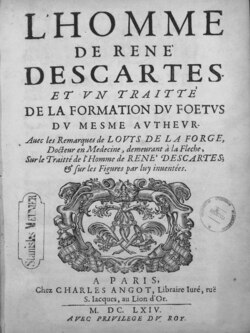
Descartes' insistence on reason over tradition helped emancipate intellectual thought from the strict doctrines of the Church. His works, including Discours de la méthode (1637) and Principia philosophiae (1644), shifted the focus of Western philosophy toward subjectivity and the individual's capacity for reason.
Frequently Asked Questions
What does "Cogito, ergo sum" actually mean?
It translates to "I think, therefore I am." It represents the one truth Descartes found impossible to doubt: because he was thinking, he must exist as a thinking entity.
What is the Cartesian coordinate system?
It is a system that specifies each point uniquely in a plane by a set of numerical coordinates, typically represented by x (horizontal) and y (vertical) axes.
What is Cartesian dualism?
It is the philosophical belief that the mind (a non-physical substance) and the body (a physical substance) are entirely separate and distinct entities.
How did Descartes influence modern science?
By promoting a mechanical view of the universe and emphasizing mathematical rigor and systematic doubt, he helped lay the groundwork for the scientific method and the development of calculus.
Where did René Descartes die?
Descartes died in Stockholm, Sweden, on February 11, 1650, while serving as a tutor to Queen Christina.