Red Army Faction: The Rise and Fall of West Germany's Urban Guerrillas
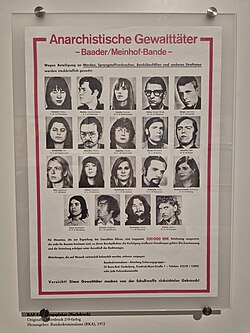
The Red Army Faction (RAF), also known as the Baader-Meinhof Group, was a far-left militant organization that operated in West Germany and other European nations for nearly three decades. Emerging from the radical student movements of the 1960s, the group sought to overthrow the West German state through a campaign of bombings, assassinations, and kidnappings, viewing the government as a continuation of the fascist structures of the Nazi era.
Driven by a blend of Marxism-Leninism, Maoism, and anti-imperialism, the RAF envisioned an "urban guerrilla" war to spark a wider proletarian revolution. Their activities became a defining feature of the Cold War era in Europe, pitting the West German state against a determined, clandestine network of revolutionaries.
Key Facts
- Active Period: May 14, 1970, to April 20, 1998.
- Founders: Andreas Baader, Ulrike Meinhof, Gudrun Ensslin, and Horst Mahler.
- Ideology: Far-left, encompassing Communism, Marxism-Leninism, Maoism, and Anti-fascism.
- Casualties: At least 34 deaths attributed to the state/victims and 20 deaths among RAF members.
- Primary Regions: West Germany, France, Netherlands, and Sweden.
- Dissolution: Officially dissolved via a fax to Reuters on April 20, 1998.
The Origins of the Urban Guerrilla
The RAF grew out of a deep-seated resentment among student activists who believed that the older generation of Germans had not sufficiently purged the influence of Nazism from society. This radicalized youth, influenced by the New Left, rejected peaceful reconciliation in favor of militant action.
In April 1971, co-founder Ulrike Meinhof authored "The Urban Guerrilla Concept," which provided the theoretical framework for the group's transition from political protest to armed struggle. The group's insignia—a red star superimposed over a Heckler & Koch MP5 submachine gun—became a symbol of their commitment to violent revolution.

Generations of Terror
Historians often categorize the RAF into "generations." The first generation was led by the core founders, including Baader, Ensslin, and Meinhof. This era was characterized by high-profile attacks against U.S. military installations and West German state officials, reflecting their anti-imperialist stance.
The Stammheim Trial and Security Measures
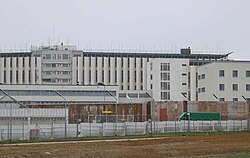
The capture of the first-generation leaders led to the infamous trials at Stammheim Prison. The proceedings were marked by intense security measures and a contentious defense strategy. The trial became a focal point for supporters who claimed the prisoners were being mistreated, further fueling the group's narrative of state oppression.
The German Autumn
The peak of RAF activity occurred during the "German Autumn" of 1977. This period saw the kidnapping of Hanns Martin Schleyer, chairman of the German Employers' Association, and a coordinated effort to force the release of imprisoned RAF members. The crisis culminated in the "Stammheim Death Night," where several core members died in their cells, an event that remains a subject of historical debate.
International Links and State Support
The RAF did not operate in isolation. They received support from the Popular Front for the Liberation of Palestine (PFLP) and the PFLP-GC. Some members underwent training in facilities operated by the Polish Ministry of Public Security in Masuria, Poland, alongside militants from Arab countries.
Following German reunification in 1990, it was revealed that the Stasi (the East German secret police) had monitored the RAF and provided shelter and new identities to ten former members during the 1980s.
The Path to Dissolution
By the 1990s, the group's influence had waned. On April 20, 1998, the RAF sent an eight-page typewritten letter to the Reuters news agency declaring its dissolution. Despite this, official investigations continued into the 2000s following evidence of potential re-founding activities, such as a robbery in Duisburg involving former members.

Summary of RAF Activity
| Category | Details |
|---|---|
| Primary Targets | U.S. Army bases, West German police, judges, and industrial leaders. |
| Notable Attacks | 1972 US Army V Corps bombing; 1975 Stockholm embassy siege; 1977 Schleyer kidnapping. |
| Key Allies | PFLP, PFLP-GC, and elements of the East German Stasi. |
| Outcome | German state victory; official dissolution in 1998. |
Frequently Asked Questions
Who were the primary founders of the Red Army Faction?
The group was founded by Andreas Baader, Ulrike Meinhof, Gudrun Ensslin, and Horst Mahler.
What was the "Urban Guerrilla Concept"?
Written by Ulrike Meinhof in 1971, it was the theoretical justification for using armed struggle and violence within urban environments to destabilize the state and incite a socialist revolution.
What happened during the German Autumn?
The German Autumn refers to a period of intense crisis in 1977 involving the kidnapping of Hanns Martin Schleyer and the subsequent deaths of RAF leaders in Stammheim Prison.
Did the RAF have foreign support?
Yes, the RAF was supported by the Popular Front for the Liberation of Palestine (PFLP) and later received shelter and new identities from the East German Stasi.
How did the Red Army Faction officially end?
The group declared its dissolution in a fax sent to the Reuters news agency on April 20, 1998.