Rear Admiral: Rank, History, and Global Naval Variations
In the structured hierarchy of maritime command, the rear admiral serves as a critical link between senior captains and the highest levels of naval leadership. As a flag officer—a term used to describe officers entitled to fly their own personal flag on a ship—the rear admiral holds a position of significant authority and responsibility across English-speaking navies and beyond.
While the rank is most commonly associated with the British Royal Navy and the United States Navy, its application varies globally, reflecting different national traditions and organizational needs.
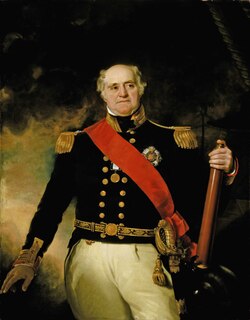
The Origins of the Rear Admiral
The term "rear admiral" is not merely a title but a relic of the era of naval sailing squadrons. Its origins can be traced back to the British Royal Navy, where the physical positioning of ships during a battle determined the rank of the officers in command.
In a traditional squadron, the admiral commanded from the center vessel, directing the overall activities of the fleet. To assist the admiral, a vice admiral led the vanguard ships, which were positioned at the front and typically bore the brunt of the enemy's initial attack. The remaining ships formed the rear of the squadron, commanded by a third admiral. Because the rear was considered the position of least danger, the officer in charge was the most junior of the three. This historical structure persists today, with the rear admiral remaining the most junior admiralty rank in many modern navies.
Key Facts
- Hierarchy: Typically senior to a commodore and junior to a vice admiral.
- Army Equivalent: Generally equivalent to the rank of major general.
- European Variation: In many European navies, the equivalent rank is known as a counter admiral.
- US Structure: The United States utilizes two distinct rear admiral grades: lower half (one-star) and upper half (two-star).
- Global Reach: Used by the navies of Australia, Canada, India, Pakistan, New Zealand, Singapore, Sri Lanka, and the UK.
Global Implementations and Insignia
Australia and New Zealand
The Royal Australian Navy (RAN) uses the abbreviation RADM. Since the mid-1990s, the insignia has featured the Crown of St. Edward above a crossed sword and baton, two silver eight-pointed stars, and the word "Australia." The sword used is a traditional naval cutlass. Notably, Rear Admiral Robyn Walker became the first female admiral in the RAN on December 16, 2011, upon her appointment as Surgeon-General of the Australian Defence Force.
In the Royal New Zealand Navy, rear admiral is currently the highest ordinary rank filled, typically held by the Chief of Navy unless that individual also serves as the Chief of Defence Force.
Canada
In the Royal Canadian Navy, the rank is referred to as rear-admiral (RAdm) in English and contre-amiral (CAm) in French. It is equivalent to a major-general in the Army or Air Force. The insignia consists of two silver maple leaves beneath a silver crossed sword and baton, topped by St Edward's Crown. Since June 2010, the service dress includes a wide gold braid cuff with a narrower strip above it featuring the executive curl (a traditional loop in the gold lace of naval officers).
United States
Since 1985, the United States has maintained two tiers of this rank: rear admiral (lower half) (RDML), which is a one-star rank, and rear admiral (RADM), which is a two-star rank. These ranks are utilized across four uniformed services: the U.S. Navy, U.S. Coast Guard, Public Health Service (USPHS) Commissioned Corps, and the National Oceanic and Atmospheric Administration (NOAA) Commissioned Officer Corps.
Other International Navies
- Pakistan: A two-star rank superior to commodore and captain, but junior to vice-admiral and admiral.
- Singapore: The Republic of Singapore Navy maintains both a one-star and a two-star rear admiral rank.
- Sri Lanka and Sweden: Both navies utilize the rear admiral as a two-star rank.
Comparative Summary of Rear Admiral Ranks
| Country/Region | Rank Title/Abbreviation | Star Level | Army Equivalent |
|---|---|---|---|
| United States | RDML / RADM | 1 or 2 Star | Brigadier General / Major General |
| Canada | RAdm / CAm | 2 Star | Major General |
| Australia | RADM | 2 Star | Major General |
| Europe (General) | Counter Admiral | 2 Star | Major General |
| Pakistan | Rear Admiral | 2 Star | Major General |
Frequently Asked Questions
What is the difference between a rear admiral and a vice admiral?
A rear admiral is junior to a vice admiral. Historically, the rear admiral commanded the back of the fleet, while the vice admiral commanded the lead ships in the vanguard.
Is a rear admiral the same as a general?
Yes, in terms of hierarchy. A rear admiral is a flag officer, which is the naval equivalent of a general officer in the army. Specifically, it is usually equivalent to a major general.
Why are there two different rear admiral ranks in the US Navy?
The US Navy distinguishes between the rear admiral (lower half), which is a one-star rank, and the rear admiral, which is a two-star rank, to provide a more granular progression of leadership.
What does the "executive curl" on a Canadian uniform represent?
The executive curl is a decorative loop in the gold braid on the sleeve of the uniform, a traditional naval marking used to denote commissioned officers.
Who was the first female admiral in the Royal Australian Navy?
Rear Admiral Robyn Walker became the first female admiral in the Royal Australian Navy when she was appointed Surgeon-General of the Australian Defence Force on December 16, 2011.