Real Sociedad: The History and Legacy of the White-and-Blues
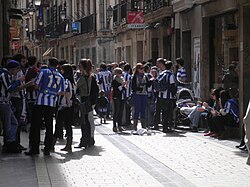
Founded on September 7, 1909, Real Sociedad de Fútbol, S.A.D. is one of Spain's most storied football institutions. Based in San Sebastián, the club is affectionately known as Txuri-Urdin (The White-and-Blues) or simply La Real. Over more than a century, the club has evolved from a local sporting society into a consistent competitor in La Liga, the top tier of Spanish football.
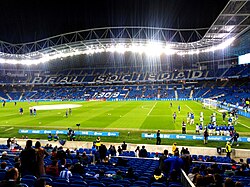
The club's identity is deeply rooted in its Basque heritage, maintaining a strong connection to its community and a renowned youth system known as the cantera. Today, they play their home matches at the Reale Arena, a modern facility with a capacity of 40,000 spectators.
Key Facts
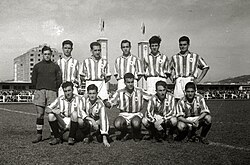
- Founded: September 7, 1909, as Sociedad de Foot-Ball de San Sebastián.
- Major Honours: 2 La Liga titles and 4 Copa del Rey trophies.
- Home Ground: Reale Arena (Capacity: 40,000).
- Nickname: Txuri-Urdin (The White-and-Blues).
- Current President: Jokin Aperribay.
Club History and Evolution
Early Years and Foundation
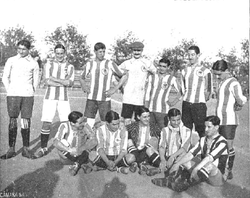
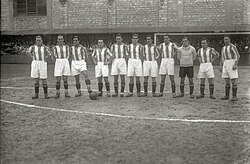
The club began its journey in the early 20th century, with its forerunner, Club Ciclista de San Sebastián, winning the Copa del Rey in 1909. In its early decades, the club established itself as a regional powerhouse, winning the Gipuzkoa Championship six times between 1918 and 1933.
The Golden Era of the 1980s
The 1980s marked the most successful period in the club's history. Real Sociedad achieved back-to-back La Liga titles in the 1980–81 and 1981–82 seasons, cementing their place among the elite of Spanish football. This era of dominance was further highlighted by a Supercopa de España victory in 1982 and a Copa del Rey title in 1986–87.
Modern Era and 21st Century Success
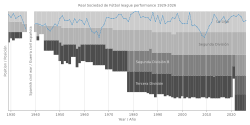
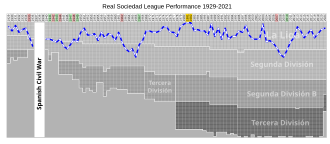
Entering the 21st century, the club experienced fluctuations, including a brief stint in the Segunda División (second tier) before returning to the top flight. Key figures like Xabi Prieto emerged as legendary goalscorers, helping the club maintain its competitive edge. In recent years, the club has seen a resurgence, winning the Copa del Rey in 2019–20 and again in 2025–26.
Squad and Technical Leadership
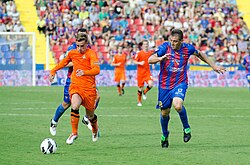
The current squad is led by captain Mikel Oyarzabal, a pivotal figure in both the club's attack and the Spanish national team. Under the guidance of head coach Pellegrino Matarazzo, the team continues to integrate homegrown talent with international stars like Takefusa Kubo and Gonçalo Guedes.

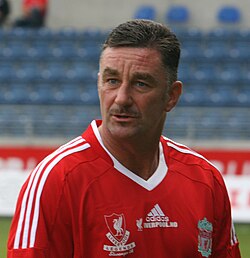
Historically, the club maintained a strict Basque-only policy for players. This changed between 1989 and 1991 when John Aldridge, an international from the Republic of Ireland, became the first non-Basque player to represent the club, serving as their top scorer during his tenure.
Honours and Achievements
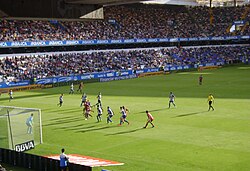
Real Sociedad's trophy cabinet reflects a century of excellence across domestic and regional competitions.
| Competition | Titles | Winning Seasons |
|---|---|---|
| La Liga | 2 | 1980–81, 1981–82 |
| Copa del Rey | 4 | 1909, 1986–87, 2019–20, 2025–26 |
| Segunda División | 3 | 1948–49, 1966–67, 2009–10 |
| Supercopa de España | 1 | 1982 |
| Gipuzkoa Championship | 6 | 1918–19, 1922–23, 1924–25, 1926–27, 1928–29, 1932–33 |
Player Legends and Statistics
The club's history is defined by loyal servants. Alberto Górriz holds the record for the most appearances with 599 matches, while Jesús María Satrústegui remains the all-time leading goalscorer with 162 goals. In the modern era, Mikel Oyarzabal has climbed the ranks rapidly, appearing in 437 matches and scoring 133 goals.
Frequently Asked Questions
What does the nickname "Txuri-Urdin" mean?
Txuri-Urdin is a Basque term that translates to "The White-and-Blues," referring to the club's traditional home colors.
Who is the all-time leading goalscorer for Real Sociedad?
Jesús María Satrústegui is the club's all-time top scorer with 162 goals.
When did Real Sociedad win their La Liga titles?
The club won the Spanish top-flight league twice, in the 1980–81 and 1981–82 seasons.
Who was the first non-Basque player to play for the club?
John Aldridge from the Republic of Ireland was the first non-Basque player, playing for the club from 1989 to 1991.
What is the capacity of the Reale Arena?
The Reale Arena has a seating capacity of 40,000 spectators.